
3 Indians Abducted in Mali Amid Al-Qaeda-Linked Terror Attacks
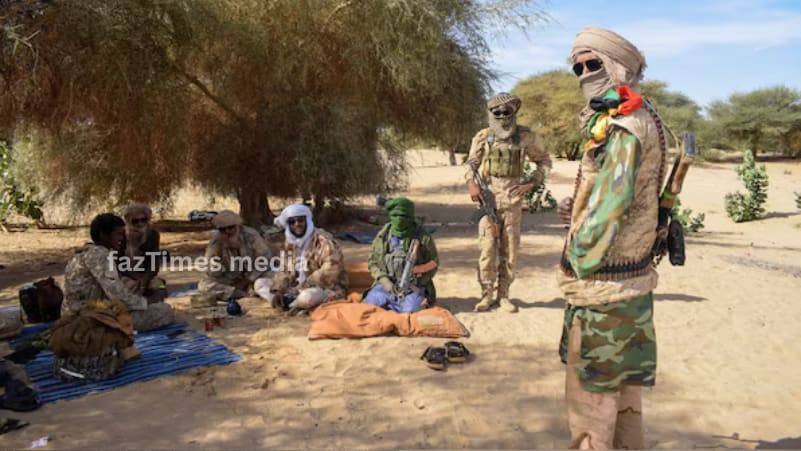
fazTimes News: Bamako/New Delhi— The Indian government is making every effort to rescue three individuals who were abducted during an assault on a cement factory in Kayes, western Mali, on July 1. The attacks are attributed to JNIM, a group linked to Al-Qaeda that has recently gained power. The attack happened during a time when there were several coordinated strikes on military and government sites in Mali, causing worry for India’s diplomats, foreign workers, and international efforts to fight terrorism.
The Abduction: A Targeted Strike
According to the Ministry of External Affairs (MEA), three Indian citizens were working at the Diamond Cement Factory in Kayes when armed militants attacked the place. The attackers came in during the night and took the Indian workers hostage before leaving the area. The Indian government has acted quickly. A statement from the MEA on Tuesday said, “We are very worried about the safety of our citizens.” It also said the Indian government strongly opposes this violent act and has asked the government of Mali to do everything possible to ensure the safe and quick release of the kidnapped Indian nationals.
Indian officials in Bamako, the capital of Mali, are working with local leaders and the factory’s management to get the workers back. They have also been in touch with the families of the kidnapped people, giving them updates and helping them with emotional support.
A bigger wave of terror is spreading.
The kidnapping happened on the same day that JNIM started a series of attacks in several towns in Mali. BBC News says the group claimed responsibility for attacking army bases in Binoli, Sandere, and Kayes, and taking over three military barracks. These towns are near the borders of Senegal and Mauritania, which makes the attacks important for JNIM’s plans in the region. The Malian Army fought back, saying they “killed more than 80 militants” in response.
Why Are Indian Nationals at Risk in Mali?
India has a small but important group of skilled workers working in various parts of Africa, especially in construction, mining, and manufacturing. For example, cement factories like the one in Kayes rely on foreign engineers, technicians, and supervisors to manage their operations.
Although Mali is known for being a dangerous place because of the unstable security situation, the need for skilled workers often makes it worth the risk for companies looking for expertise. Indian workers are frequently the top choice for these jobs, which unfortunately also puts them in danger.
Dr. Anjali Mehta, a geopolitical analyst from the Institute of Strategic Studies in New Delhi, said, “This isn’t just about one factory. It’s a growing issue in areas where the government is weak and there are insurgent groups. Indian workers are often straightforward targets for terrorists who want money, attention, or to gain an advantage.”
India’s Growing Diplomatic Challenge in West Africa
India's growing diplomatic challenge in West Africa has come into focus because of recent abductions. These events highlight how India's presence in Africa, especially in West Africa, is expanding. The country is increasing trade, development, and energy partnerships in the region. India is also investing in big infrastructure projects and deals for extracting resources, which has led to more Indian involvement in countries like Mali, Niger, and Burkina Faso, which are politically unstable.
According to Al Jazeera, security problems in the Sahel region are getting worse. This is because groups linked to Al-Qaeda and ISIS are becoming more active, and they are using tools like drones, roadside bombs, and attacks across borders.
Abhishek Kumar, a former ambassador to several African countries, said, “India’s diplomatic missions are now dealing with two main tasks: promoting economic ties and keeping Indian citizens safe in dangerous areas.” He added that this situation needs better communication with local governments and a rethink about where and how
A Call for Enhanced Security Measures
After the incident, the Indian Embassy in Bamako has issued a warning to all Indian citizens in Mali, telling them to be very careful, stay alert, and keep in touch with the embassy for the latest information and help in case of an emergency.
This event is expected to result in new travel warnings and stricter rules for Indian workers going to areas that are not very stable. Some experts think that companies working in these places might now need to provide detailed safety plans and emergency plans before they can hire foreign employees.
“Another incident like this can't be allowed to happen again,” said Ltd Gen. R. Bhardwaj (Retd.), a security expert. “Our policies for sending workers abroad need to include better teamwork with intelligence services and local security groups.”
Mali has been fighting against Islamist extremists
Mali has been fighting against Islamist extremists since 2012, when a military coup and political chaos led to a power vacuum that jihadist groups quickly took advantage of. Even with help from French troops, UN peacekeepers, and local leaders, the violence from extremists has gotten worse in the Sahel region.
The Guardian reports that JNIM is now the strongest group of militants in the area. They work with smaller extremist groups and use local tensions and political issues to strengthen their position. While the Malian army says they are taking back control, attacks on civilian areas and foreign businesses are still happening. People are being kidnapped, property is being stolen, and targeted attacks are still common.
The Road Ahead: Hope, But With Caution
For now, the families of the kidnapped Indians are waiting nervously for good news. At the same time, the Indian government is working hard to get the hostages back safely and is thinking about better ways to protect Indian people living abroad.
There is some hope that with pressure from other countries and talks happening on the ground, things could work out peacefully. But the bigger picture is still worrying. This situation shows that even as more Indian workers get jobs around the world, there are also more dangers. As India becomes a bigger economic and political force, it needs to make sure its citizens living in risky areas are safer.
At FazTimes, we prioritize accuracy, credibility, and journalistic integrity. Every piece of news we publish is thoroughly verified through multiple trusted and independent sources.
This report has been cross-referenced with coverage from globally recognized news organizations, including BBC News, Reuters, Bloomberg, South China Morning Post, Al Jazeera, NDTV, The Economic Times, and The Indian Express, and we are committed to upholding the highest standards in global journalism to ensure our readers receive reliable and fact-checked information.


Discussion0
Join the conversation on this story
Loading comments...