
637+ Mob Lynching Deaths in Bangladesh in One Year
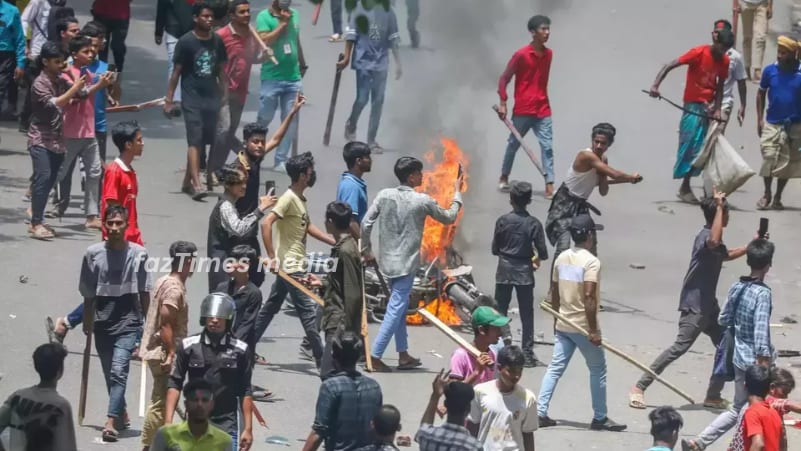
FazTimes media: Bangladesh is seeing more and more mob violence. According to the Global Center for Democratic Governance in Canada, 637 people died between August 2024 and July 2025. This unexpected rise, which is more than twelve times the 51 lynching deaths recorded in 2023, shows that the political changes that led to the removal of Prime Minister Sheikh Hasina and the rise of the interim government led by Muhammad Yunus have not been able to maintain peace and safety.
A Lot More Violence
There was mob violence during Hasina's 16 years in office, but it wasn't very common. In 2023, there were 51 deaths, most of which were in different events. The same group tracked 637 lynching deaths, including 41 police officers, between August 2024 and July 2025.
Experts in human rights also found similar results: 119 people died in 114 lynchings between August 2024 and March 2025. A group of people beat him up, threw rocks at him, and left him to die, all while they streamed the whole thing live on social media. Many people who saw the video were frustrated, and students across Bangladesh protested.
A group of people set 24 people on fire at the Zabeer Jashore Hotel in August 2024. A few weeks later, a giant fire at a tire store in Rupganj killed 182 people. Both events are believed to be the result of angry groups acting on false information they had heard.
Online posts and loudspeaker messages falsely accused members of minority groups and politicians of wrongdoing, leading to attacks against them. These groups attacked them without any real proof. Hearing about the abduction of children or insults to their faith instilled a deep fear in the populace.
In some cases, people were lynched within hours.
Human rights groups report that 70% of the victims had ties to either the Awami League or one of its student groups, indicating political targeting. Minority groups and individuals who opposed the government faced more targeted attacks than others. The incident shows a climate of fear and revenge.
Impunity and Inaction: There were few convictions even when killings were recorded and the people who did them were known. The Awami League and its student groups fell apart, which took away important checks on power. The new leaders haven't acted quickly enough.
These effects on young people and society
Students from major universities, like Dhaka University, BRAC, NSU, and East West University, have been protesting in public after high-profile lynchings like that of Lal Chand Sohag.
Who gave you the right to kill people?
Where is the law when criminals attack people who collect scrap?
Young leaders called for justice and change, and this question rang out in the streets.
What the Authorities Have Done (and Not Done)
The government has made many promises, but not much has happened. Muhammad Yunus's temporary government has issued strong threats but has not carried out many prosecutions. While some arrests have occurred following significant events, the conviction rate remains low, and the public remains unfazed.
People who are watching the situation say that getting different political groups to work together was more important than fixing the government systems. This means that regular people aren't safe.
The Road Ahead: Building Trust Again
The Global Center for Democratic Governance has made it clear that violent mobs could become a regular part of life in Bangladesh if the rules for the police, courts, schools, and media don't change.
Experts say to do the following:
First, see lynching as murder, not just a way for a group to punish someone. Laws should punish people who do such violent things very harshly. Second, improve the police by hiring more people and making sure they are not biased.
They should look into cases of groups of people attacking other people right away. Third, fight false information, especially on social media and in mosques where people can hear it.
Finally, work with young people, former activists, and religious groups to spread messages about peace instead of just fighting or protesting.
A Broader Message for Democracies
The issues faced by Bangladesh extend beyond its borders. When leaders fail to perform their duties effectively, it can lead to people taking matters into their own hands, potentially weakening the legal system.
The Daily Star's editorial says that "Bangladesh could become a failed state if law enforcement isn't strong." If we don't do something now, our people might be more dangerous to us than crime or war.
Why It Matters to Us
People in India and the countries around it can see that Bangladesh's rising violence by groups of angry people is a clear sign that democratic systems aren't working as well as they should.
Last Thoughts
In one year, mob violence in Bangladesh killed 637 people. But what worries me even more is what this violence shows: weak government systems, the dangerous spread of rumors, and the instability of civil society.
This situation needs more than just news coverage; it needs real change.
It's important to make changes, hold people accountable, and rebuild trust in the community. If this doesn't change, mob justice will not only be a problem in Bangladesh; it could also affect the country's future. BBC News and Al Jazeera say that the world is watching closely, but real change has to happen in the country itself.
FazTimes Media will keep covering this crisis as it grows and share the stories and voices of those who are fighting for fairness and democracy.
At FazTimes, we prioritize accuracy, confidence, and strong journalistic standards. To ensure every news story we share is real, we verify it with multiple trustworthy and independent sources.
We’ve compared this report with coverage from major news outlets worldwide, including BBC News, Reuters, Bloomberg, South China Morning Post, Al Jazeera, NDTV, The Economic Times, and The Indian Express.
Our dedication lies in upholding the highest standards in global journalism, ensuring our readers can trust the information they receive.


Discussion0
Join the conversation on this story
Loading comments...