
Australia Expels Iran Ambassador Over Antisemitic Attacks
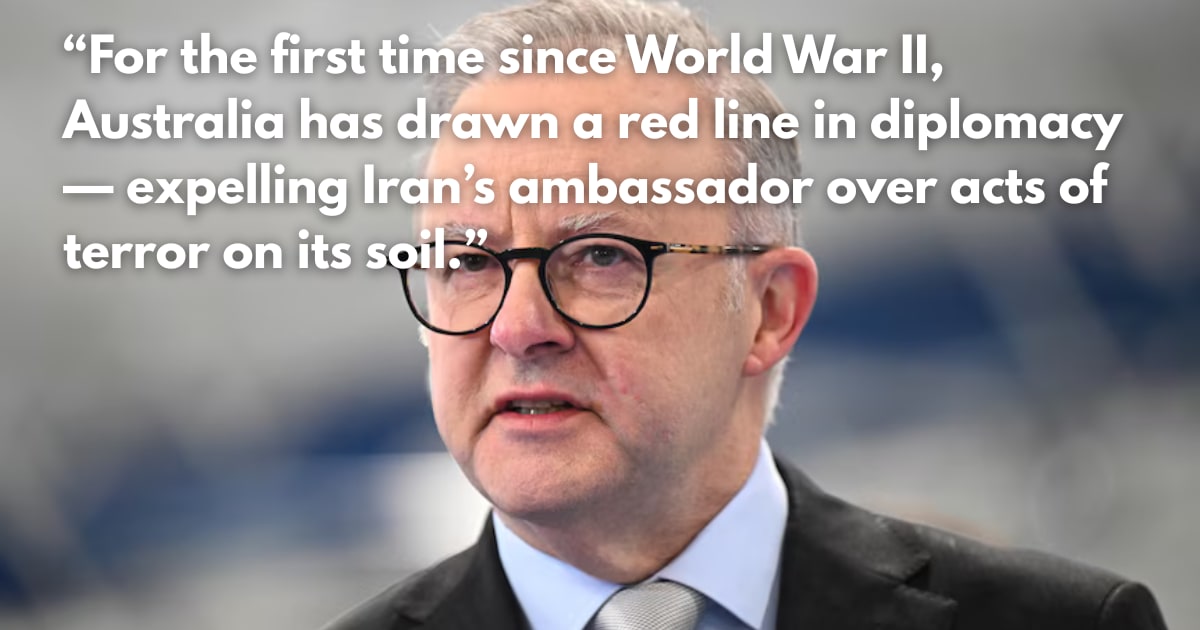

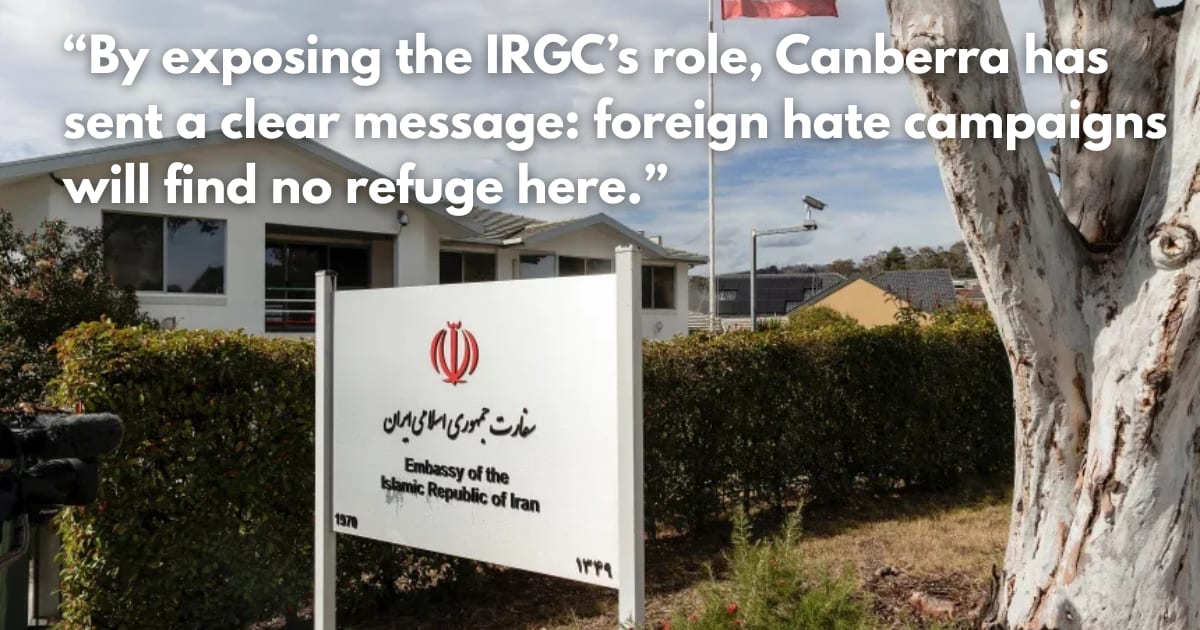
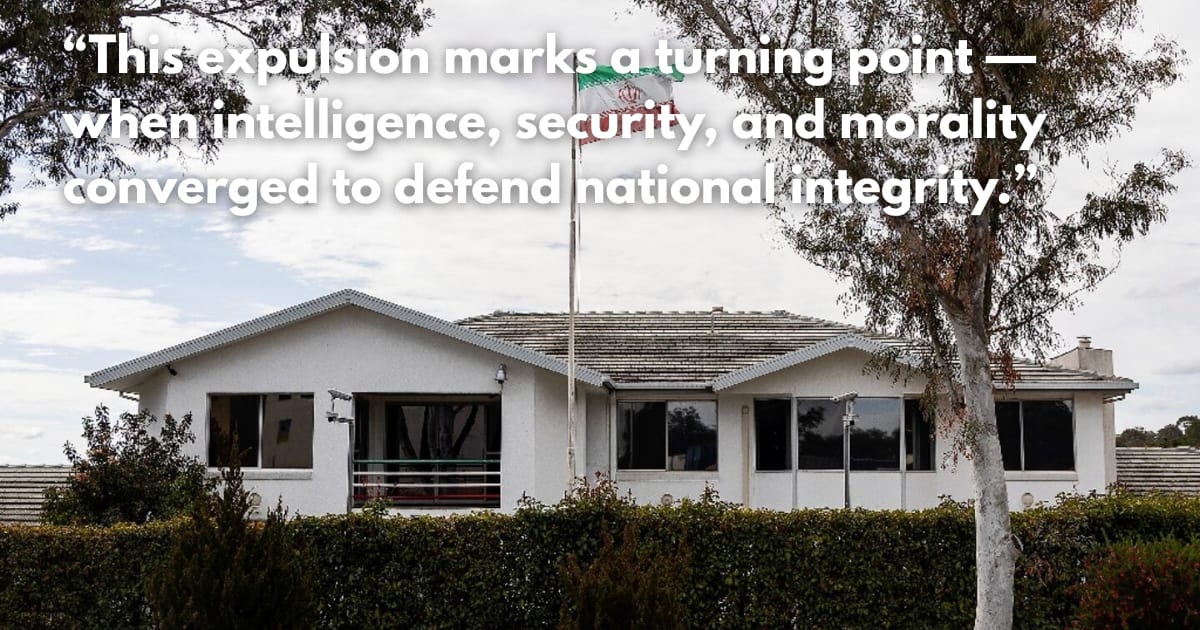

FazTimes Media: Australia has taken an unusual and important step by sending Iran’s ambassador back home. The announcement happened after intelligence reports suggested that Tehran was involved in several fires that targeted Jewish communities in Sydney and Melbourne. Prime Minister Anthony Albanese called the findings “deeply troubling” and said the decision was necessary because the threat to Australia’s society was serious.
The resignation is the first time since World War II that Australia has removed a foreign ambassador, which shows how serious the situation is.
The intelligence came from a long investigation by the Australian Security Intelligence Organisation (ASIO). They found that Iran’s Islamic Revolutionary Guard Corps (IRGC) was behind two big attacks: the October 2024 firebombing of the Lewis Continental Café, a kosher restaurant in Sydney’s Bondi area, and the December 2024 attack on the Adass Israel Synagogue in Melbourne.
Prime Minister Albanese said at a press conference, “These were extreme and dangerous acts of aggression carried out by a foreign country on Australian soil. They weren’t random incidents but planned efforts to split our society and create fear.”
BBC News reported that the findings surprised both the government and the public. The surprise wasn’t just because of the boldness of the attacks but also because it showed that foreign groups were targeting Australian communities for their beliefs.
Expulsion of Iranian Diplomats
After looking at the intelligence reports, the government said that Iranian Ambassador Ahmad Sadeghi and three other embassy staff were no longer welcome in Australia. They were given seven days to leave the country.
Foreign Minister Penny Wong said that while Australia would still talk to Iran, the embassy in Tehran would be closed, and the Australian ambassador had already gone back home. She also warned that consular services would be very limited now.
She said, “I know many Australians have family and friends in Iran, but our message is clear: don’t travel there. If you are already there, leave as soon as it is safe to do so.” Al Jazeera reported that foreign policy experts called this one of the “most dramatic diplomatic expulsions in modern Australian history”.
How the Attacks Were Organised
ASIO Director-General Michael Burgess gave more information about how the attacks happened. He said that Iran’s Revolutionary Guard used a network of other groups to hide their involvement. Although the embassy in Canberra wasn’t directly involved, Burgess said the IRGC was behind the actions.
“These actions were completely unacceptable,” Burgess said to reporters. “Lives were put in danger, places of worship were threatened, and a whole community lived in fear. Iran and its groups started the fire—literally and figuratively—and then kept adding fuel to it.”
The attacks shocked Jewish communities in both cities. A café in Sydney, which was popular among Jewish people, was destroyed by fire. In Melbourne, worshippers at a synagogue were scared when flames spread through the building. No one was hurt, but the emotional impact is still strong.
Jewish Community Reacts
Leaders from Australia’s Jewish community have shared both relief and worry after the government made a new announcement. Daniel Aghion, the President of the Executive Council of Australian Jewry, said the community is grateful for the government’s openness but is still worried about being targeted on purpose.
He said, “People are worried that we’ve been chosen in a very deliberate and harsh way by a violent foreign group, just because of who we are. While we welcome the government’s strong reaction, the attacks remind us how far hate can go.”
People in Sydney and Melbourne told ABC Australia that many families now feel unsafe, especially with more antisemitism happening around the world.
A Shift in Australia’s Foreign Policy
Deciding to send Iran’s ambassador away shows Australia is taking a harder line against Tehran. Along with the expulsions, the government also plans to label the IRGC as a terrorist group—something that would put Australia in line with the United States, the United Kingdom, and Canada.
The Israeli embassy in Canberra praised the decision, saying, “Iran’s government isn’t just a danger to Jews or Israel—it’s a threat to everyone in the free world, including Australia. This is a strong and necessary step.” Experts think this move marks a big change in Australia’s foreign policy in the Middle East.
Australia has usually kept a small but practical relationship with Iran. But these attacks have shown some weaknesses and started new discussions about how much Australia should keep working with governments that back violence abroad.
The Guardian reports that experts also warn that while Australia is showing strength, it may face risks, like retaliation from Iran and possible conflicts in international diplomacy.
Wider Implications
This situation has also brought up bigger questions about extremism, safety, and unity in Australia. Prime Minister Albanese said that any efforts to divide communities from outside will fail. He said, “Our diversity is our strength. These efforts to split Australians will not work. We won’t let hatred coming from overseas poison our society.”
Leaders from different religious groups have shared similar thoughts, asking for unity and calm. Leaders from Islamic groups have condemned the attacks and said such actions “do not reflect the values of everyday Muslims in Australia.”
Lessons for the Future
This event has led to calls for better protection for places of worship and cultural sites throughout the country. Experts say that while sending diplomats away is a strong symbolic move, there also needs to be real actions to protect at-risk communities.
Security experts also point out that this case shows how foreign governments can use local groups to carry out attacks through others. More teamwork between police, intelligence groups, and community leaders will be important in stopping similar things from happening.
As Reuters noted, the expulsion sends a clear message: Australia won’t accept foreign interference, especially when it puts citizens’ lives in danger.
Conclusion
The removal of Iran’s ambassador from Australia is more than just a news headline—it’s a major and important moment for Australia’s foreign and internal policies. By connecting Tehran’s Revolutionary Guard to the antisemitic attacks in Sydney and Melbourne, the government has clearly stated that Australia’s way of life won’t be destroyed by outside forces.
As Prime Minister Albanese said, “This wasn’t just an attack on buildings. It was an attack on who we are as a nation.” For Australia, the future will require staying alert, building stronger connections within communities, and a renewed effort to make sure no citizen is afraid because of their faith or background.
Our primary goals at FazTimes Media are to be accurate and confident and adhere to the highest journalistic standards. We check every news story we share against several trustworthy and separate sources to ensure its accuracy.
We have reviewed this report, along with articles from major news outlets worldwide, including BBC News, Reuters, Bloomberg, Al Jazeera, NDTV, The Economic Times, and The Indian Express.
We want to keep the highest standards in global journalism so that our readers can trust the information they acquire.


Discussion0
Join the conversation on this story
Loading comments...