
How Russia Replenishes Military Manpower Amid War Losses

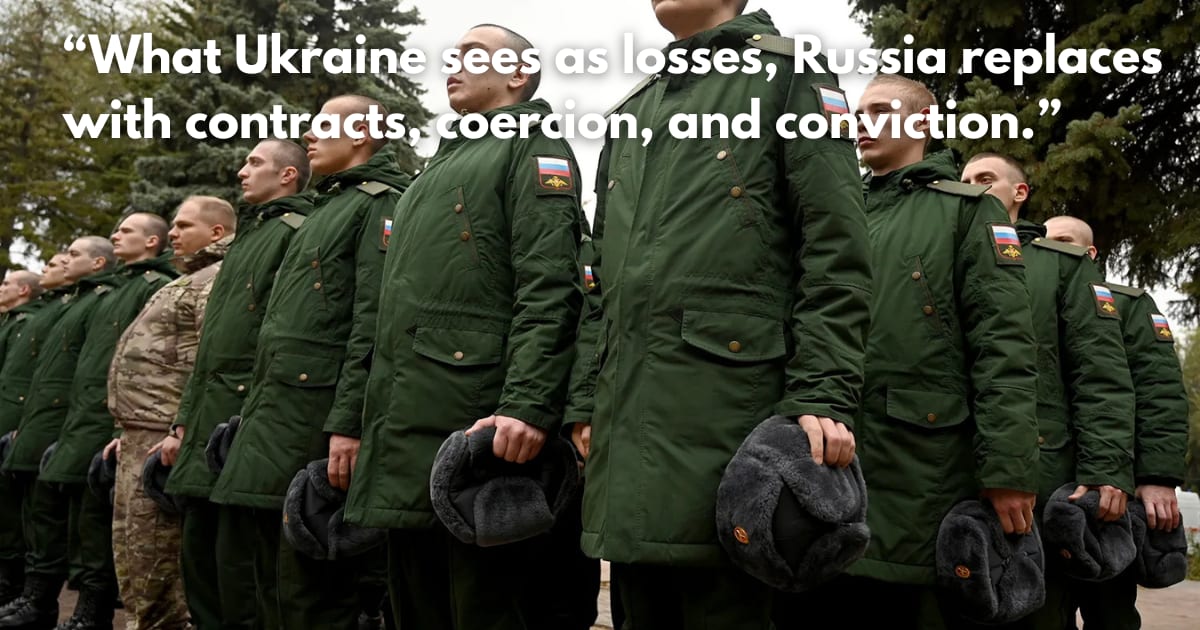

FazTimes Media: When Russian President Vladimir Putin started his full-scale war against Ukraine in early 2022, many people thought Moscow would run out of soldiers soon. But more than two years later, Russia is still finding ways to fill its army, even with huge losses and being cut off from the world. Now, the crucial question arises: how can Russia maintain such a strong military effort when so many soldiers are suffering injuries or losing their lives?
Take the story of Ivan Chenin, a 24-year-old who used to study at a university in Moscow. He joined the war effort early on. At first, he helped deliver supplies to the areas Russia now controls — Donetsk and Luhansk. But his job soon changed to actual fighting.
“I flew drones to look for Ukrainian positions,” Chenin said in an interview with Al Jazeera. “I would find where they were and tell my commander. Then they would bomb those places.” Ivan’s experience isn’t unique. Around half a million Russians joined the army last year, either by signing contracts or joining new volunteer groups. This influx is occurring despite Ukraine's struggle to recruit enough soldiers, and Kyiv has received criticism for implementing forced conscription.
President Putin has stated that Russia is recruiting soldiers at a faster rate than Ukraine. Ukrainian military officials have warned that Russia may recruit an additional 150,000 soldiers before the end of the year. Vadym Skibitsky, a top Ukrainian military intelligence official, said Russia is meeting “105 to 110 percent” of its monthly recruitment goals.
These numbers are surprising. After all, Western intelligence agencies and the British Ministry of Defence say over a million Russian soldiers have been killed or injured since the war started — a number that Russia never officially admits.
Shifts in Military Tactics
Experts believe that Russia’s changing way of fighting on the battlefield helps explain why its efforts to recruit soldiers seem to be working. Oleg Ignatov, a senior Russia analyst at Crisis Group, said, “The number of soldiers lost has gone down compared to the early months of the war.” He told Al Jazeera, “Russia is using different methods now. Instead of big groups of tanks or large groups of foot soldiers attacking together, they now use small teams that are supported by drones and heavy artillery. This reduces the likelihood of detection.
From Fear of Being Drafted to Signing a Contract
The borders with Georgia, Armenia, and Kazakhstan were extremely crowded with individuals attempting to flee. But by the end of 2022, those fears started to go away. A lawyer from the group Appeal to Conscience said, “There hasn’t been an official call-up for military service since November 2022.”
However, he added, “Mobilisation has never officially ended. Those who were already drafted can’t just leave, and local governments are pushing hard to get volunteers to sign contracts.” Reports suggest that recruiters occasionally exert pressure on men to sign up, and in certain instances, they fabricate fake contracts for them. This mixing up of legal rules leaves many recruits confused and stuck.
The Appeal of Money and Benefits
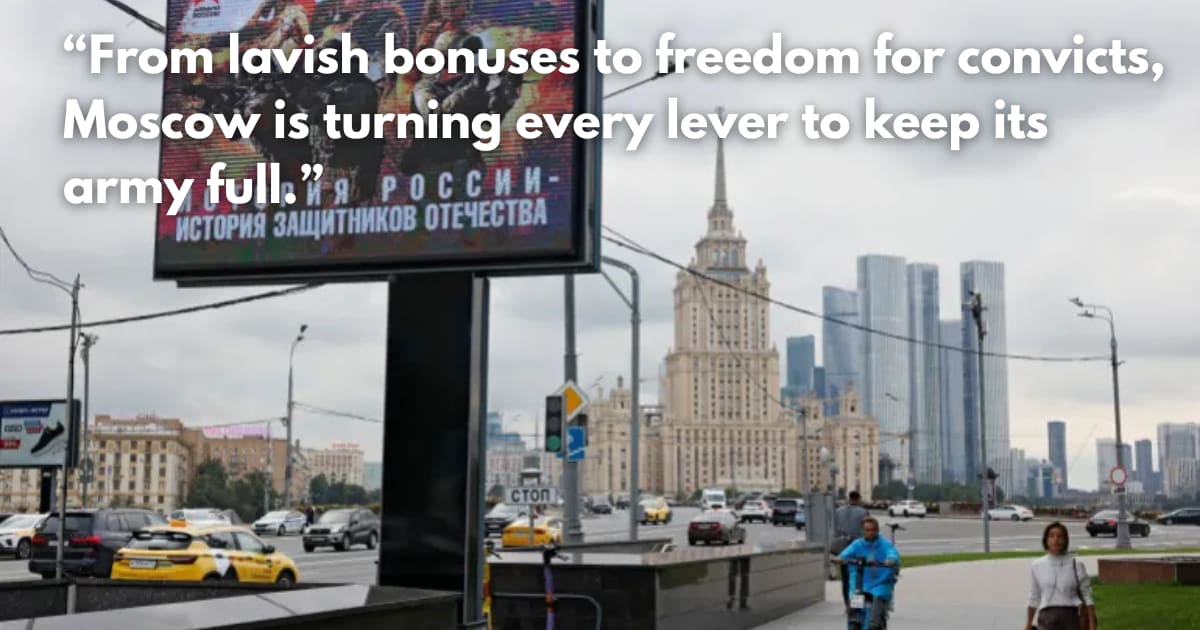
Along with pressure, money is a big reason people join the army. In 2023, the Kremlin offered generous rewards: a joining bonus of about 400,000 roubles (nearly $5,000), a monthly pay of more than 200,000 roubles ($2,500), and extra money for certain regions, like housing support or debt forgiveness.
The military offers a significant change in the lives of people from Russia’s poorest rural areas, where wages are much lower. The lawyer added, “People facing financial problems, those with legal issues, or even migrants wanting Russian citizenship are especially straightforward targets for these recruitment efforts.”
Prisoners are soldiers.
One of the most surprising parts of Russia’s way of getting soldiers has been using prisoners. Since 2022, Russia has granted freedom to men convicted of violent crimes, provided they agree to fight on the front lines. Places like Bakhmut utilised these prisoner groups as soldiers, expecting them to take significant risks in perilous attacks.
Ivan Chuviliaev from Go By The Forest, a group that helps Russians avoid being drafted, said, “If they survived, they came back as free people, often considered heroes.”
This plan has led to a big decline in the number of people in Russian prisons. The newspaper MK reported that over the last two years, the prison population has gone down by 120,000, the lowest it has ever been. Some prisons have even closed because there weren’t enough prisoners to fill them.
But there have been problems after this. Some ex-prisoners have resumed their criminal activities, while some have re-enlisted in the military to evade punishment.
Nationalism and Patriotism
Not all soldiers are being forced or paid. Surveys by the independent Levada Centre this year found that about 75% of Russians still back the war. For some people like Chenin, it’s about love for their country. “The most important thing is love for the motherland,” he said. “Everything else is not as important. The men I fought with really believed they were protecting Russia.”
The combination of national pride and government messages has significantly shaped the discourse surrounding the war. The government in Moscow shows the war as a fight for survival against NATO and Western countries, making it seem like joining is a duty, not a choice.
A War Machine That Adapts
To maintain its military personnel, Russia employs various methods, including offering financial incentives, conscripting individuals, utilizing prisoners, and promoting patriotism. These tactics have helped Moscow keep its forces at a steady level.
Still, there are concerns about how long such an arrangement can last. Western experts argue that relying on individuals who are either in poor financial situations or incarcerated is not a sustainable long-term solution. Over time, both the economy and society could become too tired to support such a system.
BBC News reports that Russia has run out of weapons and bullets, so it has to get them from countries like Iran and North Korea. If Russia begins to depend on other nations for its military forces, it may encounter an insurmountable obstacle.
As the war goes on, people around the world are watching to see if Russia can keep the pressure up or if its system will finally break down.
Our primary goals at FazTimes Media are to be accurate and confident and adhere to the highest journalistic standards. We check every news story we share against several trustworthy and separate sources to ensure its accuracy.
We have reviewed this report, along with articles from major news outlets worldwide, including BBC News, Reuters, Bloomberg, Al Jazeera, NDTV, The Economic Times, and The Indian Express.
We want to keep the highest standards in global journalism so that our readers can trust the information they acquire.


Discussion0
Join the conversation on this story
Loading comments...