
Trump's Tariffs on India Take Effect: Which Sectors Are Hit?

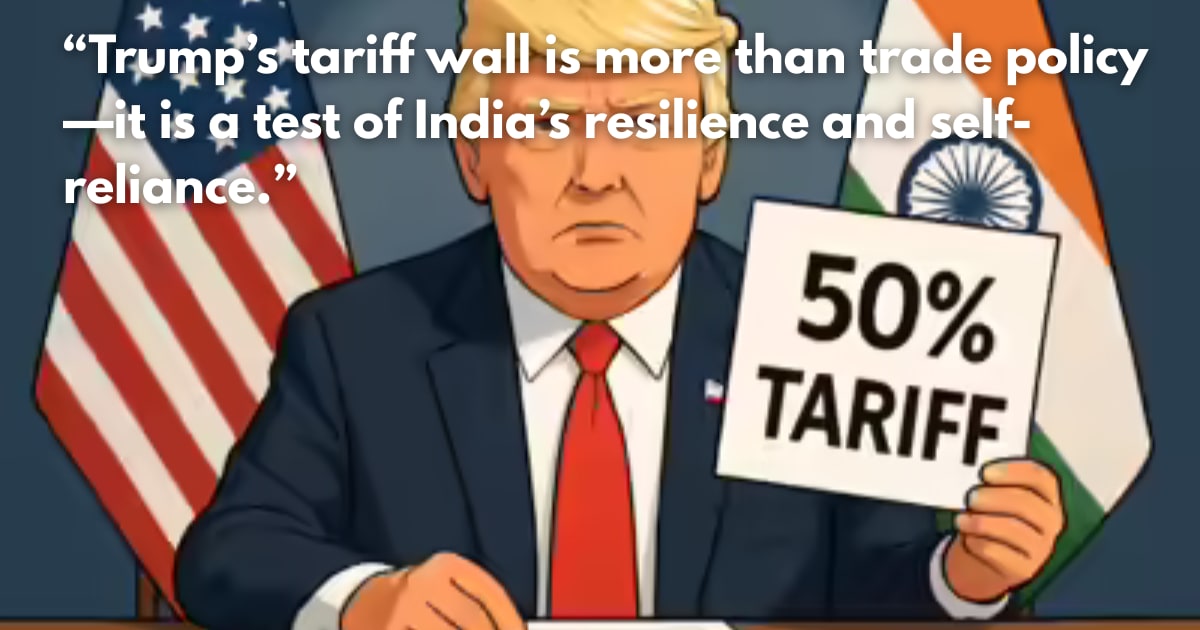


FazTimes Media: A new round of trade problems has started between India and the United States after President Donald Trump officially put a 50 percent tax on many Indian products this week. Experts say the new rate is one of the biggest tax increases in recent times, and it could hurt billions of dollars in goods and put thousands of jobs in danger in India.
According to Al Jazeera, the Trump government said the reason for raising the tax was that India kept buying oil from Russia even though Washington had warned them before. What started as a 25 per cent tax earlier this summer has now gone up to 50 per cent, which could harm India’s position in one of its most important markets.
Which Industries Are Most Affected?
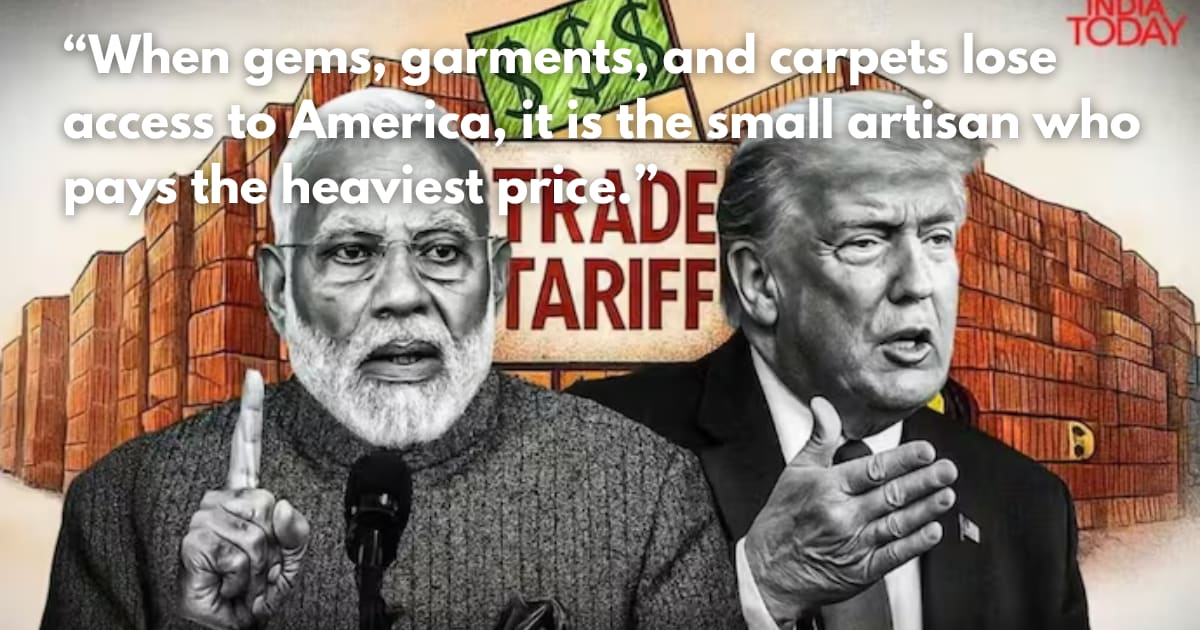
The new tax targets items like clothing, jewellery, leather goods, carpets, shoes, furniture, and some chemicals. These industries employ millions of people in India, especially those working in small businesses and family-run shops. A research group called the Global Trade Research Initiative (GTRI), based in New Delhi, says that India’s exports to the US could drop from about $86.5 billion in 2025 to almost $50 billion by 2026 if the taxes stay the same. That is a big drop of almost 40 per cent in just one year.
Industries that are hit the hardest include:
Textiles and garments: These industries, especially in states like Tamil Nadu, Gujarat, and West Bengal, employ a lot of women.
Gems and jewellery: India is known for its gem and jewellery exports, mainly from Surat and Mumbai, but it might lose out to countries like Thailand.
The new tariffs also impact industries such as seafood, carpets, and handicrafts. These traditional industries rely on exports, especially to the US, and they might face closure on a large scale. India depends a lot on the US market for these products. The new taxes make our goods too expensive to sell there. Buyers will now look to places like Vietnam, Bangladesh, or even Pakistan,” said M.K. Venu, a senior journalist, when speaking to Al Jazeera.
What Escapes the Tariff Net?
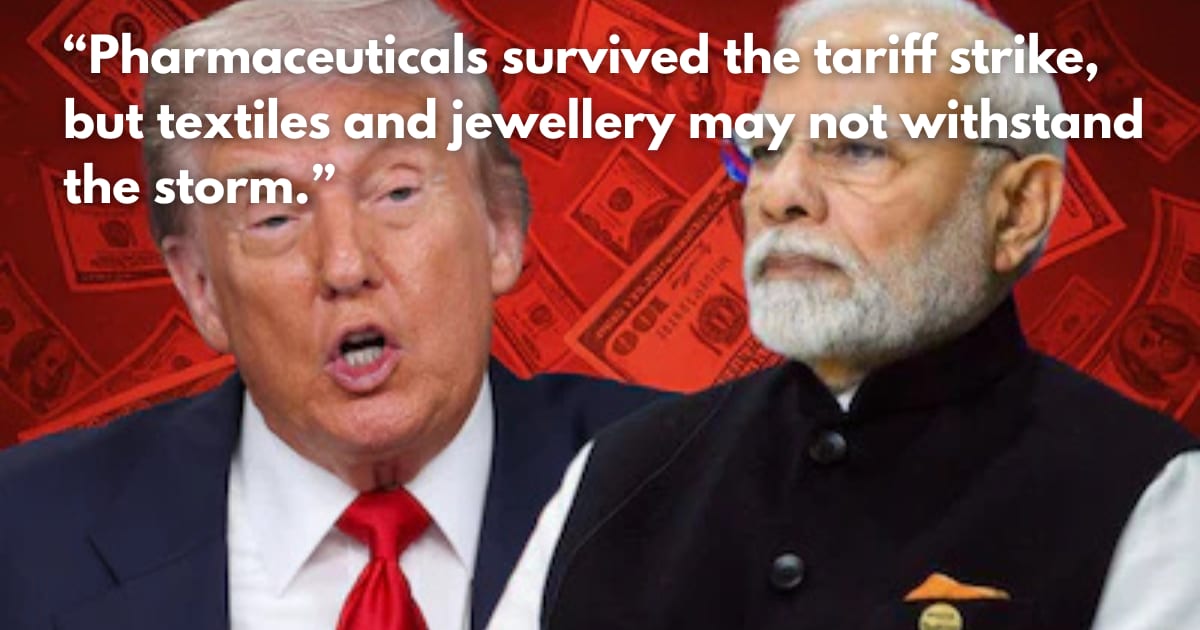
Interestingly, not all industries have been affected by the new tariffs. The tariffs still do not include Indian pharmaceutical companies that supply many cheap generic medicines to Americans. About half of the generic medicines used in the US come from India, and stopping this supply could make healthcare pricier for Americans.
Different trade rules under a broader industrial plan in the US will cover other goods such as semiconductors, steel, aluminium, and cars. But the exemption for medicines has given Indian drug makers some time to adjust.
In 2024 alone, Indian pharmaceutical companies sent about $8.7 billion worth of medicines to the US.
“This exemption shows how much the American healthcare system depends on Indian medicines,” said BBC News in its report.
India’s Response: Self-Reliance and Relief Measures
Prime Minister Narendra Modi, in his Independence Day speech earlier this month, said India must stand strong against economic challenges. He encouraged the country to become self-reliant “not because it has to, but because it wants to.”
According to Reuters, the government is already planning relief packages for exporters affected by the tariffs.
The Commerce Ministry has mentioned possible subsidies, easier access to loans, and help for businesses to move into new markets like Latin America, Africa, and the Middle East.
The Modi government has also promised tax cuts and reforms, including:
Simplifying the Goods and Services Tax (GST) could potentially benefit small businesses. Higher salaries and pensions for government workers could potentially boost domestic spending.
However, some experts are not sure. “Subsidies can only ease the problem, not fix it. The bigger question is – who will pay for these subsidies? Will it be the general public or big companies that benefited from Russian oil?” asked journalist M.K. Venu in an interview with Al Jazeera.
The Bigger Picture: Geopolitics Over Economics
At the core of Trump's decision to impose tariffs is not only trade but also political tensions between countries. The US has accused India of helping Russia by buying its oil at lower prices during the war in Ukraine. US Treasury Secretary Scott Bessent said that India's imports of Russian oil increased from 1% before the war to 37% after it started.
India has strongly denied these claims. The Ministry of External Affairs explained that these purchases are to ensure energy security for its 1.4 billion people and that Western allies like the EU still buy Russian oil.
The world is targeting India. This is more about politics than about money," said a high-level Indian trade official.
Impact on US-India Relations
Until recently, the US was India's biggest trading partner, with two-way trade reaching over $212 billion each year. However, Trump's tough tariff policies could undo years of progress in the relationship between the two countries.
Already, there are signs that India is shifting its focus. The country is working again to finalise a long-delayed trade deal with the EU, looking into new partnerships with Gulf nations, and even showing more interest in China and Russia, despite recent disagreements.
"Trust between India and the US is at its lowest in years," said Venu. "If this continues, India will move closer to BRICS and away from Western alliances."
Economic Forecasts: How Bad Will It Hurt?
Economists think the tariff shock will slow India's growth, but not by a lot. Faisal Ahmed, a geopolitics professor at the Fore School of Management, estimated the impact would be about 1% of GDP. Similarly, Teresa John from Nirmal Bank told Reuters that India could lose around $36 billion, which is about 0.9% of GDP. While the situation is tough, it doesn’t mean India's growth will completely stop.
Earlier this year, the IMF predicted India's GDP growth would be 6.4% in 2026. Despite the tariffs, India's GDP growth may slow down, yet it remains one of the world's fastest-growing economies.
Farmers, Trade Disputes, and What Comes Next
Trump has often pointed out that India has high trade barriers, especially in agriculture. The US government says India’s average farm tax is 39 per cent, while in the US it is only 4 per cent. Washington wants India to let more American farm and dairy products into the country, but Prime Minister Modi has not changed his position. Earlier this month, he said, “India will never give up on our farmers’ interests.”
This disagreement makes it difficult to reach an agreement. Currently, Indian exporters might face losses, and the government is working hard to help the affected industries.
Conclusion
The new 50 per cent taxes have made it harder for India to reach its trade goals and have affected its relationship with the US. While the pharmaceutical industry remains unaffected, industries such as textiles, jewellery, and handicrafts are bracing for significant sales declines.
At the same time, New Delhi is being encouraged to look for other trade partners, speed up its self-reliance plans, and think again about how much it depends on the US market. Whether these steps can stop the damage is still unclear.
As reported by BBC News, the next few months will show how well India can handle these challenges and keep growing while dealing with political issues. One thing is clear: the trade conflict has changed the direction of India-US relations, and the effects could be felt around the world for a long time.
Our primary goals at FazTimes Media are to be accurate and confident and adhere to the highest journalistic standards. We check every news story we share against several trustworthy and separate sources to ensure its accuracy.
We have reviewed this report, along with articles from major news outlets worldwide, including BBC News, Reuters, Bloomberg, Al Jazeera, NDTV, The Economic Times, and The Indian Express.
We want to keep the highest standards in global journalism so that our readers can trust the information they acquire.


Discussion0
Join the conversation on this story
Loading comments...