
Life Paralyzed in Jammu as Highway, Rail Services Shut for 5th Day
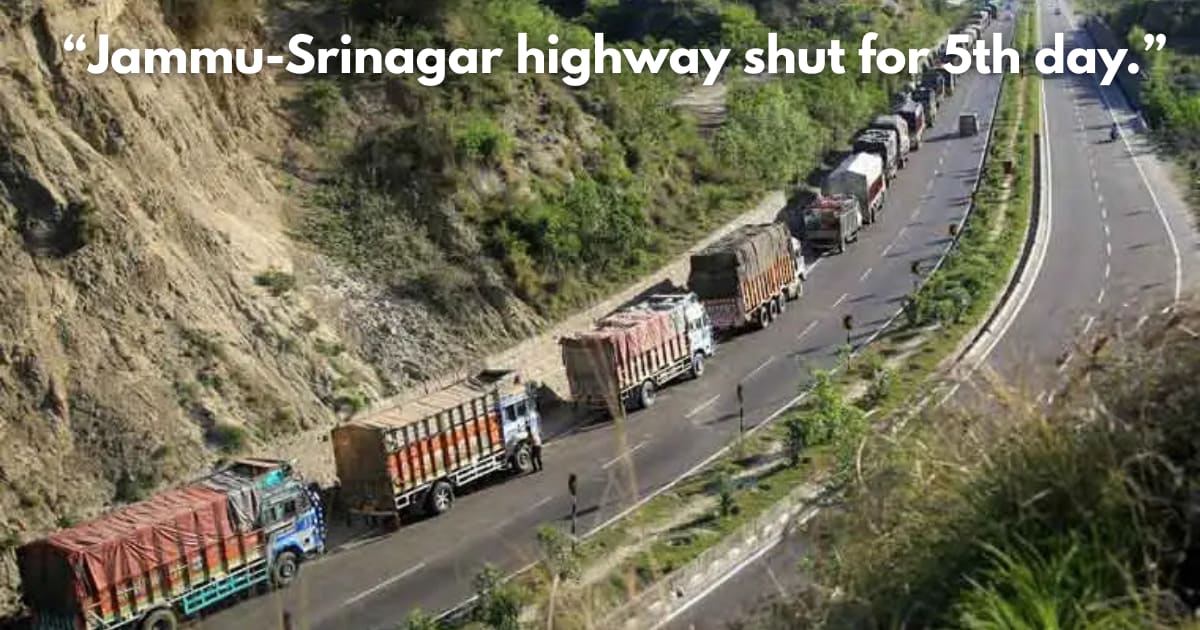


Faztimes Media, Jammu, August 30 – Life in the Jammu region has come to a standstill as the important Jammu-Srinagar National Highway remains closed for the fifth day in a row. This has left thousands of people stuck and essential supplies trapped along the 270-kilometre stretch of the road. The long disruption has stopped daily activities and made people very frustrated, with no clear time set for the road to be fully opened again.
Traffic officials said the highway, which is known as the “lifeline of Kashmir,” is blocked in several places between Jakhani and Chenani in Udhampur district. A senior traffic official said, “The work to fix the road is still not done. No vehicles will be allowed to move from Nagrota to Reasi, Chenani, Patnitop, Doda, Ramban, Banihal, and Srinagar until we give more orders.”
The Deputy Commissioner of Udhampur, Saloni Rai, said on Saturday that efforts are continuing to clear the road. “We are doing everything we can to restore the connection, and there is hope that some traffic might start moving again by late evening,” she said.
Alternative Routes, But Limited Relief
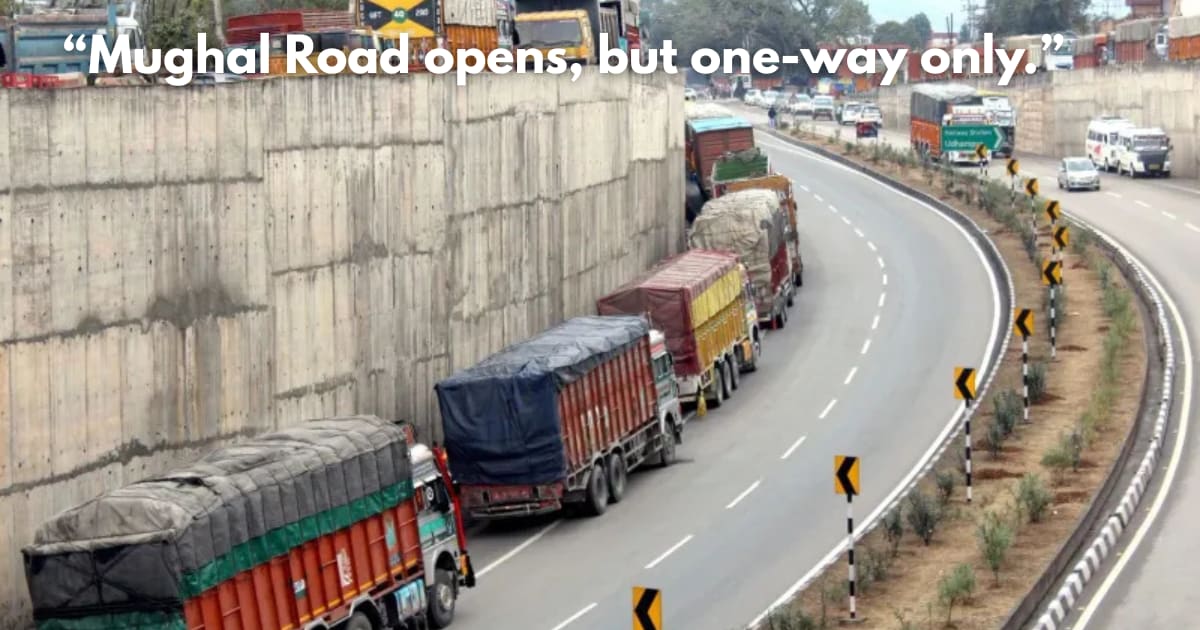
Since the main highway is blocked, authorities have directed vehicles to use the Mughal Road that connects Poonch with Shopian. However, this route is only open for one-way movement because of its poor condition, causing traffic jams and long lines of vehicles waiting to pass.
Drivers stuck on the road are upset about the slow progress. “We have been stuck for hours. Could the government allow two-way movement? It would at least help reduce the waiting time,” said Nazir Ahmed, a truck driver transporting vegetables to Srinagar.
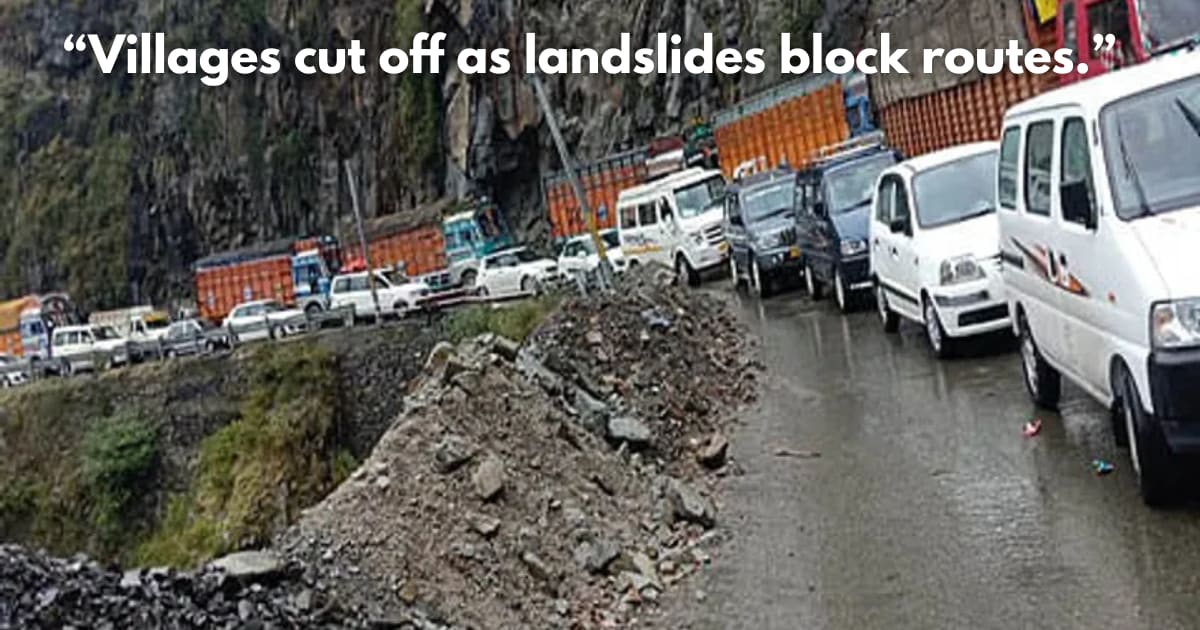
The Kishtwar-Sinthan-Anantnag road is also working, but only for small vehicles. Many villages in the interior are still cut off because of landslides and damaged roads. Local authorities have warned people in affected areas to stay inside their homes unless they really need to travel.
On the Jammu-Pathankot highway, which connects Jammu to Punjab, the situation is also bad. One tube on each of the Lakhanpur-Madhopur and Sahar Khad bridges has been badly damaged, forcing traffic to use only the remaining lanes. Long delays are being reported, especially for trucks carrying important goods.
Rail Network Suffers Heavy Blow
The railway system, which is often used when highways are blocked, has also been hit hard. Heavy rains and soil erosion have damaged many railway bridges and tracks, causing train services in the area to almost stop completely.
Some of the worst-hit structures are Bridge No. 17 between Kathua and Madhopur, and Bridge No. 137 between Hiranagar and Ghagwal. Railway officials say that fully repairing the double-track network could take three to four weeks.
Since Tuesday, no regular passenger or freight trains have been running from Jammu, Katra, or Udhampur stations. Only two special trains were briefly operated on Wednesday and Thursday to handle emergencies. Officials say that partial repair of one track might allow some special services to start running on Saturday evening. Two trains, one heading to Uttar Pradesh-Bihar and another to Delhi, are planned to leave from Jammu as a test run.
Work on Bridge No. 163 near Chak Rakwal is also almost finished. If everything goes well, the Katra-Jammu route might be open for short-distance services by Sunday.
Residents Struggle with Shortages
The long-term disruption has started to affect daily life in Jammu and Kashmir. Some parts of the Valley are reporting a lack of fresh vegetables, dairy products, and other essentials. Although there are still enough supplies, fuel stations are worried that shortages could happen if the highway remains closed for a long time.
“We are already paying much higher prices for basic items. Tomatoes that were ₹40 per kilo last week are now ₹80. If the road isn’t cleared soon, we’ll have to rely entirely on what’s locally available,” said Mushtaq Khan, a shopkeeper in Anantnag.
Students and people who go to work are also affected. Several exams planned for this week had to be delayed, and patients needing treatment outside Jammu can’t travel. “I have a medical appointment in Delhi, but my train was cancelled. Flights are too expensive, and the uncertainty is really scary,” said 58-year-old Sunita Devi from Udhampur.
Meteorological Warnings Add to Concerns
The India Meteorological Department (IMD) has predicted light to moderate rainfall over the Jammu division up to September 2. However, some areas might experience heavy rain and thunderstorms. The department has also warned about possible flash floods, landslides, mudslides, and falling rocks in high-risk areas.
People have been warned to stay away from rivers, streams, and mountain roads. “Even though work is being done to clear roads, more heavy rain could damage these efforts,” said a disaster management official. Al Jazeera reports that the region's weak geography makes it very vulnerable to such issues. Highways and railways often get blocked by landslides caused by the weather. Experts say the need for stronger, climate-proof infrastructure in Jammu and Kashmir is more urgent than ever.
Voices from the Ground
The situation has made people angry because they feel the government is not helping enough. Civil society groups and transport organizations are asking the government to build better, long-term routes and stronger infrastructure to prevent repeated road closures.
“Each year, we face the same problem. Can the government think about building tunnels or using better technology to keep the highway open? Our economy and lives rely on this road,” said Abdul Majid, a transporter from Ramban.
Meanwhile, shopkeepers in Jammu City are seeing fewer customers as supplies are not reaching the area regularly. Some hotels have also lost bookings from tourists who can't get to the region.
Government’s Response
Government officials say they are doing everything possible to bring things back to normal. Heavy machinery is being used in risky areas, and teams are working day and night to remove debris. The National Disaster Response Force (NDRF) is also ready for any emergency.
Foreign Secretary-level officials in Delhi have been informed about the situation because the highway is important for moving security forces and supplies to remote areas. BBC News says the Jammu-Srinagar highway is not just important for civilians but also a key military route, making it even more important to fix it quickly.
Looking Ahead
Some relief is expected once one railway track is fixed and the highways are repaired, but the event shows how important it is to plan for the future. Experts think building tunnels that work in any weather, updating bridges, and strengthening embankments can help reduce the yearly problems caused by heavy rains.
For the people in Jammu and Kashmir, the main worry is still about staying safe and being able to move around. Until the roads and railways are completely open, the area will keep facing challenges, both in terms of money and daily life.
As one passenger stuck at Jammu railway station said, “We’re not just waiting for a train or bus; we’re waiting for life to return to normal.”
Our primary goals at FazTimes Media are to be accurate and confident and adhere to the highest journalistic standards. We check every news story we share against several trustworthy and separate sources to ensure its accuracy.
We have reviewed this report, along with articles from major news outlets worldwide, including BBC News, Reuters, Bloomberg, Al Jazeera, NDTV, The Economic Times, and The Indian Express.
We want to keep the highest standards in global journalism so that our readers can trust the information they acquire.


Discussion0
Join the conversation on this story
Loading comments...