
Hyderabad Man Duped of ₹72 Lakh in 'Digital Arrest' Cyber Fraud


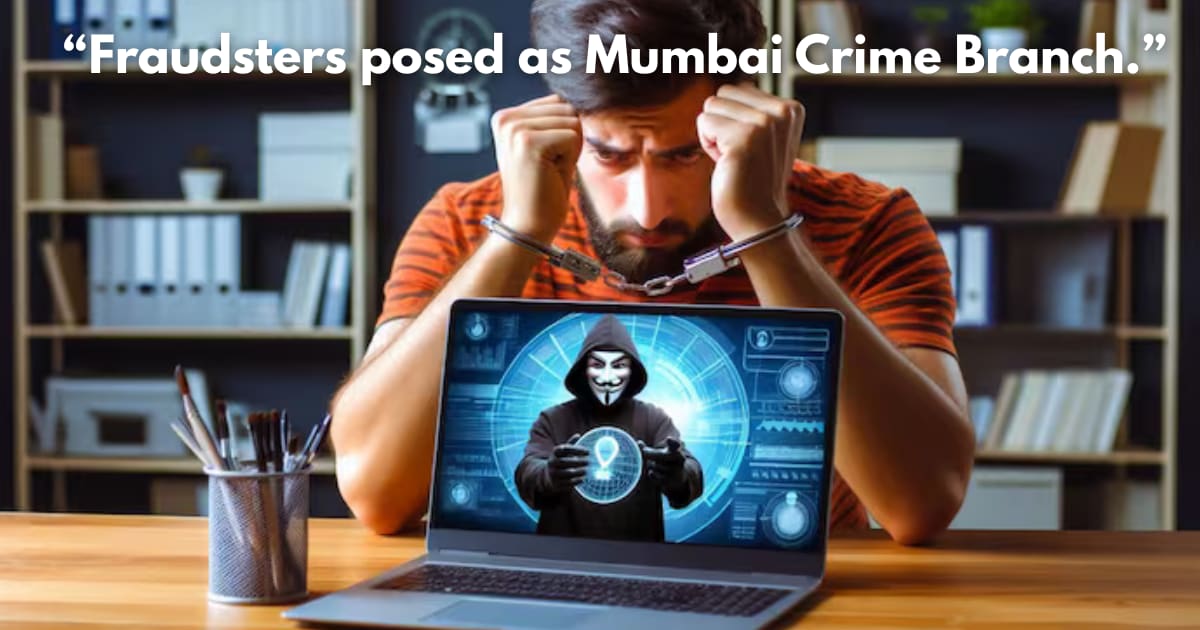




FazTimes Media: A shocking example of how cybercriminals are getting more clever has left an 82-year-old man from Hyderabad’s Banjara Hills area with a huge loss of ₹72 lakh. The scam involved something called a “digital arrest”, which is a scary trick used by fraudsters. The victim, who used to have a professional job, was tricked for more than 10 days by criminals pretending to be high-ranking police officers. On 11 August, the story began when the man unexpectedly received a video call on WhatsApp. On screen was a man dressed in a police uniform, who introduced himself as an officer from the Mumbai Crime Branch.
He informed the elderly man that he was implicated in a significant money laundering case. The fraudster claimed that there was a suspicious bank account linked to the elderly man's Aadhaar details and that his name appeared on the list of accused individuals. To make it worse, the man was told he would be arrested and taken to court if he didn’t follow their instructions.
The criminals then put the man under a “digital arrest.”. This meant he was asked not to leave his home, not to talk to his family, and not to call friends or lawyers. He was warned that if he tried to break these rules, there would be an “immediate police raid” and he would be arrested in person.
To build fear, the fraudsters even showed fake official documents and video clips of what they called “court proceedings”. The next day, the man was pushed to give a false statement before what he was told was the Supreme Court of India. In reality, it was just a fake video call set up by the scammers.
The Financial Drain
In just 10 days, some criminals tricked an old man into thinking he had to send a lot of money to prove he wasn’t guilty until an “investigation” was done. He was feeling very stressed and confused, so he sent ₹72 lakh into several bank accounts given to him by the criminals. He believed he was acting correctly by assisting a legitimate law enforcement investigation and chose not to inform his family or relatives about it.
The criminals discovered the scam when they demanded more money. The man then realised something wasn’t right, and he finally told the police in Hyderabad about what happened.
Cybercrime Police Investigating
The police at the Narayanaguda Cybercrime Police Station said they are looking into the case. A senior officer said early information shows the group used several linked bank accounts and fake call centres. Criminal networks based outside Telangana, possibly even overseas, may have connections to these accounts.
“The scams are getting more clever every day. Elderly people are especially at risk because criminals use their fear of the police and lack of knowledge about online fraud,” the officer said.
Could you please explain what a digital arrest scam is?
In this scam, criminals pretend to be police officers or judges, making the victim petrified. They tell the victim that their identity has been used for crimes like money laundering, drug dealing, or sending money abroad.
They’re forced to send money to “safe” accounts.
According to BBC News, similar scams have happened in China, where people were kept on video calls for days, making them feel like prisoners in their homes. Criminals exploit this solitary time to manipulate the victim's thoughts and actions.
Experts are warning about the increasing prevalence of digital arrest scams in India, particularly in cities with high digital banking usage. Al Jazeera reports that police in many Asian countries are seeing that groups of cybercriminals are targeting professionals, older people, and business owners.
A cybersecurity expert based in Hyderabad, “Scammers are using clever tricks to trick people’s minds. They don’t just take personal information—they take control of the victim’s digital world. That makes the scam very effective and difficult to notice until it’s too late.”
These scams not only cause financial loss but also leave lasting emotional and mental harm. For older people, being tricked by someone pretending to be a law enforcer can be very painful.
The victim's neighbour described him as a quiet and respected man who was wary of strangers.
“It’s heartbreaking to see someone his age being taken advantage of like this,” said a resident. “He was so scared that he didn’t even tell his family until it was too late.”
The Hyderabad Police are asking the public to be cautious when getting calls from unknown numbers, especially if the caller claims to be from the government or police. “No police officer or court official will ever ask for money transfers over the phone or through WhatsApp,” said a police official. “If someone gets such a call, they should hang up immediately and report it to the nearest police station or the 1930 Cybercrime Helpline.”
The police have also provided some digital safety tips:
Do not share personal details like Aadhaar or PAN over the phone.
Teach elderly family members about these scams.
Larger Implications
According to data from the National Crime Records Bureau (NCRB), the number of cybercrime cases in India has gone up by almost 25% compared to the previous year, and most of these cases are about financial fraud.
Conclusion
The ₹72 lakh fraud in Hyderabad is a clear example that careful people can be tricked by cybercriminals when they are scared.
According to BBC News, many Asian countries are already dealing with the problem of "digital arrests".
For India, it's time to take this threat seriously before more people are hurt by criminals who hide behind screens and phones.
Our primary goals at FazTimes Media are to be accurate and confident and adhere to the highest journalistic standards. We check every news story we share against several trustworthy and separate sources to ensure its accuracy.
We have reviewed this report, along with articles from major news outlets worldwide, including BBC News, Reuters, Bloomberg, Al Jazeera, NDTV, The Economic Times, and The Indian Express.
We want to keep the highest standards in global journalism so that our readers can trust the information they acquire.


Discussion0
Join the conversation on this story
Loading comments...