
Chicago Mayor Defies Trump, Bars Police from Aiding Federal Troops


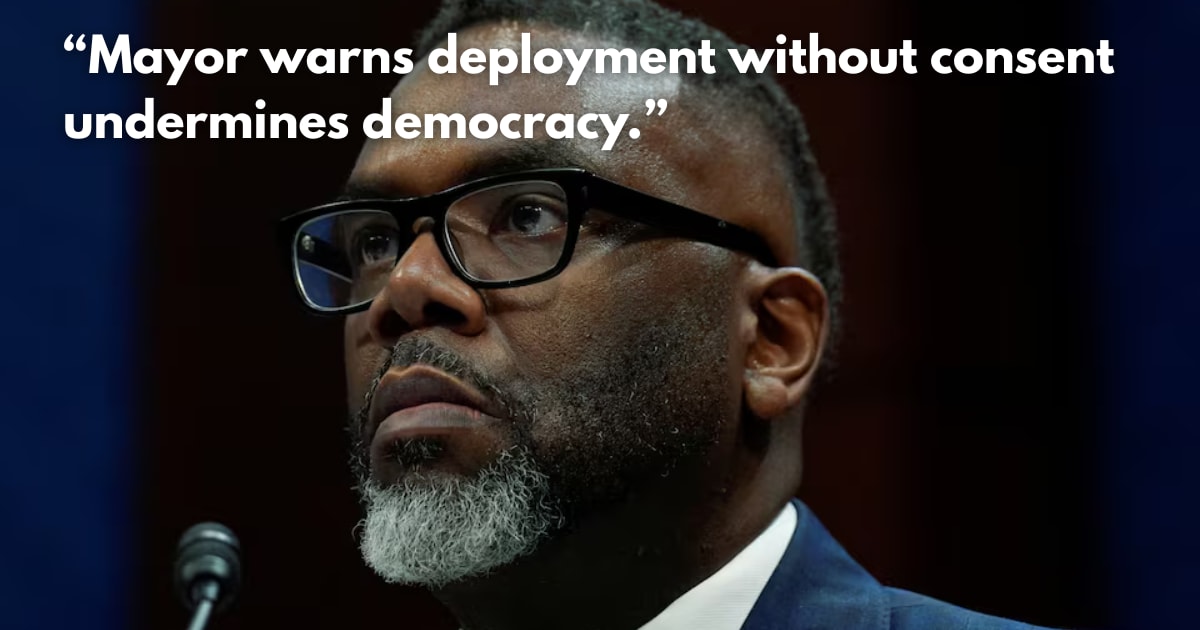


FazTimes Media, Chicago, Aug 31 – A new conflict has started between the city of Chicago and the White House after Mayor Brandon Johnson said that local police will not work with federal troops or agents if President Donald Trump goes ahead with his plan to send them. Standing with city leaders, Johnson signed an executive order on Saturday, explaining how Chicago’s government will react if National Guard units or federal officers are sent without state or local permission. “This is about getting ready and protecting our rights,” Johnson told reporters. “We are making it clear to everyone working in this government and every resident of Chicago how to stand up against this kind of interference.”
The order says that Chicago police will continue doing their normal jobs as required by state and city laws, but they will not take part in joint patrols, arrests, or surveillance with federal forces. Officers are told to wear their official uniforms clearly, use body cameras, and avoid masks that might make it hard to tell who is from local or federal authorities.
“This deployment hurts our independence, breaks down democratic rules, threatens civil rights, and could make things worse instead of better,” the order states.
A Struggle Between Federal and Local Authorities
This action is the most recent example of the ongoing disagreement between federal and local governments about who has control over law enforcement. President Trump has focused on targeting cities run by Democrats, blaming their leaders for not doing enough to fight crime. He often points to Chicago, the third-largest city in the U.S., in his speeches.
BBC News reports that Trump claims his involvement is needed to “bring peace” to cities with high crime rates, even though Chicago police data shows a big drop in murders and shootings in recent years.
Burglaries have also decreased.
Mayor Johnson and Illinois Governor J.B. Pritzker argue that crime is a complicated issue that should be handled by local strategies, not by sending in federal officers who might not know the community well. Pritzker, also a Democrat and a possible 2028 presidential candidate, said the president cannot send troops into Illinois without the governor’s agreement.
“This is not Washington, D.C.,” Pritzker said, referring to the federal district where Trump previously took over local policing. “In Illinois, the law is clear. The president can’t use military force without state permission.”
Echoes of Earlier Federal Deployments
Trump has already sent federal troops to cities like Los Angeles and Washington under the claim of fighting crime and protecting federal property. These actions led to strong complaints from local leaders and civil rights groups, who said the administration was making things worse and using military-style force against peaceful people.
According to Al Jazeera, when federal agents came to Portland last year, there were nightly fights. Critics warned that these deployments make it hard to tell the difference between police and military forces. Chicago officials are worried something similar could happen if their city is next.
Civil rights groups say that having federal agents in the streets can confuse people, as it's difficult to tell them apart from local police. This, they say, makes it harder to hold people accountable and makes communities less trusting of law enforcement.
Community Response: Fear, Frustration, and Determination
For many Chicago residents, the mayor's decision is a sign of support. Local activists and neighbourhood groups have been getting ready for weeks, holding meetings on legal rights and how to protect their communities if federal agents come.
“Chicagoans have lived through many years of not being understood or treated fairly by people from outside the city,” said community organiser Rosa Martinez. “We don’t need federal agents to tell us what safety means. Safety means jobs, schools, and healthcare—not soldiers on our streets.”
At the same time, some business owners and residents are worried about rising crime and are wondering if more police might help. “I just want my shop to be safe,” said Ahmed Khan, a small business owner in South Chicago. “But I also don’t want to see our neighbourhoods turned into war zones.”
White House Pushback
The White House quickly disagreed with Johnson’s decision. In a strongly worded statement, spokeswoman Abigail Jackson said Democrats were just playing politics instead of solving crime. “If these mayors spent less time doing publicity stunts and more time fixing their cities, America would be much safer,” she said.
Trump has often said he would like cities to ask for federal help on their own, but has also threatened to send it anyway. “If they won’t protect their communities, we will,” he said in a recent speech.
Legal experts note that while the president can't send the National Guard without permission, he has the power to send federal law enforcement officers like ICE or ATF agents. This gap could let the administration increase its presence in Chicago without breaking state laws.
Legal and Political Implications
Mayor Johnson said Chicago is ready to stand up against any federal government action in the courts if needed. “We will use every tool we have—legal, legislative, and community-based—to protect the rights of our people,” he stated.
Experts believe this disagreement could become a major test of the Constitution, showing how much power local governments have compared to the federal government. According to reports from The New York Times, previous presidents usually avoided confrontations with cities to keep law enforcement relationships strong. However, Trump has shown he is more willing to push those limits.
Politically, this conflict might influence national discussions before the next election. Democrats claim that Trump is using fear of crime to win votes, while Republicans say Democratic mayors are not doing enough to keep citizens safe.
What Lies Ahead for Chicago?
Right now, Chicagoans are staying alert. Some reports suggest federal action might happen within days, but nothing is certain yet. The mayor’s order, though symbolic, has already inspired local resistance and shown how city police will act if federal forces come in.
The city is also reaching out more to community leaders to avoid confusion and spread false information. “We want people to know exactly what to expect,” said Johnson. “Being clear is our way to stop confusion.” If federal agents do arrive in Chicago, there could be more conflicts between local and federal goals.
Experts warn that the biggest danger isn’t just legal fights but also rising tensions on the streets, where even small mistakes could lead to bigger problems.
Conclusion
Chicago’s disagreement with the federal government highlights the ongoing discussion about how much power the federal government should have in American cities. While Trump sees this as a matter of law and order, Mayor Johnson and his supporters see it as a fight for democracy, local control, and community trust.
As reported by BBC News, the country is watching closely to see if Chicago becomes the next major conflict in the growing struggle between city governance and presidential power.
For Chicago residents, the main question is not just about politics but about everyday life—whether their streets will be patrolled by local officers or by federal agents, and how that change might affect their city in unexpected ways.
One thing is clear: the discussion has already placed Chicago at the centre of a national debate about democracy, public safety, and how much power a president should have.
Our primary goals at FazTimes Media are to be accurate and confident and adhere to the highest journalistic standards. We check every news story we share against several trustworthy and separate sources to ensure its accuracy.
We have reviewed this report, along with articles from major news outlets worldwide, including BBC News, Reuters, Bloomberg, Al Jazeera, NDTV, The Economic Times, and The Indian Express.
We want to keep the highest standards in global journalism so that our readers can trust the information they acquire.


Discussion0
Join the conversation on this story
Loading comments...