
NASA Rover Finds 'Megaripples' on Mars, Proving Shifting Soil
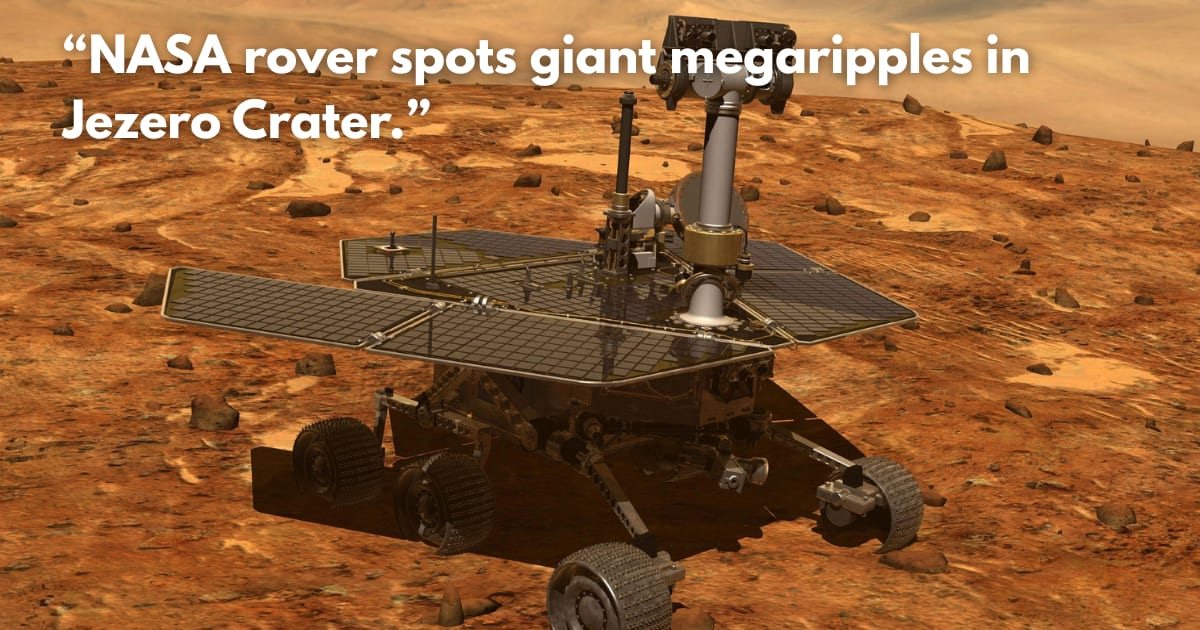

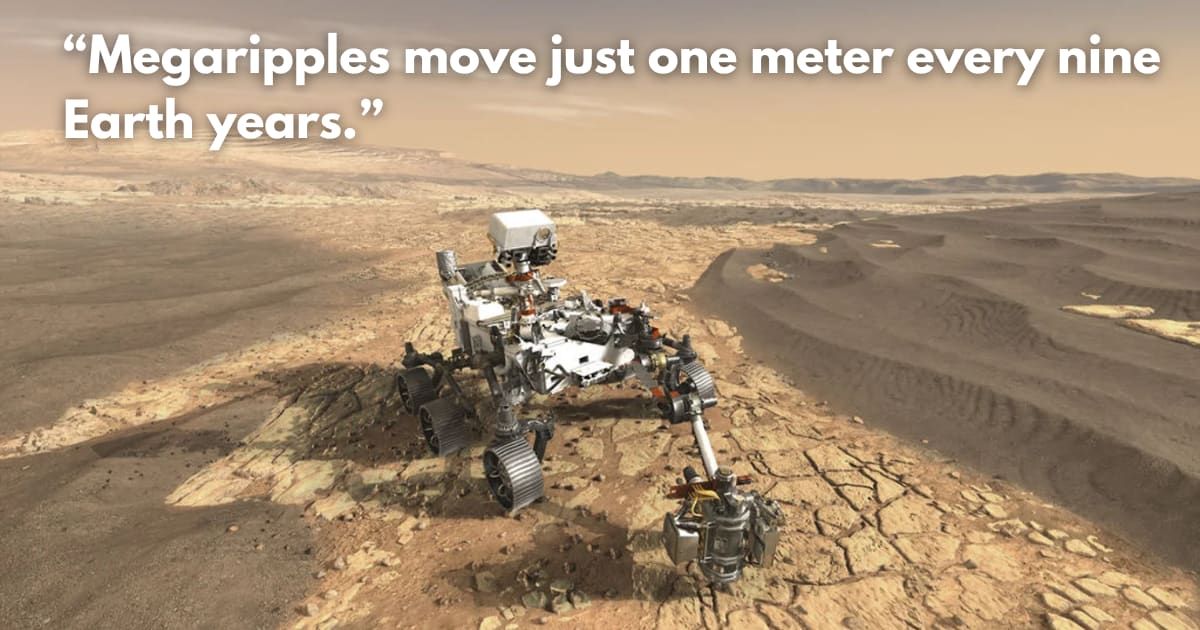


FazTimes Media, Science and Space: The Perseverance robot from NASA has found something else amazing on Mars. At the Jezero Crater, the rover found large sand domes, known as "megaripples." The results are strong proof that the surface of Mars is still changing due to wind. There are beautiful pictures and accurate measurements in the new findings. In ways we can't see with our own eyes, they help scientists learn more about how Mars is still changing over time.
What Do Megaripples Mean?
Megaripples are lines of sand that are made by the wind. They are a lot bigger than the little waves you see on the beach. The height of these peaks on Mars is almost a metre, or three feet. Furthermore, they're not as big as Mars's big dunes, making them a unique type of landform on the planet.
These shapes aren't new, according to scientists. They were likely made a long time ago, when Mars's atmosphere was thicker and its winds were stronger. As the years went by, many of them stopped moving, got brittle, or were covered by bigger grains. There are still some of these peaks moving, though, as Perseverance's find shows.
"At Kerrlaguna, the ripples look almost frozen in time," researchers said. "However, they are slowly moving forward at a very slow rate—about one metre per nine Earth years."
A Moving Landscape
The rover found these ridges in Jezero Crater, in a sandy spot called Kerrlaguna. "The past is written in stone on Mars, but the present is written in sand," NASA said. Now we know that the sand patterns help us figure out how the surface of Mars is still changing.
BBC News says that the moving sands are important proof that Mars is not a "dead planet" but is still being changed by things like wind and weather.
The Tools That Helped Find
Perseverance possesses some of the most advanced scientific tools ever sent to another planet. The rover's SuperCam and Mastcam-Z cameras were used to get clear shots of the megaripples at Kerrlaguna. These shots show the texture, the sand grain spread, and the ripple distance.
This information is important for human exploration.
Scientists think that studying the dirt could help them figure out if Martian sand can be used to build things. It is easier to decide where to build on Mars if you know how the sand moves. Space geologist Dr Matthew Golombek said, "Every ripple tells us a story." "Reading these sand-filled records helps us understand how Mars' weather has changed over time and how it is still changing now."
Ancient Weather, Lessons for Today
Many people think of Mars as a "cold desert", but it wasn't always that way. There is proof that Mars had rivers, lakes, and maybe even seas billions of years ago. Its atmosphere thinned out over time, leaving behind a frozen world with strong winds.
Perseverance discovered megaripples, which are remnants of these changes. The shape of these ripples evokes memories of periods when the winds were more powerful or when frost and ice interacted with the dirt grains.
Get ready for bigger problems to come.
People think that the rover will find ripples and dunes that are even bigger than before. The increased size will give experts more chances to study them. Scientists at NASA are looking for the best places to get dirt samples that could be sent back to Earth on a future mission to Mars. These samples could tell us more about Mars's history, its rocks, and maybe even about life there.
Our primary goals at FazTimes Media are to be accurate and confident and adhere to the highest journalistic standards. We check every news story we share against several trustworthy and separate sources to ensure its accuracy.
We have reviewed this report, along with articles from major news outlets worldwide, including BBC News, Reuters, Bloomberg, Al Jazeera, NDTV, The Economic Times, and The Indian Express.
We want to keep the highest standards in global journalism so that our readers can trust the information they acquire.


Discussion0
Join the conversation on this story
Loading comments...