
'Brahmins Profiteering': Trump Aide's Controversial Remark on Russian Oil

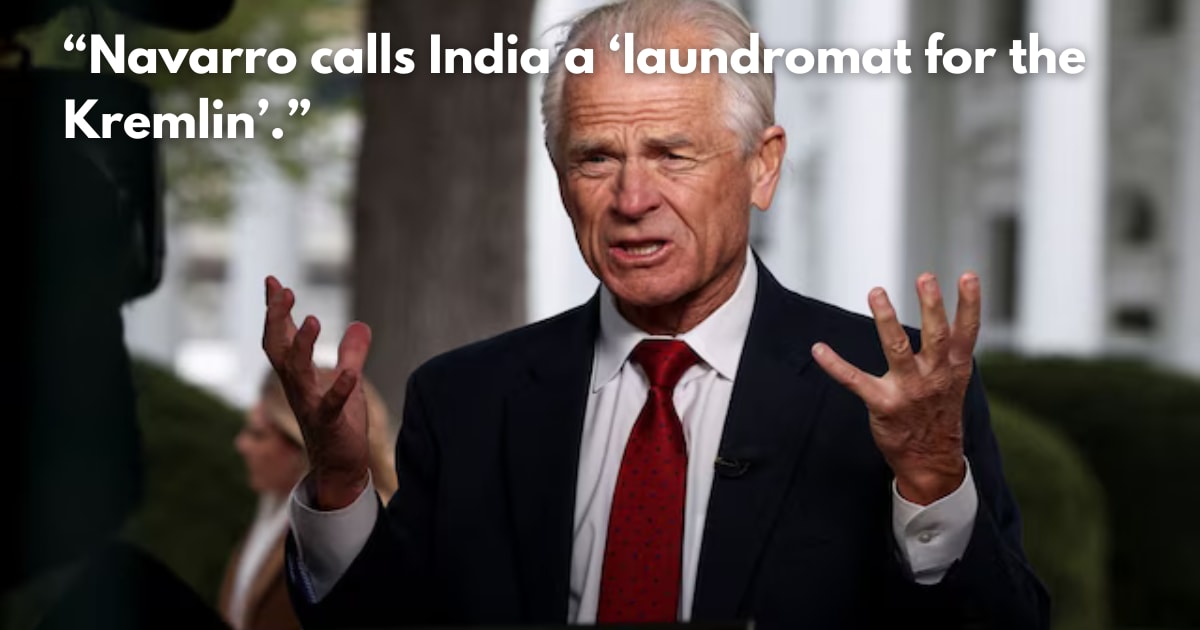

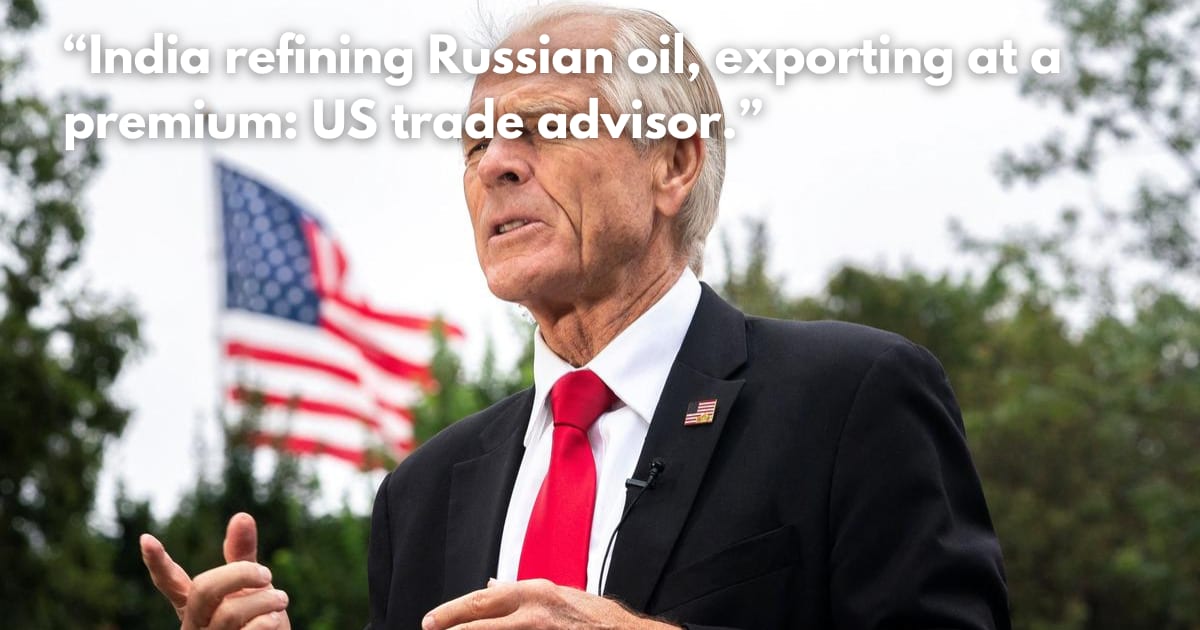


FazTimes Media | Washington/New Delhi: A new controversy has come up in international relations after Peter Navarro, the former trade adviser to US President Donald Trump, strongly criticised India for buying Russian oil at lower prices. Navarro, speaking in Washington, said that India's rich and powerful people are taking advantage of the energy crisis for their own benefit, saying they are "making money at the cost of ordinary Indians."
His remarks have caused heated discussions both in India and around the world, bringing up important topics like class differences, politics between nations, and how India is trying to stay balanced between different big powers.
India in Navarro's Focus
Navarro's comments were harsh and unusual. He claimed that India is importing crude oil from Russia at lower prices, processing it, and then selling the finished products to European countries at higher prices. He said this makes India act like "a money laundering centre for the Kremlin".
Navarro said, "You have Brahmins making money at the expense of the Indian people." We need that to stop," a statement that has become widely shared online.
His use of the word "Brahmins" has sparked significant backlash due to its perceived racially and culturally offensive nature. Many in India believe it was inappropriate to bring up caste issues in a simple conversation about energy and trade.
Timing of the Comments: Modi is in China for the SCO Summit.
Navarro made these comments just as Prime Minister Narendra Modi arrived in Tianjin, China, for the Shanghai Cooperation Organisation's (SCO) Summit. Modi's visit, along with Russian President Vladimir Putin and Chinese President Xi Jinping, has caught the attention of Washington, where officials are concerned about possible closer relationships between the three major countries.
This is Modi's first visit to China in seven years, and it happens at a sensitive moment for India's foreign policy.
BBC News reports that the SCO event is being carefully watched by Western countries, which are worried it might become a stronger group challenging US influence in the Eurasian region.
The Oil Equation
Reports indicate that India is now one of the biggest buyers of Russian oil. It refines a lot of it in its own refineries and then sells diesel, petrol, and jet fuel to international markets, including European countries that don’t want to buy directly from Russia.
Navarro’s Wider Worries
Navarro also brought up India’s trade with Russia in relation to the war in Ukraine. He said that by buying and processing Russian oil, India is indirectly supporting Moscow’s war efforts. Navarro said, “It kills Ukrainians… What actions are required from us as taxpayers? We’ve got to send them more money,” while defending the U.S. government’s continued support for Ukraine.
He also warned that India’s relationship with Russia and China might “weaken global stability”, which is a concern for the United States as it tries to maintain its influence in the region.
Reactions in India
India has had a variety of responses to Navarro’s comments—some furious, some amused, and some dismissive. Political experts say that Navarro’s remark about “Brahmin profiteering” oversimplifies a complicated issue and unfairly labels India’s energy policy as profit-driven.
Experts also point out that India’s energy choices are made by the government, state-owned companies, and private refiners, based on market conditions, not just by a few people. The Financial Times interviewed a senior energy economist in New Delhi.
"India cannot be criticised for obtaining cheaper oil, especially when inflation is a widespread issue." The U.S. may not like it, but for India, affordable energy is about survival, not making a profit.”
A Diplomatic Tightrope
Prime Minister Modi being present with both Putin and Xi at the SCO meeting adds to the ongoing diplomatic situation. On the other hand, India depends a lot on Russian military equipment and gets oil at lower prices from Russia.
Reuters reports that the US has privately asked India to limit its energy trade with Russia but has not directly imposed sanctions on New Delhi.
The Caste Remark Controversy
Some commentators believe it's not appropriate for a US official to bring up caste in an international energy discussion.
Final Thoughts
Navarro's comments show how India's choices are no longer considered separate but as part of a bigger global picture where each decision has its consequences. One thing is clear: the debate over Russian oil is not just about oil and trade numbers—it's about identity, geopolitics, and what India's future role will be in a world that is divided.
As BBC News reported, the Modi-Putin-Xi meeting at the SCO Summit may show new alliances, but India's next steps will require careful diplomacy and strong decisions at home.
Our primary goals at FazTimes Media are to be accurate and confident and adhere to the highest journalistic standards. We check every news story we share against several trustworthy and separate sources to ensure its accuracy.
We have reviewed this report, along with articles from major news outlets worldwide, including BBC News, Reuters, Bloomberg, Al Jazeera, NDTV, The Economic Times, and The Indian Express.
We want to keep the highest standards in global journalism so that our readers can trust the information they acquire.


Discussion0
Join the conversation on this story
Loading comments...