
Jarange's Maratha Quota Fast: Police Order Protesters to Vacate Azad Maidan


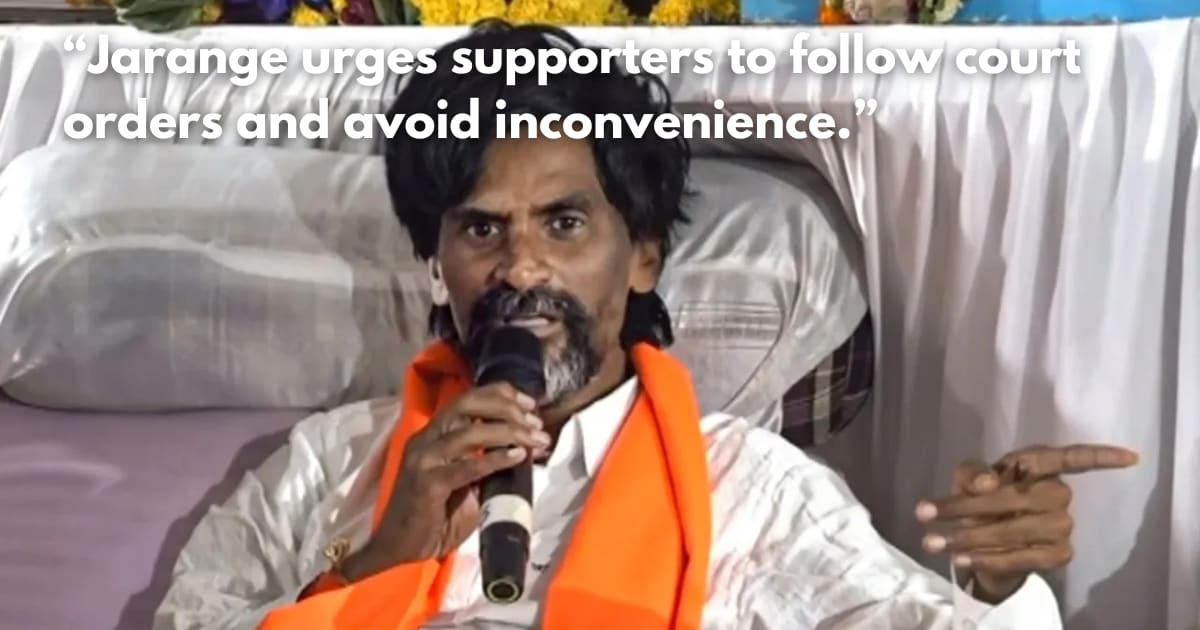


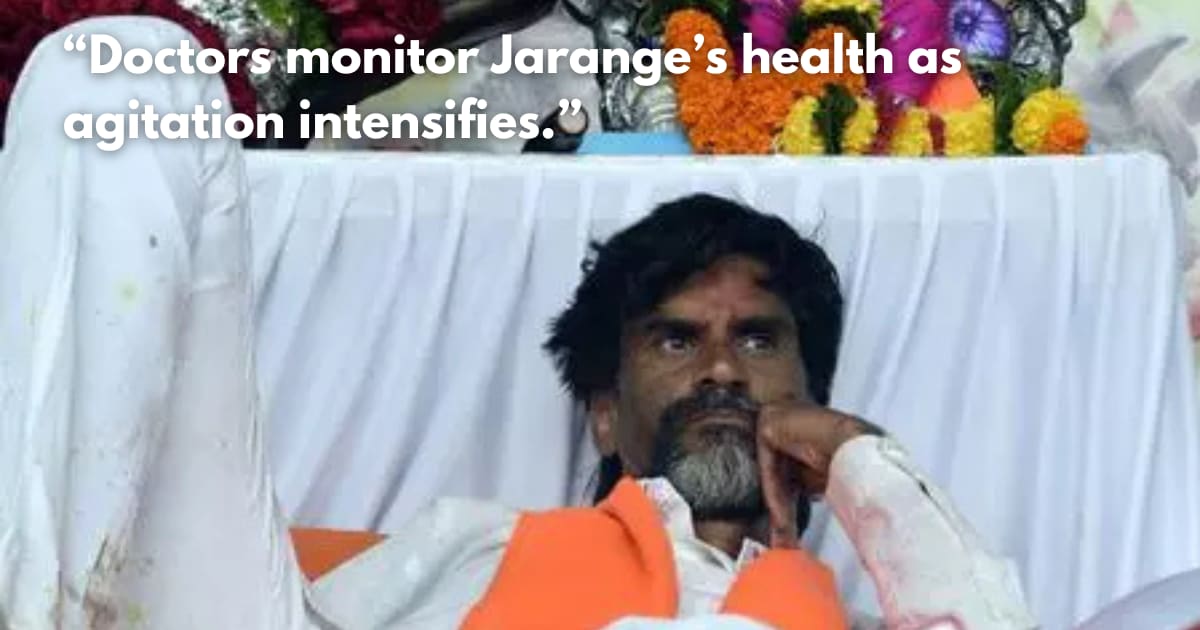
FazTimes Media, Mumbai, September 2: The protest led by activist Manoj Jarange demanding a Maratha reservation quota has now been going on for five days straight at Azad Maidan. Tensions are very high between the protesters, the state government, and the courts. On Tuesday, the Mumbai Police issued a notice to Jarange and his group, telling them to leave Azad Maidan as per the Bombay High Court’s latest order.
This has once again brought the long-standing issue of Maratha reservation into the headlines. People, travellers, and the government are all dealing with the large number of protests in Mumbai, which is the financial hub of India.
Court Steps In
On Monday, during a special court session, the Bombay High Court showed serious concern about the impact of the ongoing protest. The court, with Judges Ravindra Ghuge and Gautam Ankhad, said that Mumbai had been almost completely stopped because the demonstrators had gone beyond the allowed area for protests.
The court declared that the demonstrators had violated all the pre-protest rules. They gave one last chance to fix the situation and told the streets to be cleared and cleaned by noon the next day.
The judges also mentioned that protesters had moved into important places like the Chhatrapati Shivaji Maharaj Terminus (CSMT), Churchgate station, and even the Marine Drive area. The court said, “We cannot stop life in Mumbai.” It also warned that protesters should not be using public streets for bathing, cooking, or toilet needs.
The court also told the Maharashtra government to make sure that no more protesters come into Mumbai in the coming days. They warned that there would be strict legal action if the situation got worse.
Jarange’s Firm Stand
Even though there is a lot of pressure, Jarange, who is 43 years old, has continued his hunger strike since August 29. On Monday, he made his protest more noticeable by refusing to drink water. Later in the evening, he had a few sips of water while speaking to his supporters after the High Court shared its comments.
Jarange said to the crowd, “We are not here to trouble the people of Mumbai. I ask all my supporters to stay peaceful and stick to the allowed protest area. But we want the government to know that we will not stop until justice is achieved.”
Jarange’s main goal is to have the Marathas recognised as part of the Other Backward Class (OBC), which would give them benefits like reservations in education and government jobs. He claims the government is intentionally delaying a decision that could be made quickly.
He explained, “It’s simple. If the state agrees to the Hyderabad, Satara, and other gazetteers, then all Marathas in Marathwada can be considered Kunbis. District collectors and tehsildars can issue certificates right away.”
Government’s Balancing Act
Maharashtra Chief Minister Devendra Fadnavis said his government respects the court’s instructions and is looking for a legal solution. “We are committed to finding a solution that will work in court. But we also can’t let normal life in Mumbai come to a stop,” he said.
The state’s Advocate General, Birendra Saraf, told the High Court that the protesters were only allowed to protest until August 29, and that all the terms of that agreement have now been broken. Saraf warned, “If Jarange is right and many more people are coming to Mumbai, the government will have to prepare for a possible law and order problem.”
Public Sentiment and Local Impact
Many people in Mumbai feel for the Maratha community's long-standing demands, but there's a lot of frustration in the city. Heavy traffic, issues at railway stations, and blocked roads plague commuters. Al Jazeera reports that the use of public areas for protests has upset people in South Mumbai.
Protesters have set up temporary camps near famous places. Shopkeepers in Churchgate say their businesses have dropped a lot recently. At the same time, there is strong support for Jarange in rural Maharashtra, especially in Marathwada, where the Maratha community has been asking for reservations for many years. A farmer from Jalna, who came to Mumbai to support Jarange, said, “Our patience is running out. We would rather not cause trouble for regular people, but the government only listens when we speak up loudly.”
Historical Context of the Maratha Quota Demand
The Maratha community, making up about a third of Maharashtra's population, has long fought for reservations in jobs and education. This has led to several protests in the past ten years. In 2018, the state government gave 16% reservation to Marathas under the SEBC category. But in 2021, the Supreme Court stopped this, saying it broke the 50% reservation limit.
Since then, the focus has shifted to giving Marathas OBC status, especially under the “Kunbi” category, which already gets reservations. The challenge is balancing legal issues with meeting the community's needs.
Political Reactions
Political parties are being careful about how they respond. The Mahayuti alliance, led by the BJP, Shiv Sena, and NCP (Ajit Pawar group), is pressured to find a solution before the protests get worse. Opposition leaders are accusing the government of being slow. “This isn’t just a political issue; it's about social justice,” said Congress leader Balasaheb Thorat. “The government should act quickly, not wait for the courts to decide.”
Health Concerns and the Court’s Warning
Doctors checked Jarange on Monday and found he was worn out and not getting enough water. The High Court has told the state to provide urgent medical help if his condition gets worse. BBC News reports that health workers are worried that continuing to fast could put Jarange’s life in danger. This might also cause a bigger political problem in Maharashtra.
The court also suggested that if the activist refuses to accept treatment, the state might have to think about force-feeding him to save his life. But such actions usually create a lot of controversy.
The Road Ahead
As of Tuesday morning, there is still a lot of uncertainty at Azad Maidan. Will Jarange comply with the court's orders and relocate the protest to the designated area, or will he continue to test the government's patience?
Right now, Mumbai's primary objective is to restore normal life while safeguarding the people's right to protest. For the state, the bigger challenge is finding a solution that is legal, accepted by society, and politically possible for the Maratha quota demand—a demand that is still forceful.
Conclusion
The issue of Maratha reservations is no longer just about the community or the state—it is now a test for India’s democracy. It involves balancing fairness, the law, and keeping order in society. As one person said, “This is not just a question of quotas; it is about dignity and being recognised.”
Right now, everyone is watching Azad Maidan, where a hunger strike by an activist has once again sparked a debate that Maharashtra has been dealing with for many years.
Our primary goals at FazTimes Media are to be accurate and confident and adhere to the highest journalistic standards. We check every news story we share against several trustworthy and separate sources to ensure its accuracy.
We have reviewed this report, along with articles from major news outlets worldwide, including BBC News, Reuters, Bloomberg, Al Jazeera, NDTV, The Economic Times, and The Indian Express.
We want to keep the highest standards in global journalism so that our readers can trust the information they acquire.


Discussion0
Join the conversation on this story
Loading comments...