
AI Stethoscope Detects Heart Problems in 15 Seconds: A UK Breakthrough
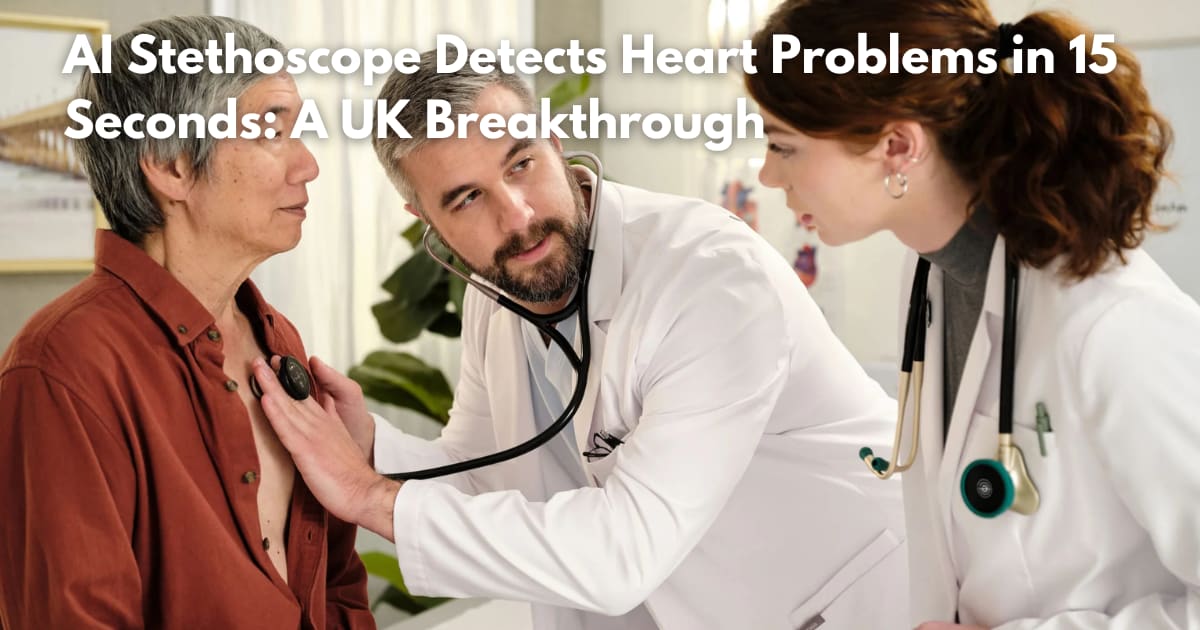
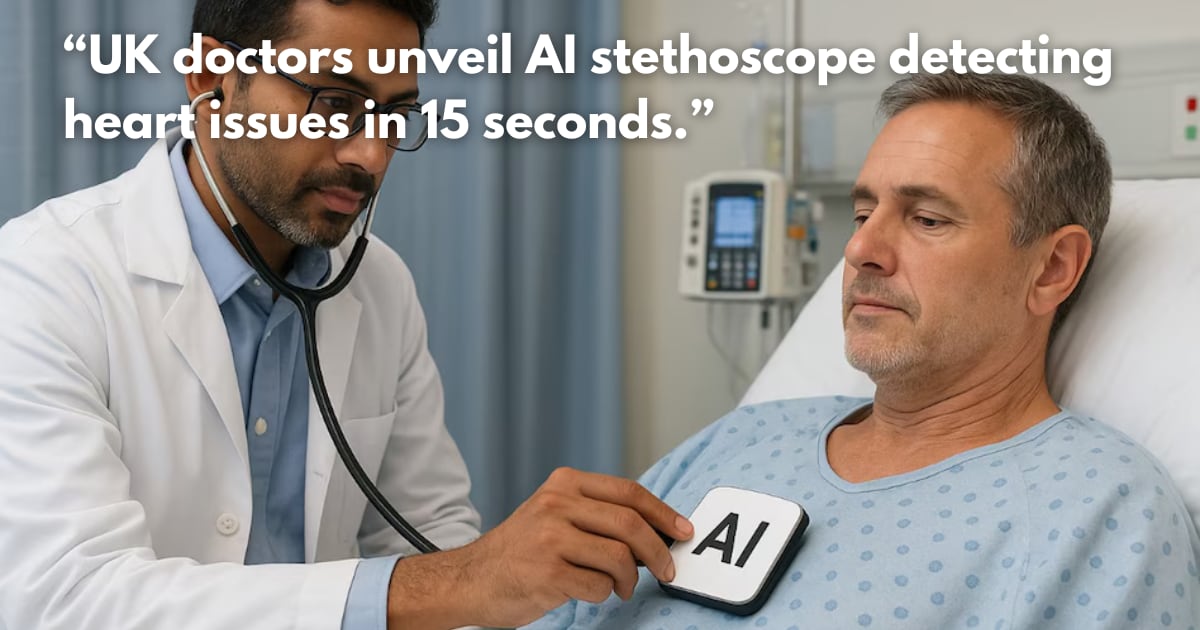


FazTimes Media, London, September 2025 – Using artificial intelligence, researchers have redesigned the stethoscope, one of the most famous medical tools for over 200 years. A group of doctors and researchers in the UK has created an AI-powered stethoscope that can detect serious heart problems in just 15 seconds. The result, according to experts, is a significant shift in the diagnosis of heart diseases.
A 200-Year-Old Tool Meets AI
The first stethoscope was made in 1816 by a French doctor called René Laennec. For a long time, doctors used it as their main tool for checking the heart. But even though it was crucial, the design didn’t change much over the years.
Now, according to BBC News, a team from Imperial College London and Imperial College Healthcare NHS Trust, supported by the British Heart Foundation and the National Institute for Health and Care Research (NIHR), has developed a new version of the tool. They showed it off at a major cardiology conference in Madrid, which received a lot of attention.
Dr Patrik Bächtiger, a heart doctor working on the project, said:
“The design of the stethoscope hasn’t changed much in 200 years. With AI, we can now run a 15-second test that gives doctors quick and clear information about a patient’s heart. This technique could change how we diagnose heart problems faster and more accurately.”
How the Device Works.
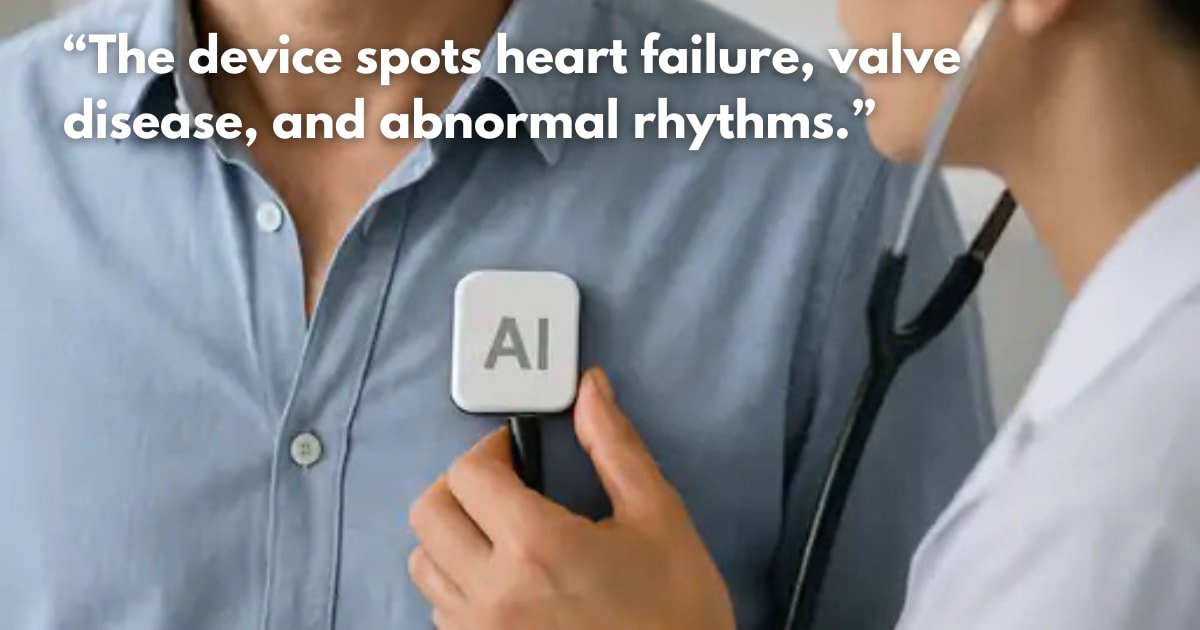
The stethoscope, made by a medical tech company in California called Eko Health, has a flat, rectangular chest piece instead of the usual round shape. It connects to high-quality earbuds and a smartphone app. When it’s placed on a patient’s chest, it records the heart’s electrical activity through an ECG and also listens to the sound of blood moving. This data is sent right away to a secure cloud server where AI looks at the information. In just a few seconds, the results come back to the doctor’s phone, showing whether the patient might have conditions like irregular heartbeats, valve problems, or early signs of heart failure.
As Al Jazeera reported, this technology isn’t meant to take the place of regular check-ups, but it is recommended for people who already have symptoms like shortness of breath, irregular heartbeats, or unusual tiredness.
Why This Matters for Patients
Heart disease is still the main cause of death around the world. In India, it causes more than 28% of all deaths every year, as reported by government health data. One of the main problems doctors face is that many heart conditions develop without clear signs, making them difficult to detect early.
The new AI-powered stethoscope might change the landscape by helping find problems much earlier. Early detection lets doctors start treatment with medicine, suggest lifestyle changes, or plan surgery before the condition gets too serious.
Dr Bächtiger said this innovation could help connect patients with faster treatment:
“Finding these conditions early gives better chances of survival and improves the quality of life. With this tool, doctors can notice problems during a regular check-up, instead of waiting for costly scans or delayed referrals.”
A Potential Game-Changer for Rural Healthcare
Though the device has been tested in UK hospitals, experts believe it could be even more useful in developing countries like India, where there are few heart specialists and advanced equipment in rural areas.
A senior doctor at AIIMS, New Delhi:
“Think of a village doctor using this AI stethoscope. He can quickly determine whether a patient requires immediate transfer to a larger hospital. This invention could save thousands of lives in rural India, where people often travel for hours to see a heart specialist.”
The device can also connect to smartphones, allowing results to be shared instantly with specialists worldwide. For the first time, this enables remote diagnosis.
Challenges and Concerns
Experts have also expressed concerns about data privacy, given that the cloud analyzes patient information. Ensuring security and following strict medical rules will be important before this tool is used widely.
The Road Ahead
Even with these challenges, there's a lot of excitement about the AI stethoscope. Researchers think that in the next ten years, these kinds of devices might become common in hospitals and clinics all around the world.
The British Heart Foundation, which helped fund this research, called it “a big step toward combining traditional medicine with new technology.”
Dr Bächtiger said:
“We don’t think this will replace doctors, but it can help them. A quick 15-second check that shows possible heart problems could stop years of pain and save billions in healthcare money.”
Local Relevance for India
For people in India, this is a big deal. Heart disease is increasing fast because of stress in cities, unhealthy eating habits, and not enough exercise. We really need tools that can find heart problems early.
If the AI stethoscope comes to India, it could:
Help health workers in villages where there are no heart specialists.
Lessen overcrowding in hospitals by knowing which patients need more tests.
Give general doctors tools that can give them insights similar to specialists.
Save lives by finding heart issues before they become life-threatening.
As technology changes healthcare, the hope is that these kinds of tools won’t only be in rich hospitals in Europe and America. They should also reach the people who need them most in India’s towns and villages.
Our primary goals at FazTimes Media are to be accurate and confident and adhere to the highest journalistic standards. We check every news story we share against several trustworthy and separate sources to ensure its accuracy.
We have reviewed this report, along with articles from major news outlets worldwide, including BBC News, Reuters, Bloomberg, Al Jazeera, NDTV, The Economic Times, and The Indian Express.
We want to keep the highest standards in global journalism so that our readers can trust the information they acquire.



Discussion0
Join the conversation on this story
Loading comments...