
'Halal Township' Controversy: BJP Leader's Remarks Fuel Intolerance Debate


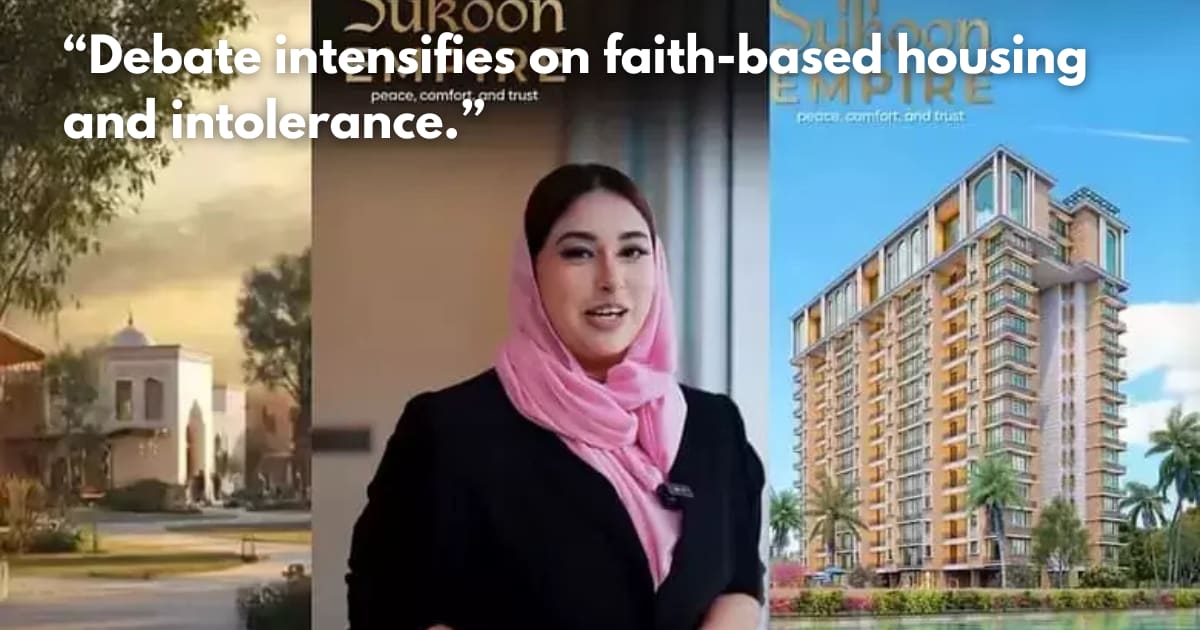
FazTimes Media, Karjat: A small town close to Mumbai has become the centre of a big national discussion after a housing project called a “halal lifestyle township” was marketed only to Muslim buyers. What started as an advertisement for a residential area turned into a debate involving religious identity, unfair treatment in housing, and political differences.
However, when the video went online, it caused many different reactions. Some people saw it as a beneficial idea in a country where Muslims sometimes face unfair treatment when trying to rent or buy homes in areas mostly populated by Hindus. Others critiqued it, saying it was a harmful attempt to separate people and could make religious conflicts worse.
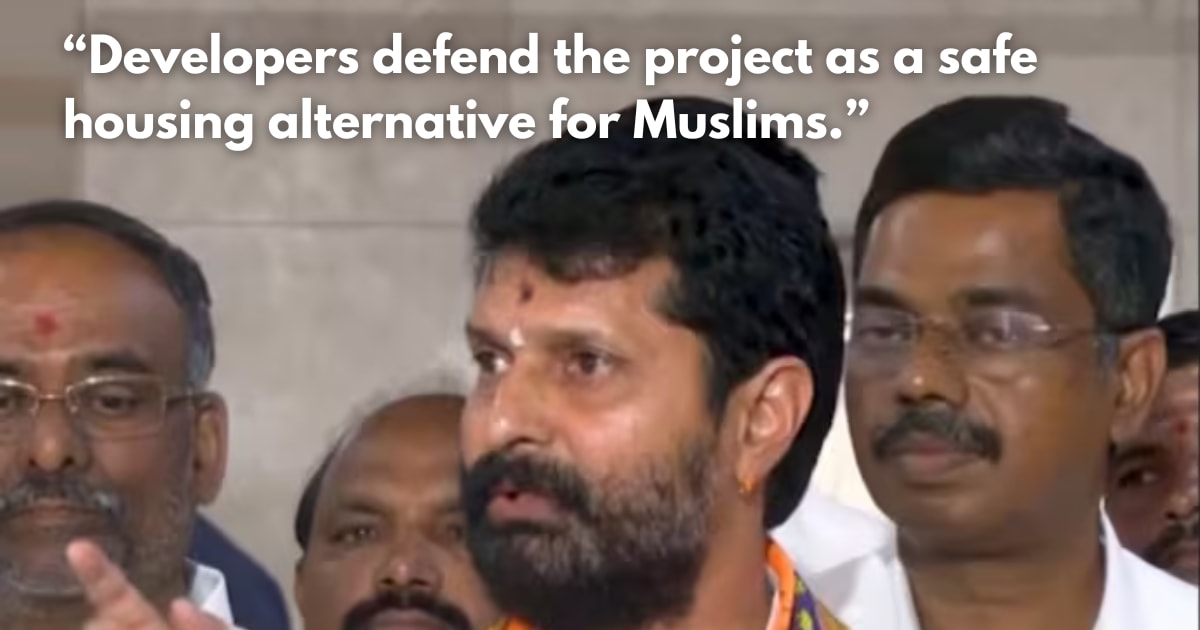
The situation got even more serious after Priyank Kanoongo, a member of the National Human Rights Commission (NHRC) and also associated with the Bharatiya Janata Party (BJP), shared the video on his social media on September 1. He asked the Maharashtra government to look into the developers and take legal action. According to The Siasat Daily, Kanoongo wrote that these types of projects “threaten social harmony” and should not be supported.
Housing Discrimination: A Hidden Problem in Urban India
To understand why this township caused such strong reactions, it's important to look at the long-term problem of unfair treatment in housing in India. Many studies and news reports have shown that Muslims, Dalits, and other groups often have trouble finding homes to rent or buy in certain parts of cities.
A report from BBC News earlier this year showed that in cities like Mumbai, Delhi, and Ahmedabad, Muslims are often refused housing because of their religious background. Landlords often express a clear preference for not accepting Muslim tenants. Some housing societies have unspoken rules that stop non-Hindu buyers from joining.
For many Muslims, then, these special residential projects aren’t about separation—it's about finding a place where they are not judged or turned away because of their faith. “When doors keep closing on us, what else do we have but to build our own doors?” asked a social media user who supported the Sukoon Empire project.
The Political Angle: Housing Disputes Fuel Polarisation
The timing of this controversy is also important. Maharashtra is approaching a politically sensitive period, and issues related to the community often become topics of discussion. Critics say that the objections by BJP leaders about the township are part of a bigger story that shows Muslims as creating separate identities.
Supporters of Kanoongo say that India’s Constitution does not allow creating housing societies based only on religion. They say that if Hindu or Christian projects are banned, so should Muslim-only housing. A BJP spokesperson said during a recent TV debate, “This is not about discrimination against Muslims; it is about keeping people united and avoiding religious groups living separately.”
Al Jazeera reports that religious-based housing segregation has been prevalent in many Indian cities for decades, albeit not always openly discussed. The Sukoon township has simply made this hidden issue more visible.
Social Media Divided Over Alleged Housing Discrimination Case
As with many controversies in today’s India, social media became the place where people argued. Hashtags supporting and opposing the township were trending on X (formerly Twitter). Those against the project called it “gated segregation”, saying it could make communities more distrustful of each other.
Supporters, however, pointed out that Muslims often don’t have a choice but to live in regular societies, making such exclusive projects a form of self-protection rather than isolation. One post said, “When Muslims are not allowed to live in other places, they are told, ‘Go build your own.’ However, when Muslims create their own communities, those efforts are also met with opposition. Could you please clarify what the critics are seeking?
Another said, “Imagine if someone announces a ‘Hindu-only’ township. Wouldn’t the same people defending this project call it communal?” The divide is clear, with both sides accusing each other of being hypocritical.
Developers’ Defence: Justifying Their Role in Housing Projects
The promoters of Sukoon Empire have defended their project, saying it wasn’t about exclusion but about offering comfort for a particular cultural group. In an interview with a local Marathi channel, one of the developers said, “We are not saying others cannot live here. We are just highlighting features that appeal to Muslim families. Just as some communities promote Jain kitchens or vegetarian-only policies, should we consider supporting halal-friendly facilities?”
This comparison with Jain housing societies that only allow vegetarians is important. In cities like Mumbai, there are many “vegetarian-only” apartments where non-vegetarians are not allowed. Courts have had mixed opinions on such restrictions, but they are common in practice.
Experts Weigh In on Housing Policies, Laws, and Social Equity
Urban policy experts say the issue is more complicated than it seems. Dr Ramesh Narayan, a sociologist from Mumbai University, says, “This isn’t just about one community. It’s about the bigger problem of our society not giving everyone equal chances to get a home. When discrimination happens a lot, people from minority groups often make safe places for themselves. But when these places become official, they look like segregation, which makes people worried.”
Mental health experts also say that being constantly refused housing can make people feel rejected. A report from The Indian Express says that young Muslim professionals often feel embarrassed when they are turned down for flats even though they have the money and qualifications to rent. One person said, “It’s not about being able to pay; it’s about being treated fairly.”
Legal Questions Surrounding Housing Rights and Discrimination
From a legal standpoint, the situation isn’t clear. Indian laws say discrimination in housing based on religion, caste, or gender is not allowed. But these rules aren’t enforced well. Legal experts say that if a housing area is officially called a “halal lifestyle” community, it could face legal problems for indirectly pushing people out. But it’s difficult to prove that these areas are discriminatory unless they outright refuse people of other religions.
Broader Implications
The Karjat township issue is more than just a local story—it points to bigger problems about what India might become. Can communities create safe places without being considered separate from the rest of society? Should we work on stronger laws and better enforcement to stop housing discrimination instead of just letting minorities cope with it?
BBC News says that when people don’t mix with others in housing, it can cause long-term issues. Simultaneously, causing minorities to feel unwelcome in certain areas can engender anger and intensify feelings of exclusion.
Conclusion: Understanding the Larger Impact of the Housing Dispute
The Sukoon Empire's halal township has become a symbol of two different stories in modern India.
Our primary goals at FazTimes Media are to be accurate and confident and adhere to the highest journalistic standards. We check every news story we share against several trustworthy and separate sources to ensure its accuracy.
We have reviewed this report, along with articles from major news outlets worldwide, including BBC News, Reuters, Bloomberg, Al Jazeera, NDTV, The Economic Times, and The Indian Express.
We want to keep the highest standards in global journalism so that our readers can trust the information they acquire.


Discussion0
Join the conversation on this story
Loading comments...