
US Job Growth Stalls as Trump Policies Impact Labor Market
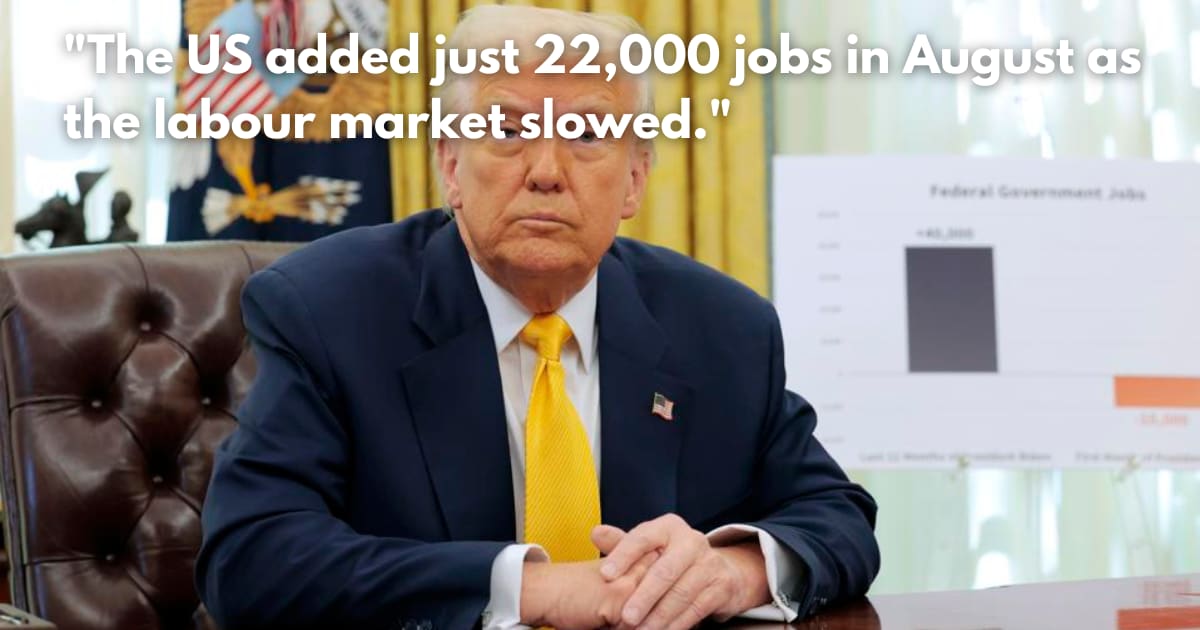


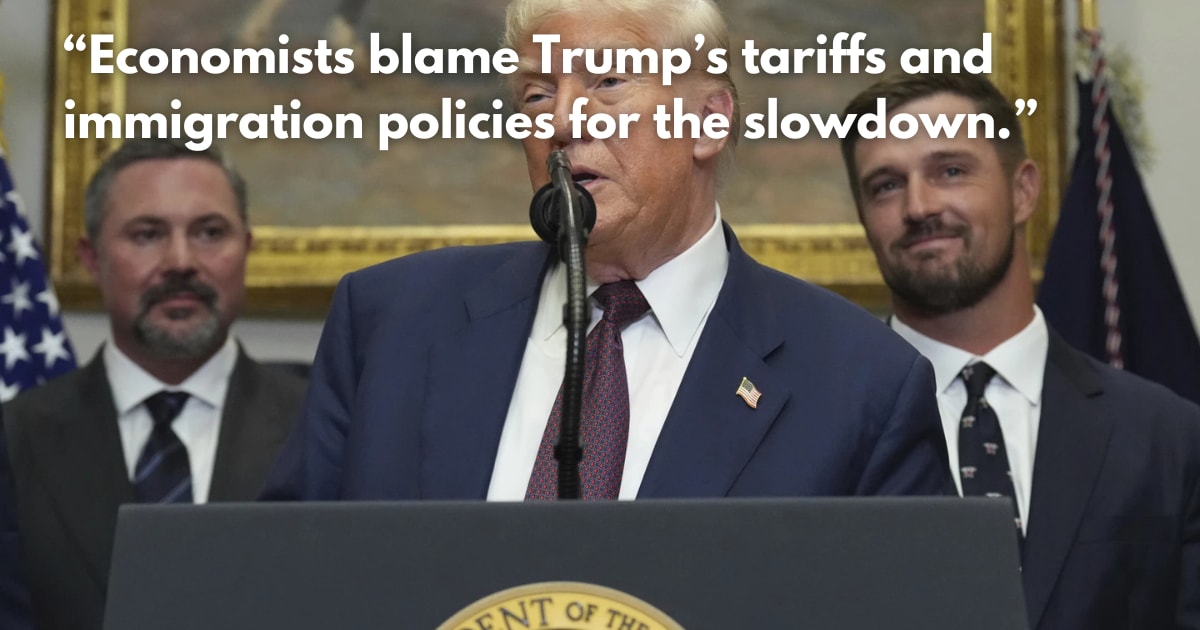


FazTimes Media, Washington, D.C.: The U.S. job market, which used to show the economy was strong, is now showing signs of trouble. New government data from Friday said that companies only added 22,000 jobs in August, and the number of people without jobs rose to 4.3 per cent. Experts say this suggests that President Donald Trump’s economic plans—like the tariffs on imports and stricter rules on immigrants—are making businesses less confident and less likely to hire.
The U.S. Department of Labour said the job gains were spread out in different areas. While healthcare and social services contributed to job growth, the government, manufacturing, and energy sectors offset these gains with losses.
The report shows growing worry that the American economy, which started the year well, is now slowing. Al Jazeera reports that many experts think tariffs and tighter immigration rules are weakening the job market.
A Fragile Jobs Picture: Weak Employment Growth Raises Concerns
The numbers from August show a mixed story. Sectors like construction, retail, and hospitality only added a few jobs. At the same time, big job losses happened in areas that depend on international trade. Manufacturing lost 12,000 jobs, and oil and gas companies lost 6,000. The federal government also lost 15,000 jobs.
“Another bad jobs report because of tariffs,” said Skanda Amarnath, the head of Employ America and a former Federal Reserve economist, as reported by Al Jazeera. “Manufacturing jobs are dropping considerably, and so are other trade-related businesses like mining and wholesale trade.”
Changes to earlier reports made the situation even worse. July’s numbers were updated from 73,000 to 79,000 jobs, but June’s data was changed from a gain of 14,000 to a loss of 13,000. “After the changes, we now know the jobs actually fell in June,” Amarnath said. “We don’t usually see that except during natural disasters, recessions, or just before a recession.”
The White House Response to Slowing Job Growth and Economic Pressure
Officials from the Trump administration didn't focus much on the weakness in the jobs report. White House economic adviser Kevin Hassett said the numbers were “disappointing”, but he thought that changes in the coming months might show things getting better.
However, some people believe the slowdown is part of a larger issue connected to Trump’s economic plan. Higher taxes on imported goods have made it more expensive for US factories, and stricter rules on who can come to the US have made it harder to find both skilled and unskilled workers.
Broader Signs of Slowdown Across the U.S. Economy
The August report wasn't the only sign of trouble. Several other reports this week showed that the pace of hiring is slowing down. The Job Openings and Labour Turnover Survey (JOLTS) said the number of job openings dropped to its lowest level since the early in the coronavirus pandemic. For the first time since April 2021, there are more people seeking employment than there are jobs available.
The ADP National Employment Report, which tracks hiring in private companies, said only 54,000 new jobs were created in August, compared to 106,000 in July.
According to BBC News, a report from Challenger, Grey & Christmas said that announced layoffs went up by 39 per cent in August, with more than 85,000 jobs lost in one month. That's a 13 per cent increase from the same time last year, bringing the total number of job cuts in 2024 to nearly 892,000—the highest since 2020.
Nela Richardson, chief economist at ADP, explained the trend: “The year started with strong job growth, but that momentum has been shaken by uncertainty.”
Political Ramifications: How the Jobs Data Impacts Elections and Policy
The weak jobs report has effects not just on the economy but also on politics. Just a few weeks ago, President Trump fired Erika McEntarfer, the head of the Bureau of Labour Statistics (BLS), after the agency revised down earlier job numbers.
People criticise this move as damaging confidence in the independence of government agencies. “This jobs report confirms what we already knew—that President Trump’s firing of the BLS commissioner was unnecessary,” said Angela Hanks, head of policy programs at The Century Foundation, as reported by Al Jazeera.
Since then, Trump has nominated EJ Antoni, the chief economist at the conservative Heritage Foundation, to lead the BLS. Antoni has previously suggested stopping the monthly jobs report, a plan that has caused controversy among economists and lawmakers.
The timing of the most recent job market data is very important. The Fed is set to meet on September 16th and 17th to decide if it will change interest rates. The central bank is trying to walk a tightrope. Inflation is still a concern, but a weaker job market shows that raising rates too high might push the economy into a recession.
The White House has been asking Fed Chair Jerome Powell to lower rates. If they do, it would be the first time since December.
Financial markets reacted quickly to the disappointing job numbers. By 11 a.m. in New York (15:00 GMT), the Nasdaq had dropped 0.1 per cent, the S&P 500 had fallen 0.1 per cent, and the Dow Jones Industrial Average had dropped 0.7 per cent from where it started.
This slowdown could mean fewer jobs and slower pay rises for regular workers. Industries like manufacturing and construction, which were key to Trump's support in 2016, might be hit hardest.
At the same time, this downturn affects the world. As reported by BBC News, slower job growth in the US can reduce consumer spending, lowering demand for imports from Asia, Latin America, and Africa.
Conclusion: The Future of America’s Job Market and Economic Stability
According to Al Jazeera, the slowing growth in important areas like manufacturing and mining shows the dangers of focusing on quick political wins instead of long-term economic health. For the global economy, and for countries that trade with the US, this slowdown shows how connected today's markets really are.
As the Federal Reserve gets ready for its meeting, everyone is watching to see if leaders can guide the world's biggest economy away from a possible slump—or if the problems in the job market will get worse in the coming months.
Our primary goals at FazTimes Media are to be accurate and confident and adhere to the highest journalistic standards. We check every news story we share against several trustworthy and separate sources to ensure its accuracy.
We have reviewed this report, along with articles from major news outlets worldwide, including BBC News, Reuters, Bloomberg, Al Jazeera, NDTV, The Economic Times, and The Indian Express.
We want to keep the highest standards in global journalism so that our readers can trust the information they acquire.


Discussion0
Join the conversation on this story
Loading comments...