
China's High-Orbit Refueling Puts Them Ahead in Moon Race

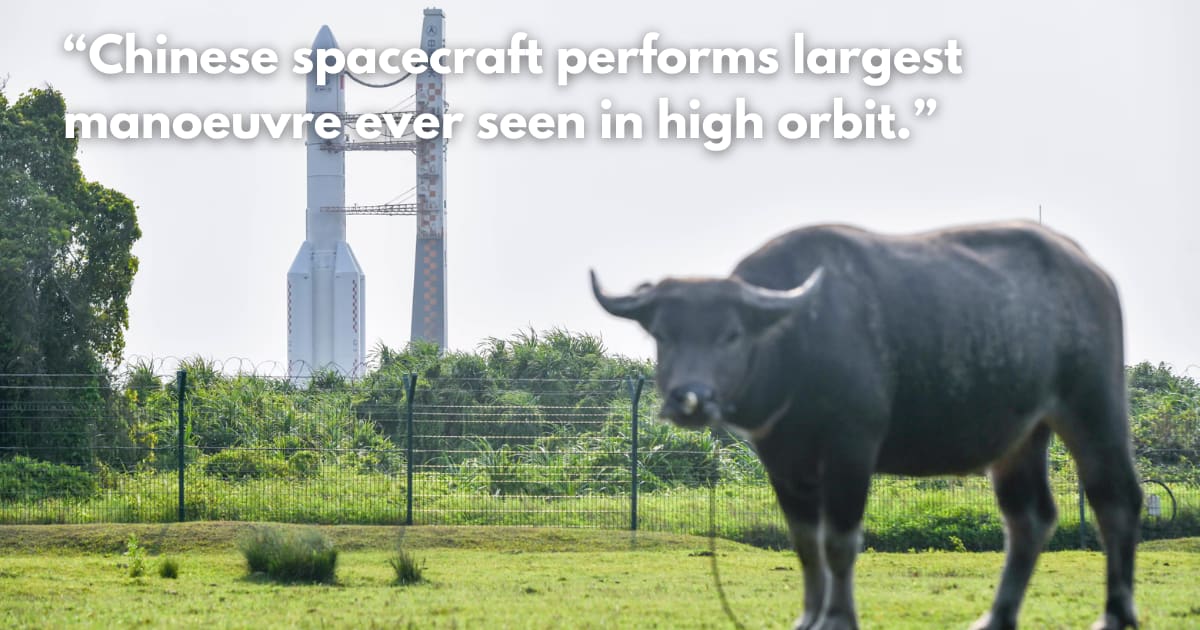


FazTimes Media, Beijing/Washington: A surprising event has caught the attention of space experts around the world. China seems to have completed a major mission involving satellites in a high orbit, and experts are calling it the "biggest move ever seen" in geosynchronous orbit. If this is true, it might mean China is moving ahead of the United States in the race to send astronauts to the moon.
Since early July, two Chinese satellites, Shijian-21 and Shijian-25, have been linked to an activity about 36,000 kilometres above Earth. Observers tracking this activity believe that Shijian-25 gave Shijian-21 new fuel, which would be the first time satellites have refuelled each other at such a high altitude.
A Breakthrough Move: The Start of a Fierce Lunar Competition
The mission involved more than just refuelling. According to Lieutenant General John Shaw, who used to lead part of the US Space Command, the Chinese satellites made the biggest change in speed ever recorded in a geosynchronous orbit, moving more than 330 metres per second.
"This speed change is a huge step by current standards," Shaw said during a meeting in Washington. Experts say that kind of movement would use up almost six years' worth of fuel normally needed to keep a satellite in its place.
This operation shows how much China has improved in high-orbit satellite technology, something only a few countries have tried.
Beijing’s Silence and Washington’s Rising Concern
Notably, Chinese officials haven’t officially talked about this mission or admitted any refuelling took place. However, space watchers say the evidence is strong. The satellites were seen doing unusual and fuel-heavy actions, like tilting 6 degrees and changing direction by 20 degrees—moves that require a lot of energy.
These steps align with China's ambition to become a major player in space exploration, despite the government's lack of official confirmation.
US experts are raising concerns about a shift in power in space. This warning came up during a US Senate meeting called “There’s a Bad Moon on the Rise: Why Congress and NASA Must Thwart China in the Space Race.”
At the meeting, Jim Bridenstine, who used to lead NASA, gave a clear message: “If things don’t change, the US might lose the race to send astronauts to the moon’s surface to China.” Bridenstine started the Artemis programme during the Trump presidency. He said NASA expects to orbit the moon in 2026, but it still doesn’t have a working lander to bring people down. In contrast, China is aiming for a crewed moon landing by 2030, and experts think they might reach that goal before the US.
The mission isn’t the first time China has shown its space skills. In 2022, Beijing successfully manoeuvred a broken BeiDou navigation satellite into a special orbit, rendering it unusable. This was the first time any country successfully moved a satellite that wasn’t working with them, and it has both civilian and military uses.
This year, China launched Shijian-25 to test refuelling and extending the life of satellites in space. By mid-2023, it was seen moving toward Shijian-21 and connecting with it. This led to speculation that China had done a rare refuelling operation in high orbit.
According to Al Jazeera, experts say these technologies could give China a big advantage in space exploration and also in security and defence.
GEO, or geosynchronous orbit, is a key area in space. Satellites stay in the same spot relative to Earth, making them great for communication, navigation, and spying. If China can keep satellites in GEO longer by refuelling them, it would save a lot of money and boost its power in both military and commercial space.
Jim Shell, a former US Air Force officer who tracks space junk, thinks these moves might also bring Chinese satellites closer to important US military satellites. That could let China watch, track, or even interfere with American satellites if tensions increase.
The US Response: Racing to Catch Up in Lunar Exploration
The United States is not slowing down. NASA's Artemis programme is working towards sending astronauts back to the moon by 2027. But there are problems. Senator Ted Cruz, who ran the Senate meeting, asked for quick updates on NASA's plans. He warned that China's rapid progress could make the US lose its lead in space.
At the same time, the Pentagon is focusing more on space security. The US Space Force is closely monitoring Chinese satellites. American experts believe that China uses the Shijian missions for both regular science and potential military purposes.
Views from Experts: What Scientists and Analysts Predict
People around the world have different opinions on what China's actions mean. Some believe that China's experiments show it can build and keep space systems running well.
Local and Global Impact of a New Era in Space Exploration
The US and China are in a race that goes beyond sending astronauts to the moon. Satellites in space are important for TV, GPS, disaster help, and the internet. If one country gains a big advantage in controlling these satellites, it could change who has the most power in technology and communication.
For countries like India, which is planning its own moon mission through ISRO's Chandrayaan programme, the progress of both China and the US shows the need for better investment in their own space tech and working together with other nations.
Looking Ahead: Who Will Lead the Next Lunar Mission?
NASA is planning a crewed mission to the moon around 2027, while China is likely aiming for a landing before 2030. Some experts think that if China keeps making progress like it is, it might even reach the moon sooner than expected.
China has also made some big achievements, like refuelling satellites in geostationary orbit. This could change things a lot. It means their spacecraft can last longer, move more easily, and work better under tough conditions.
Bridenstine, a US official, told lawmakers that the US should be proud of orbiting the moon in 2026.
Conclusion: A Turning Point in the New Space Race
By making satellites last longer and showing they can control complex space movements, China is demonstrating it’s ready to take on the US in space.
Al Jazeera reports that these developments have raised an important question for the US: can it keep up and stay on top in the new space race? Currently, the moon is not just a place to visit. It’s becoming a key area where countries show their strength, influence, and advancement in the 21st century.
Our primary goals at FazTimes Media are to be accurate and confident and adhere to the highest journalistic standards. We check every news story we share against several trustworthy and separate sources to ensure its accuracy.
We have reviewed this report, along with articles from major news outlets worldwide, including BBC News, Reuters, Bloomberg, Al Jazeera, NDTV, The Economic Times, and The Indian Express.
We want to keep the highest standards in global journalism so that our readers can trust the information they acquire.


Discussion0
Join the conversation on this story
Loading comments...