
Dalit Man Lynched in Odisha Over Cow Killing Claim


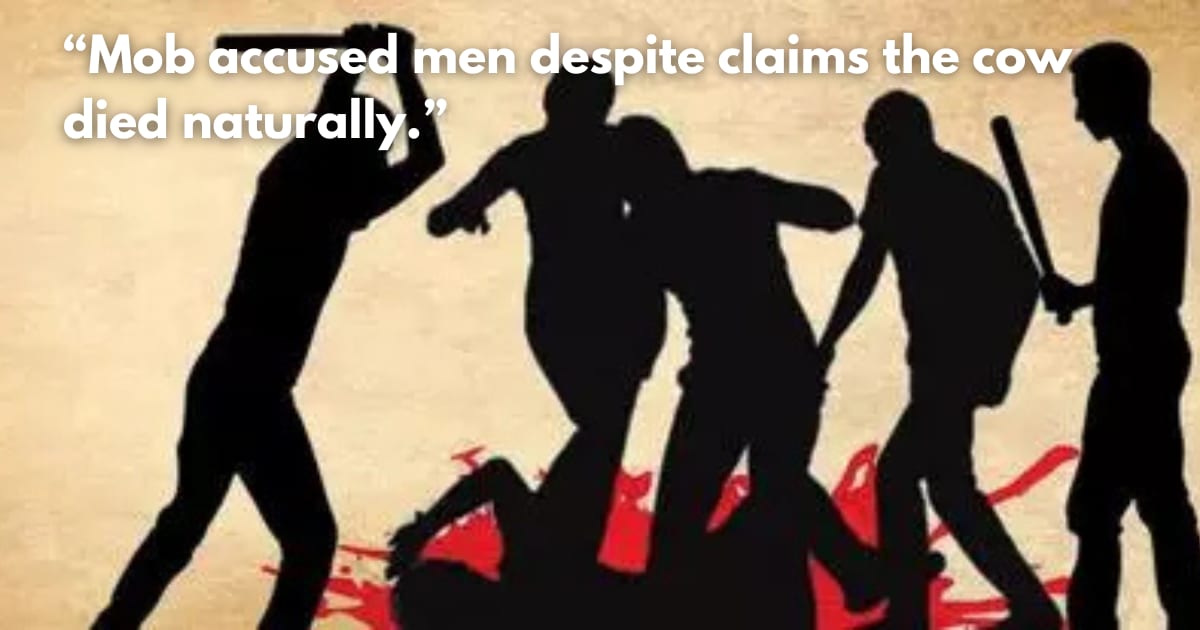
FazTimes Media: A disturbing incident of mob violence has again drawn attention to growing tensions related to cattle issues in India. On Wednesday, a group of villagers in Odisha's Deogarh district attacked and killed a 35-year-old Dalit man, Kishore Chamar, after accusing him of killing a cow. The police confirmed that villagers in Kundeijuri, under the jurisdiction of Riamal police station, beat Kishore to death.
The attack has caused tremendous anger and raised concerns about caste discrimination, community division, and the breakdown of law and order when people take justice into their own hands.
What Happened in Deogarh: The Chain of Events Behind the Mob Attack
According to police reports shared by PTI, Kishore was a cattle skinner by trade. On the day of the incident, he and his coworker, Goutam Nayak, were reportedly cutting the hide of a dead cow. Local people claimed the two men had killed the animal, but both said the cow had died naturally.
Anil Kumar Mishra, the Superintendent of Police in Deogarh, has reported the arrest of six people so far. He promised to take strict action and continue the investigation.
Violence Fueled by Rumours: A Growing Threat in Rural India
A senior police officer said, “The mob didn’t wait for proof. They assumed someone was guilty and acted as judge, jury, and executioner.” Such acts of vigilante justice are not new in India. People from lower castes, particularly Dalits and Muslims, have faced attacks in many states due to accusations of cow slaughter or cattle movement.
BBC News has reported several recent cases where false information or local disputes have led to violence, often targeting the most vulnerable groups.
We cannot ignore caste when examining this situation. The attack started because of claims about cows, but activists say the victim's caste was also a big part of the reason. Kishore, who is a Dalit, belonged to a community that has historically done jobs like skinning dead animals. Despite the necessity of these jobs, people still view them with disdain.
Rashmi Pradhan, a social activist from Bhubaneswar, said, “This is not just about the cow. It’s about the caste system that keeps some people powerless and others in control.”
Various activist groups in Odisha have strongly condemned the attack and are calling for strict legal action against those involved. They believe that such violence against people from lower castes continues old social injustices.
This incident is not the first occurrence of such violence in Odisha. Two months ago, in Ganjam district, an accusation of cattle smuggling resulted in the beating and humiliation of two Dalit men. The group wanted ₹30,000 from them. When they didn’t pay, they were beaten, made to crawl on the ground, and even forced to eat grass.
According to Al Jazeera, incidents of violence related to cows are increasing in many states. Groups often commit these acts while claiming to protect religious beliefs. But experts say this kind of behaviour breaks the rule of law and makes social divisions worse.
Local leaders have expressed worry about the incident but haven’t openly talked about the caste issue. The Odisha government has promised to bring the attackers quickly to justice. However, rights groups say just making promises isn’t enough. Subhasini Patnaik, a lawyer and human rights worker, said, “Every time this kind of violence happens, we hear condemnations, but unless the government makes strong laws, mobs will keep acting as if they are the law.”
There’s also a big debate about cow protection laws across the country. Despite the strict rules many states have imposed against cow slaughter, critics claim these laws unfairly target Dalits and Muslims.
The Humanitarian Costs of Mob Justice: Families Shattered, Communities Scarred
Beneath the news stories, there's a heavy toll on families. Kishore was the only person working to support their home. His relatives say that his unexpected death has left them not only sad but also struggling financially.
His workmate, Goutam, is getting better from his injuries but is still very shaken. He reportedly said to the police, “We were just doing our job. The cow was already dead. But no one believed us.”
Families like theirs are worried about possible future attacks. Many in their community are now afraid to keep their traditional job of skinning cattle, because they fear they might be seen as criminals too.
The Role of Social Media: How Rumours Turn Into Real-World Tragedies
In many similar cases across India, rumours spread quickly—often because of social media. Sometimes villagers act on what they hear without checking if it's true. Experts say that spreading false information without checking is a big reason for violence.
According to The Hindu, the rise of WhatsApp messages and unverified posts has helped start mobs in rural areas. Fact-checkers say that communities need to learn more about how swiftly wrong information can cause serious harm.
Larger Questions for Society: Why Rumours Still Spark Violence
The Deogarh incident brings up important questions. Why do groups feel allowed to kill people in the name of cows? Why do poorer communities suffer the most from these attacks?
But activists say that real change must also start within society itself. “We must stop the culture of violence. Protecting animals should not mean taking human lives,” said Father Ajay Ekka, a local community leader.
Conclusion: Lessons From a Tragic Episode of Mob Justice
The killing of 35-year-old Kishore Chamar in Odisha is not just another crime—it shows how profound problems like caste discrimination, religious conflict, and frustrated groups acting without the law still exist in India today.
According to BBC News, India has seen many similar events recently, each one making people lose trust in the systems meant to protect them. For Kishore’s family and others who live in fear like them, getting justice is more important than ever.
Our primary goals at FazTimes Media are to be accurate and confident and adhere to the highest journalistic standards. We check every news story we share against several trustworthy and separate sources to ensure its accuracy.
We have reviewed this report, along with articles from major news outlets worldwide, including BBC News, Reuters, Bloomberg, Al Jazeera, NDTV, The Economic Times, and The Indian Express.
We want to keep the highest standards in global journalism so that our readers can trust the information they acquire.


Discussion0
Join the conversation on this story
Loading comments...