
Interfaith Unity: Ambala Muslims Aid Flood-Hit Punjab

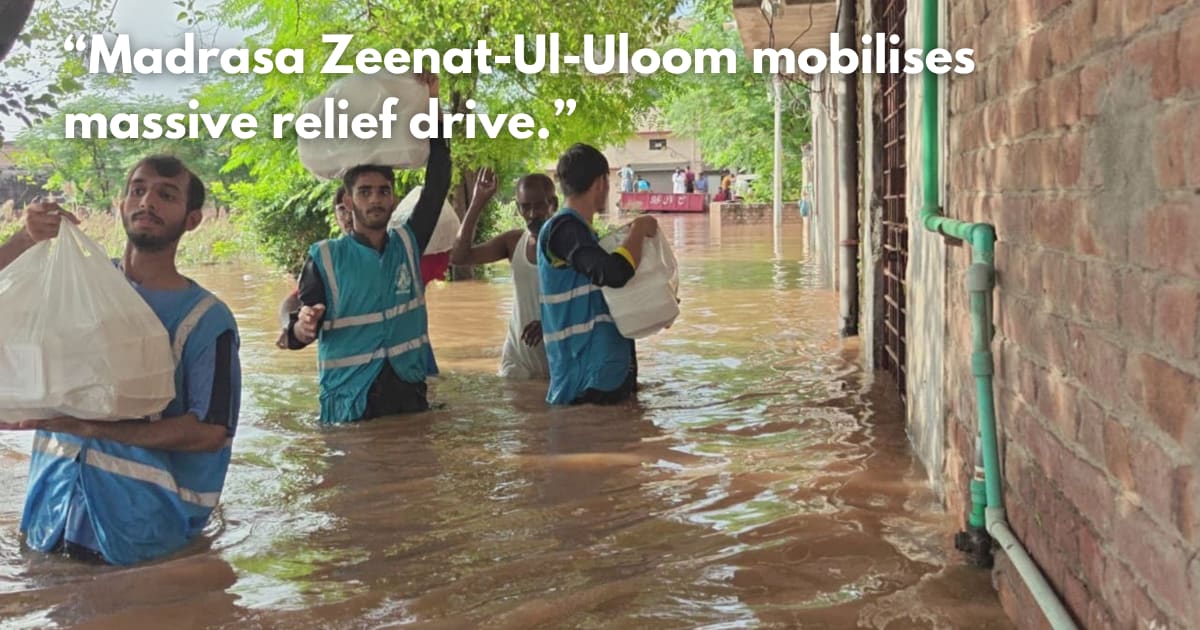





FazTimes Media, Ambala, Sept 6 – When disasters strike, acts of kindness often outshine the tragedy itself. Such generosity was clearly seen in Naraingarh town, in Ambala district, where members of the Muslim community came together to help their flood-affected neighbours in Punjab. Madrasa Zeenat-Ul-Uloom in the town orchestrated a significant effort on Wednesday, dispatching 10 vehicles filled with relief items to areas severely affected by recent floods.
The heavy monsoon rains that hit Punjab caused a lot of damage. Floods in districts such as Amritsar, Gurdaspur, and Hoshiarpur forced families to evacuate their homes and submerged farmland. According to BBC News, thousands have lost crops, animals, and even their homes. Many communities are now struggling to find clean water and basic supplies. In this situation, the help from Ambala stood out as a strong example that kindness knows no religion or borders.
How the Relief Effort Began: Volunteers Step Up in Crisis
The effort started when community leaders from Madrasa Zeenat-Ul-Uloom talked about the suffering of flood victims. Najim Nisar Ahmed, who leads the madrasa, explained that the idea quickly grew from there. “We saw on the news that Punjab was in trouble. Families had lost everything – food, shelter, and their jobs. At that moment, we decided we couldn’t just stand by and watch. Every religion teaches us to help others when they are in need,” Ahmed said.
Within hours of announcing the plan, donations started coming in. What was at first a small request turned into a big campaign. The result was three trucks and seven pickup vehicles filled with essential items like food, water, clothes, medicines, and bedding.
“I have never seen such splendour come together so quickly,” Ahmed said with pride.
A Journey of Compassion: Humanity Shines Through Tragedy
The relief convoy, made up of 65 to 70 young volunteers, started their journey to the Ajnala region in Amritsar, which was one of the hardest-hit areas during the floods. Before they left, the group met at a madrasa to pray for the safety of the Punjabi people and for the success of their mission.
We took the time to deliver them to the villages where people really needed help.” He added that they wanted to support those who were struggling the most, including people in rural areas.
A Message Beyond Religion: Unity and Solidarity in Tough Times
People from Ambala said their actions were driven by human feelings, not by religious beliefs. Imran Qureshi, a young volunteer with the convoy, said, “Faith teaches us to stand together when things are tough. This isn’t about one religion helping another—it’s about people helping each other.”
According to Al Jazeera, local communities often provide the best and fastest help when a crisis happens. The example of Ambala showed how efforts from the ground can make a real difference in helping people who are in need.
Floods in North India: A Growing Problem Fueled by Climate Change
The dire situation in Punjab is part of a bigger issue. Northern India has had more unpredictable monsoons recently, and states like Himachal Pradesh, Haryana, and Punjab have all suffered from sudden floods and landslides. Experts say these problems are getting worse because of climate change, cutting down trees, and poor planning in cities.
BBC News reports that over 300 people have died in northern states this season because of heavy rains. Punjab’s farming areas, which are already struggling with poor soil and low water tables, now face another problem – floods destroying crops.
Efforts to help people are ongoing, but with so many people forced to leave their homes, the need is much bigger than the resources available. This is where local efforts, like the one in Ambala, make a big difference.
A Wave of Good Deeds: Communities Joining Hands to Help
Dr Shalini Verma, a social worker in Ambala, said, “This is the time to put aside differences and help others. The Muslim community in Naraingarh has shown us that real leadership is about caring. Now it's up to everyone else to do the same.”
Government and Institutional Actions: Relief, Aid, and Policy Gaps
While officials in Punjab are still working to save people and help them recover, they are also supporting local efforts. Officials from Amritsar's district government confirmed they are talking to volunteer groups to better organise relief.
Al Jazeera reports that local governments often have trouble giving quick help because of rules and red tape. That’s why efforts from the community are so important. “When people take the lead, the response is quicker and more personal,” said one official.
Lessons for the Future: Building Stronger Disaster Preparedness
The Ambala initiative gives important lessons about how to respond during disasters.
It shows that:
Community mobilisation: Regular people can come together and act quickly—often faster than government or organisation teams.
Interfaith unity: Showing care across different religions and regions helps bring people closer and keep society peaceful.
Direct action: Giving help directly to people ensures that aid is clear and reaches places that are difficult to get to, like rural areas.
Climate change is increasing the frequency of disasters, necessitating communities to establish swift response systems when assistance is required.
Voices from the Ground: Stories of Struggle and Survival
For families in Ajnala, getting help from relief workers was more than just receiving food and supplies – it was about getting emotional support. “We lost everything to the floodwaters. When people from another state came here to help us, it brought back hope,” said Gurpreet Kaur, a resident of one of the affected villages.
Children were smiling as volunteers gave them food and clothes. Older people were truly thankful, and some were even brought to tears by the unexpected kindness.
Conclusion: Hope, Humanity, and the Road Ahead
In a time full of division, their convoy carrying aid was not just a physical journey from one state to another but also a journey that touched people’s hearts. As India faces more challenges because of climate change and natural disasters, these acts remind us that the true strength of a society is not how it does during favourable times, but how it stands together during difficult times.
As reported by BBC News, disasters can reveal both the best and the worst in people. The best of humanity was clearly visible in Ambala, and its influence will extend far beyond this monsoon season.
Our primary goals at FazTimes Media are to be accurate and confident and adhere to the highest journalistic standards. We check every news story we share against several trustworthy and separate sources to ensure its accuracy.
We have reviewed this report, along with articles from major news outlets worldwide, including BBC News, Reuters, Bloomberg, Al Jazeera, NDTV, The Economic Times, and The Indian Express.
We want to keep the highest standards in global journalism so that our readers can trust the information they acquire.


Discussion0
Join the conversation on this story
Loading comments...