
'Blood Moon' Total Lunar Eclipse in India: Date, Time & How to Watch


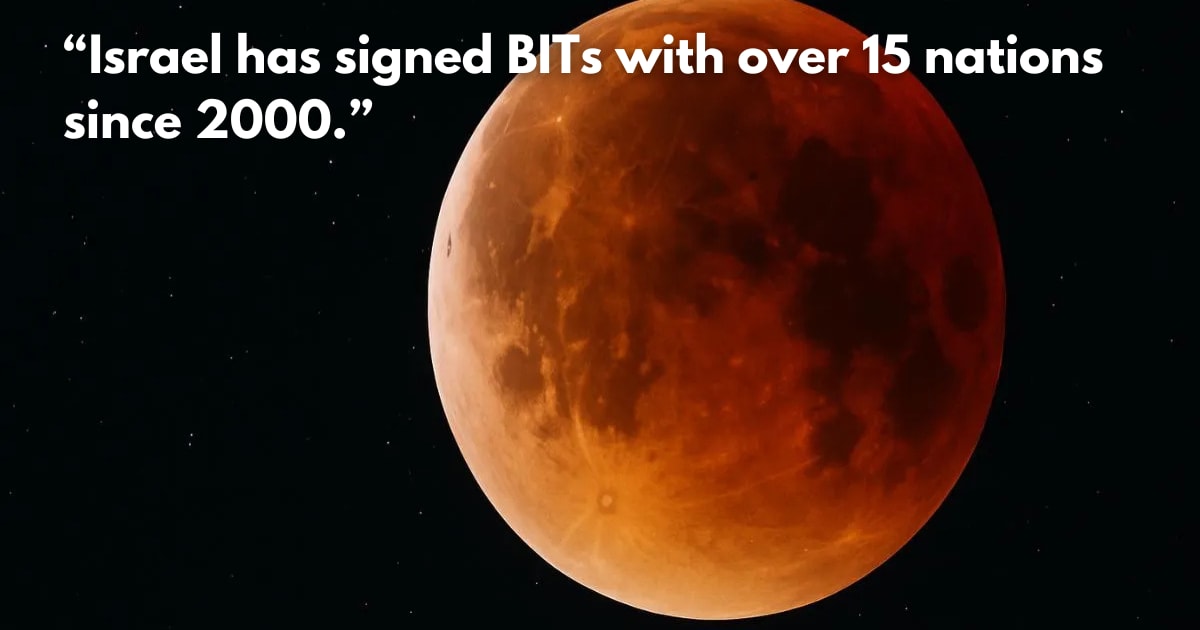

FazTimes Media, New Delhi – People who love watching the sky across India are getting ready for a special event this weekend. The country is set to see its longest total lunar eclipse since 2022. On the night of September 7–8, 2025, the moon will fully enter the Earth’s shadow, turning into a glowing red-orange moon, often called a “Blood Moon”. This event will be visible everywhere in India, and millions of people will get to enjoy this wonderful view of the night sky.
This will be the first long total lunar eclipse visible in India since July 27, 2018. According to experts, the next eclipse of this type won't occur until December 31, 2028. So, the spectacle is a rare chance for people who love stars to see a cosmic event with their eyes.
The Science Behind the Eclipse: Understanding the Celestial Event
At first glance, the lunar eclipse may look like magic, but scientists explain it as a result of the precise positioning of the sun, Earth, and moon. Divya Oberoi, chairperson of the Public Outreach and Education Committee (POEC) of the Astronomical Society of India, explained the phenomenon in simple words: “A lunar eclipse happens when the Earth is directly between the Sun and the Moon, and the Earth’s shadow falls on the Moon.
The Moon’s orbit is slightly tilted compared to Earth’s orbit, so eclipses do not occur every month.”
The Earth’s shadow has two parts:
The umbra is the inner, darker part of the shadow.
The penumbra is the lighter outer part of the shadow.
When the Moon enters the umbra, people on Earth see the moon’s surface getting darker, and it slowly changes into the red-orange colour we recognise as the Blood Moon.
Eclipse Timings in India: When and Where to Watch
The Public Outreach and Education Committee (POEC) has shared exact times for each part of the eclipse:
The penumbral phase starts at 8:58 pm on September 7.
The partial eclipse begins at 9:57 pm.
The total eclipse starts at 11:01 pm.
The total phase lasts for 82 minutes.
The eclipse finishes at 2:25 am.
This means the Moon will stay fully in Earth's shadow for almost an hour and a half, giving people plenty of time to watch and take pictures of the event.
Niruj Mohan Ramanujam, who leads Science Communication and Outreach at the Indian Institute of Astrophysics in Bengaluru, said, "The penumbral phase is very difficult to see without special tools, but once the Moon moves into the partial and total phases, even people who aren’t into astronomy will notice the big change."
Why the Moon Turns Red: The Mystery of the Blood Moon Explained
One of the most eye-catching things about a total lunar eclipse is the Moon changing from its usual bright white to a dark red colour, known as the "Blood Moon". B.S. Shylaja, former director at the Jawaharlal Nehru Planetarium, said, "When the Moon is inside Earth's shadow, it isn't completely dark.
Light from the Sun passes through Earth's atmosphere, bends, and is filtered before reaching the Moon. The red part of the light shines on the Moon, which is the same reason sunsets and sunrises appear red on Earth.
The red colour can look different depending on the air. If there is more dust, pollution, or volcanic ash in the air, the Moon may look darker and redder. If the air is clear, the Moon may look lighter, like copper or orange.
Is It Safe to Watch? What You Need to Know Before Viewing
Many amateur astronomy groups in India are setting up public viewing sessions so people can join in.
BBC News reports that several observatories and science groups are also planning live webcasts so those who can't go outside can still watch the eclipse online.
Public Engagement Across India: Crowds, Temples, and Science Clubs Join In
Astronomical societies, planetariums, and university departments are getting ready for community events to make the most of this special occasion. Skywatching groups plan to hold viewing parties in big cities like Delhi, Mumbai, and Bengaluru, as well as in smaller towns and villages.
Local clubs are also taking this chance to teach people about eclipses and clear up any misunderstandings or beliefs that are often connected with such events. Eclipses typically evoke cultural ideas in India. Some people think they are bad luck, while others see them as a sign of a fresh start in the universe. Scientists and teachers want more people to watch the event themselves so that wrong ideas can go away and more people can develop an interest in astronomy.
A Global Spectacle: How the World Watches the Same Moon
This total lunar eclipse won’t just be seen in India. According to Al Jazeera, it will be visible in Saudi Arabia, the UAE, much of the Arab world, large parts of Asia, Australia, and sections of Europe and Africa. Because it can be seen by so many people, the September 2025 lunar eclipse is expected to be one of the most widely watched in recent years.
Social media is already full of excitement, with amateur photographers getting ready to take pictures of the event from different places around the world.
How to Best Observe the Eclipse: Tips for Skywatchers and Enthusiasts
For those who want to see the Blood Moon in all its beauty, astronomers suggest a few easy tips:
Choose a dark place – city lights can make it difficult to see. Try to find an open space like a rooftop, park, or field that’s away from streetlights.
Capture the moment – even smartphones in night mode can take good pictures of the red moon. Amateur astrophotographers might use tripods for better photos.
Why This Eclipse Is Special: Rare Astronomical Highlights
Eclipses don’t happen every day, and this one has some special things about it. India will witness the longest total lunar eclipse since 2018, with a duration exceeding 80 minutes. Furthermore, the whole event—from the start of the penumbral phase to the end—will be visible across India without any breaks.
Astronomers say the next time something like this eclipse happens will be in 2028, which shows how rare this event really is. As The Hindu reported, long total eclipses happen when the Moon passes close to the centre of Earth’s shadow, making the total phase last longer. That perfect alignment makes September’s eclipse a special occasion for people who watch the sky, whether they are just curious or are experts in astronomy.
Conclusion: Blending Science, Wonder, and Shared Experience
The message is the same: don't miss it, whether you see it with your eyes, binoculars, or a telescope. The Blood Moon of September 2025 is not just a show—it is a reminder of the beauty and wonder of the stars above us.
Our primary goals at FazTimes Media are to be accurate and confident and adhere to the highest journalistic standards. We check every news story we share against several trustworthy and separate sources to ensure its accuracy.
We have reviewed this report, along with articles from major news outlets worldwide, including BBC News, Reuters, Bloomberg, Al Jazeera, NDTV, The Economic Times, and The Indian Express.
We want to keep the highest standards in global journalism so that our readers can trust the information they acquire.


Discussion0
Join the conversation on this story
Loading comments...