
Taliban's Gender Rules Delay Medical Aid to Women in Afghan Quake Zones

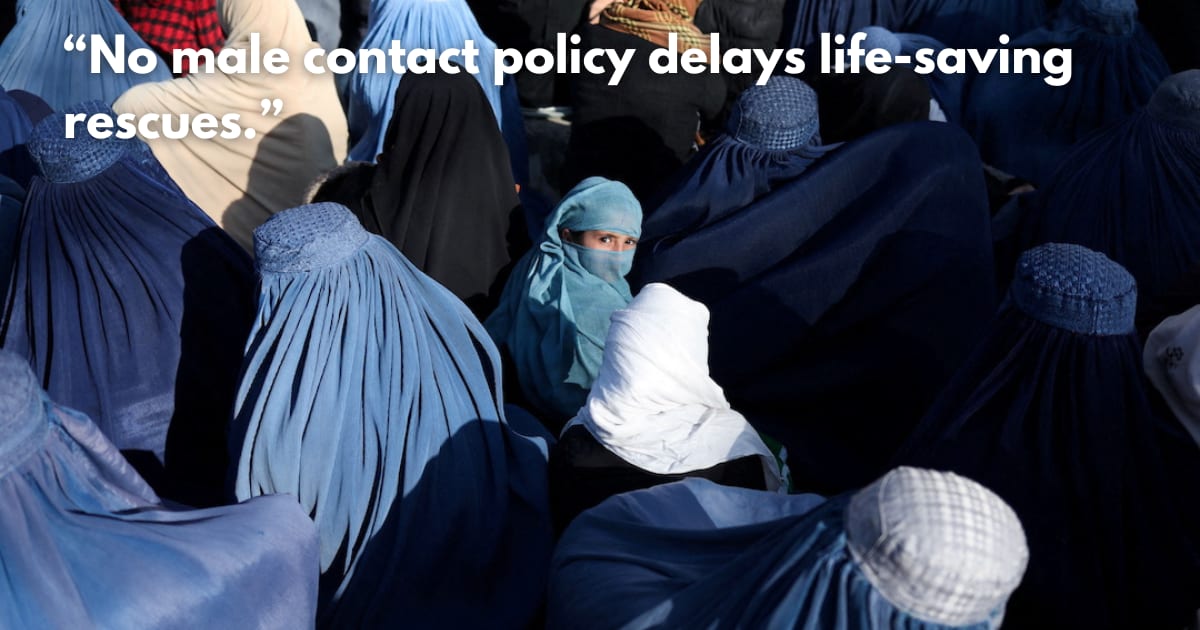


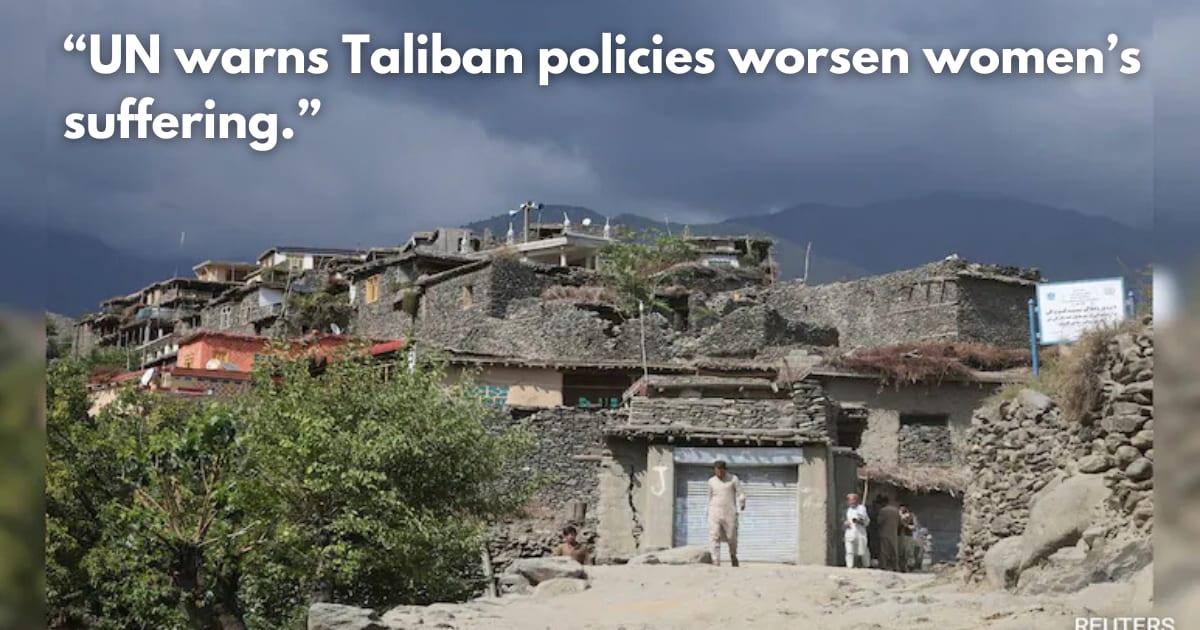
FazTimes Media, Kabul/Herat – The humanitarian situation in Afghanistan has gotten worse after the earthquake on August 31, which caused a lot of damage. Women trapped under rubble find it challenging to access the necessary medical help due to the Taliban's strict gender rules. The 6.6-magnitude earthquake devastated numerous villages in western Afghanistan. Government officials say over 2,200 people died and more than 3,600 were injured. However, the numbers conceal another heartbreaking story: the Taliban's rules prevented male rescuers from touching women, leaving them without immediate help.
Under Taliban rules, women can’t have physical contact with men who aren’t their close family. In the wake of the earthquake, this made it almost impossible for rescuers to save the women. People who saw the damage in Herat province told FazTimes that even when people were screaming for help from under the rubble, male rescuers didn’t dare touch the injured women. Some survivors said they saw women trapped for hours, just because there weren’t any female medical workers around.
A rescuer said, “We could hear women crying under the rubble, but we couldn’t help. We were told not to touch them.” According to Al Jazeera, in some cases, bodies were pulled out by clothing to avoid touching skin, showing how grave the situation has become because of these rules.
The Taliban’s earlier bans on women studying medicine or working in public jobs have left a big shortage of female doctors, nurses, and rescue workers. In the countryside, where the earthquake hit hardest, this problem is even worse.
Dr Saira Ahmad, a doctor in Kabul who spoke anonymously for fear of being punished, said, “Even before the earthquake, Afghanistan was in a dire healthcare situation. Now, the ban on women studying medicine is intensifying the problem. Women in rural areas often don’t have anyone to help them.”
BBC News reports that the ban on women in higher education has already made it harder for hospitals to staff maternity wards and female outpatient centres. This makes the impact of natural disasters even worse.
A Silent Emergency for Women: Lives Restricted Under Taliban Rule
Women who survived the disaster described their experiences in heartbreaking and scary ways. Many of them had to wait for hours or even days to get help with basic medical care. Fatima, a 28-year-old from a village close to Herat, told local aid workers, “When the house fell, my leg was broken. The men pulled my brother out first. They said they couldn’t touch me without my husband. I had to wait until another woman from a neighbouring village arrived. By then, the pain was too much to bear.”
Relief groups say that because of these gender-based delays in rescue efforts, some women died—not from the collapse itself, but from injuries that could have been treated.
Cultural Barriers and Taliban Edicts: How Rules Deepen the Crisis
In Afghanistan, there are already strict rules about how men and women interact. However, the Taliban has transformed these rules into official laws that the government enforces. A woman’s ability to move around often depends on having a male relative with her, called a mahram. During the earthquake, the government left many injured women alone and ignored those without a male family member.
Even when female rescuers were present, they were not allowed to help male victims, which made it even harder for people to get the help they needed. A UN worker in Kabul said, “These policies go against everything humanitarian aid stands for. Disasters don’t care who you are, but the Taliban’s rules do.”
The Numbers Behind the Crisis: Data That Reveals the Human Toll
Although the Taliban hasn’t shared specific numbers about how many women were affected, aid workers in the area told FazeTimes that women seemed to be among the most impacted. Over 2,200 dead: thousands of homes collapsed in rural areas, where women often stay inside because of limits on their public life.
3,600 injured: Many of these injuries were not treated for hours or days because of the rules about gender.
Healthcare shortage: Since 2022, women have been banned from studying medicine in Afghanistan. This has made an already weak healthcare system even worse.
Because there are very few female healthcare workers, women in many places can’t get the medical care they need.
International Outcry: World Leaders Condemn the Situation
Groups that focus on human rights and international bodies have criticised the Taliban's handling of the crisis.
Human Rights Watch said that rules based on gender are not only unfair but also dangerous during emergencies. The group asked global donors to connect help to a promise of equal access for women.
The United Nations also issued a statement cautioning that aiding individuals in Afghanistan would be ineffective if it excluded half of the population. A UN speaker said, “Women and girls have the same right to safety and healthcare as men.”
Aid Groups Struggle with Restrictions Amid Tight Taliban Controls
International aid groups find themselves in a challenging situation. Many need the Taliban's permission to work in Afghanistan, but following the rules means women can't get help. An aid worker says, “We have to choose between working under the Taliban's rules or leaving completely. Either choice leads to loss of lives.”
Even with the restrictions, some aid groups have quietly trained women volunteers in local areas to help during emergencies. However, their reach is small, and the size of the disaster is way bigger than what they can handle.
Lessons for the Future: What the World Must Learn from Afghanistan
Experts say the earthquake showed not only how weak Afghanistan's buildings are but also how harmful gender-based rules can be. “Natural disasters show how strong or weak a society is,” said political analyst Haroon Mir. “But in Afghanistan, the earthquake showed the Taliban's failure to protect everyone equally. Until women can learn, work, and help, every disaster will affect them more.”
Voices from the Ground: Women Share Stories of Struggle and Survival
Despite the limits, Afghan women are speaking up. A woman’s activist in Kabul said, “They want us to stay hidden. But during the earthquake, it was clear—when women are hidden, they die.”
Local communities are also helping. In some villages, men have quietly ignored Taliban orders to rescue female family members and neighbours. “When it's life or death, rules don’t matter,” said a villager who asked to stay anonymous.
Conclusion: A Crisis That Goes Far Beyond Natural Disasters
The August 31 earthquake was a natural disaster, but for Afghan women, it became a bigger problem, with buildings and rights both falling. The Taliban's strict gender rules have turned a human crisis into a moral failure. As BBC News reported, international groups keep asking the Taliban to let women get equal help, but there's not much progress.
For now, Afghan women are waiting for medical care, for recognition, and for the chance to survive future problems on equal ground.
Our primary goals at FazTimes Media are to be accurate and confident and adhere to the highest journalistic standards. We check every news story we share against several trustworthy and separate sources to ensure its accuracy.
We have reviewed this report, along with articles from major news outlets worldwide, including BBC News, Reuters, Bloomberg, Al Jazeera, NDTV, The Economic Times, and The Indian Express.
We want to keep the highest standards in global journalism so that our readers can trust the information they acquire.


Discussion0
Join the conversation on this story
Loading comments...