
Yamuna Floods Agra: Water Reaches Taj Mahal Walls as River Rises


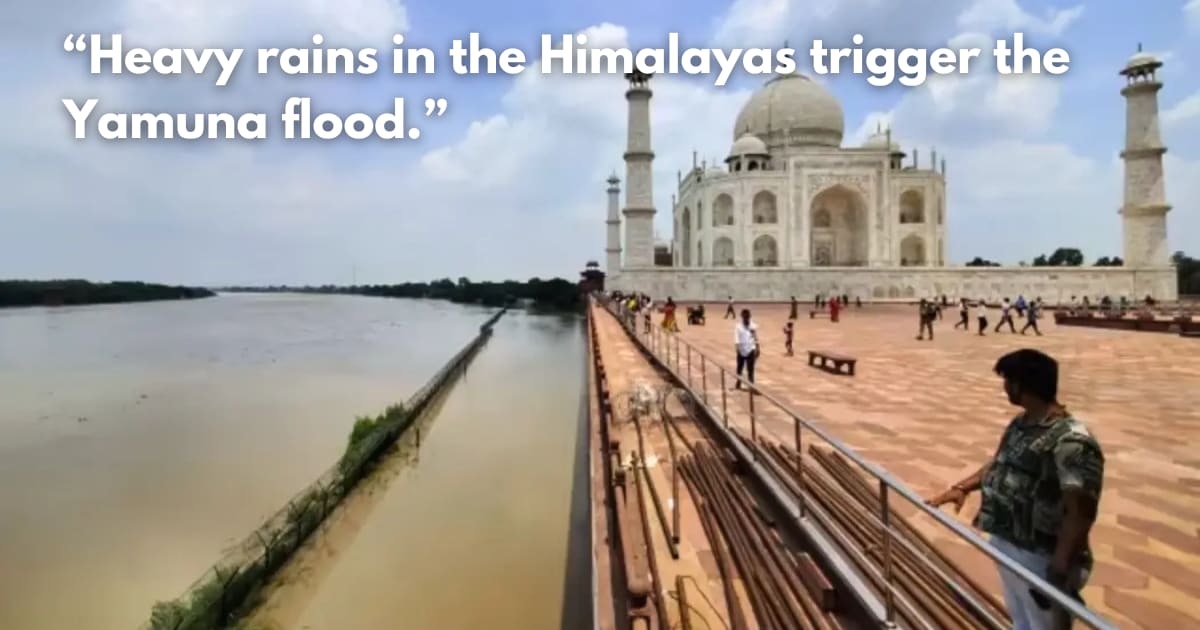
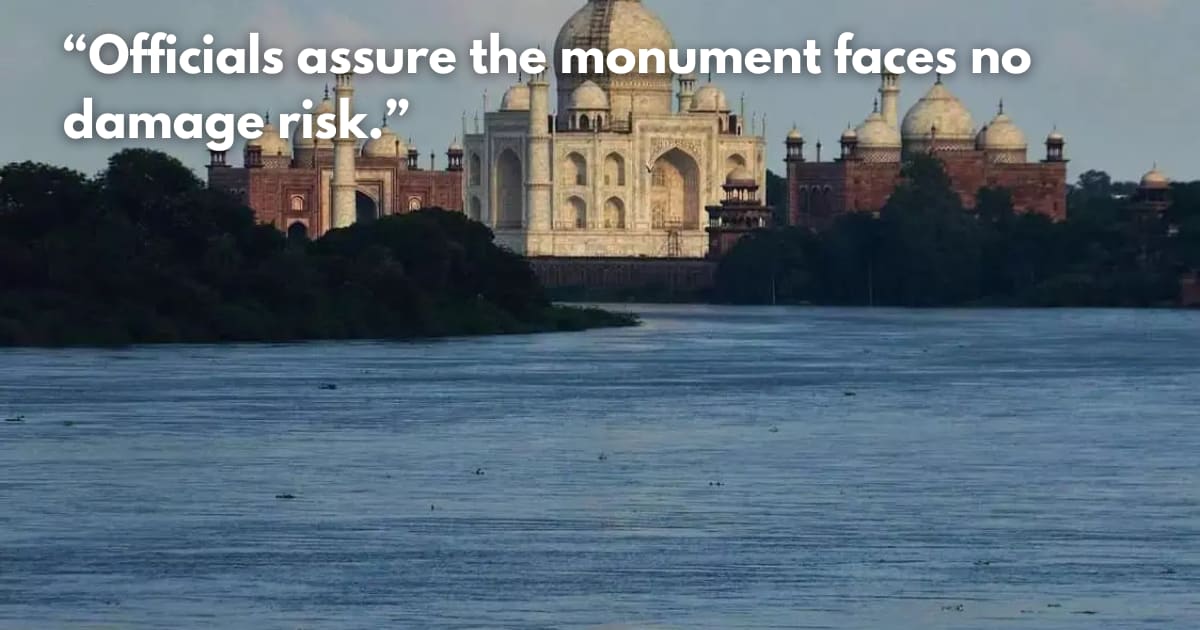

FazTimes Media, Agra, India – The Yamuna River’s rising waters reached the outer walls of the Taj Mahal this Sunday, causing worry and interest among people living nearby and those who care about protecting the monument. The famous Mughal-era tomb, which is one of the world’s best symbols of love, once again stood in the way of nature’s power. Heavy monsoon rains in the lower Himalayas, especially in Himachal Pradesh and Uttarakhand, caused the Yamuna to rise above its dangerous level.
As the river grew stronger, it flooded several low areas in Agra, making it difficult for people to walk through water up to their knees. The most talked-about moment was when the river came close to the Taj Mahal’s protective wall, bringing back memories of a similar situation last year.
A Monument Tested by Nature: Floodwaters Threaten the Taj’s Legacy
Local historian Raj Kishore Raje told reporters that in 2023, the Yamuna had reached similar levels. He told people that the Taj Mahal’s foundation was built to handle changing water levels. The monument was built in the 17th century by Emperor Shah Jahan and sits on a foundation made of wells and wooden planks that help take in moisture.
“The Mughal builders knew how the Yamuna behaved. They designed the Taj Mahal so that rising waters would not damage its base. In fact, the moisture from the river actually helps keep the wooden parts strong,” Raje said.
But he also pointed out that changes in the river’s path, along with new city growth and pollution, are problems that the old builders could not have expected.
Flooded Homes and Rising Anxieties: Locals Struggle as River Levels Rise
Water entered several homes along the riverbank, forcing families to move their things to higher ground. Streets close to the river became like canals, messing up normal life. Officials reported dispatching help teams to the most vulnerable areas and deploying boats to rescue stranded individuals. The district government has also set up a control room to track the river’s level and manage emergency plans.
“We are staying alert. The safety of our people is our main concern,” said District Magistrate Bhanu Chandra Goswami, adding that they have made plans to move people if the water continues to rise.
A Heritage Under Watch: Experts Monitor Historic Structures at Risk
Every year, millions of visitors are drawn to the Taj Mahal, a UNESCO World Heritage Site and one of the New Seven Wonders of the World. Its link to the Yamuna goes beyond just being near the river. Experts are worried about this. They say that while big floods might not directly damage the Taj, the overall health of the river is important for keeping the monument safe in the long run.
Echoes of the Past: When Floods Previously Shaped Agra’s History
Local people in Agra remember a time when the Yamuna flowed freely. There were wide steps along the riverbank and green gardens nearby. “When I was a child, we used to play by the Yamuna, and the water was clean enough to bathe in,” said Ramesh Gupta, a 72-year-old lifelong Agra resident. “Now, the river is either dry or flooded with dirty water. Both are bad for us.”
Historians point out that Mughal emperors designed gardens and palaces along the Yamuna, seeing the river as a key part of city life. The Taj Mahal was even meant to be viewed from boats on the river. That view has mostly disappeared now.
Scientific Explanations: Why the Yamuna’s Swell Endangers the Region
Hydrologists say the Yamuna’s sudden rise in water is because of heavy rain upstream and the release of extra water from dams. Climate scientists add that unpredictable monsoon weather, possibly linked to global climate change, is making these floods happen more often.
“Before, heavy rain spread out over weeks. Now, we get a lot of rain in just a few days, which overwhelms the river system,” explained Dr Anjali Mehra, an environmental researcher. “This puts both people and places like the Taj Mahal at greater risk.” She also stressed that long-term solutions, such as better management of the river and stricter control of pollution, are needed to protect both the people of Agra and its famous monuments.
Tourism Amid Floods: Visitors Witness Nature and History Collide
Even though the waters were rising, tourists kept visiting the Taj Mahal. Many were curious to see what guides called a “rare sight”. Pictures of the Yamuna River touching the Taj’s walls became widely shared online, and people had different opinions about it.
Ananya Nair, who came from Kerala, said, “I never thought I’d see the Taj surrounded by floodwaters. It’s beautiful, but it also makes me worried.” Some visitors asked if the monument was in danger of falling down. Officials and experts quickly told them there was no immediate danger. However, they also said that such events show how important it is to manage cultural heritage in a sustainable way.
Government and NGO Response: Relief, Protection, and Preservation Efforts
The local government has promised to monitor the Taj Mahal’s condition all the time. Engineers from the Archaeological Survey of India (ASI) are checking the site and measuring the water levels. So far, no damage has been found.
NGOs in Agra are calling for a more comprehensive solution. Pooja Sharma, who runs a river conservation group, said, “Every flood should be a warning. It's not just about protecting the Taj Mahal. Many families live along the river and need better flood preparedness.”
Al Jazeera reported that humanitarian groups have pointed out that poor drainage and uncontrolled building along riverbanks make floods worse in Indian cities.
Lessons for the Future: Protecting Heritage Sites in a Changing Climate
Experts assert that the situation in Agra demonstrates the interconnectedness of climate change, urban development, and heritage protection. We cannot protect the Taj Mahal without improving the health of the Yamuna River and ensuring the safety of the local people.
Our primary goals at FazTimes Media are to be accurate and confident and adhere to the highest journalistic standards. We check every news story we share against several trustworthy and separate sources to ensure its accuracy.
We have reviewed this report, along with articles from major news outlets worldwide, including BBC News, Reuters, Bloomberg, Al Jazeera, NDTV, The Economic Times, and The Indian Express.
We want to keep the highest standards in global journalism so that our readers can trust the information they acquire.


Discussion0
Join the conversation on this story
Loading comments...