
China's Military-Civil AI Ties Pose Major Challenge to US


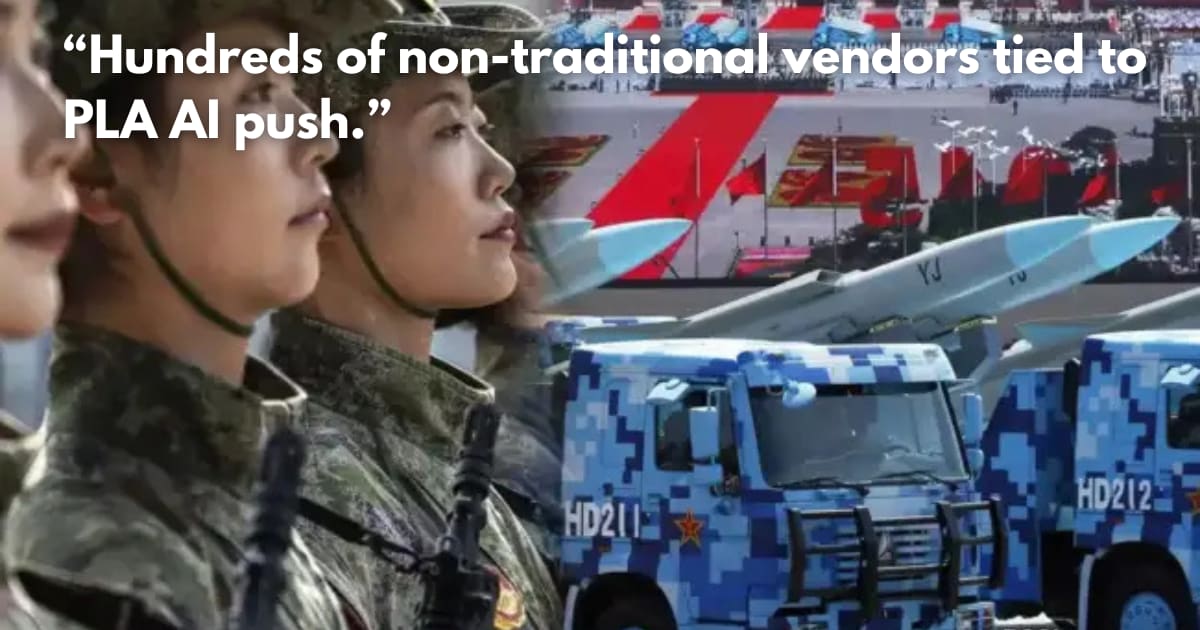



FazTimes Media, Beijing/Washington – A new report from a U.S. think tank has given more insight into how Chinese civilian companies and universities are playing a bigger role in the military’s use of artificial intelligence (AI). The report warns that these connections could create serious problems for American policymakers and global security. The Centre for Security and Emerging Technology (CSET) at Georgetown University released the findings. The report indicates that China’s military, the People’s Liberation Army (PLA), is getting advanced AI tools—not just from government-owned companies but also from private tech startups, research centres, and universities that are not officially linked to the defence sector.
This trend, often referred to as "military-civil fusion," is a key part of China's plan to modernise its armed forces by 2035 and turn them into what Beijing calls a "world-class" army by 2049. The report also pointed out some notable examples. A drone company in Chengdu was reported to have given the PLA a fully battle-ready system. A top university in Beijing was involved in creating systems to control large groups of drones. Another company that works with satellite navigation and remote sensing got contracts to build simulation tools for naval operations.
According to BBC News, the PLA’s use of these “non-traditional vendors” shows a big change from relying mainly on large state-owned companies, which have been the main players in China’s defence industry. The CSET report looked at 2,857 AI-related defence contracts that the PLA issued between January 2023 and December 2024. Of these, 338 organisations received at least two contracts. Civilian companies and research groups, not publicly known as state-owned, made up nearly three-quarters of these contracts.
“Within this data, it’s surprising to see small private firms and newer universities becoming major suppliers,” said Cole McFaul, a senior research analyst at CSET and one of the report’s authors. “This shows how deeply China is using civilian talent and innovation in its military build-up.”
Why This Matters for the United States: Security, Economy, and Global Standing
The report says that the unclear line between civilian and military industries makes it hard for Washington to stop China from getting access to important technologies. The U.S. sanctions do not apply to many of the private companies working on these projects, nor do they officially belong to the defence sector.
Al Jazeera reports that U.S. officials are worried about the increasing role of civilian universities and start-ups. Secret connections to the government could make these groups more difficult to track. This situation makes it tough for outsiders to know who they really are and what they're doing. This situation is called the “dual-use dilemma”. Businesses can easily adapt technologies like machine learning, drone guidance, or image recognition for military use.
The Bigger Strategy: China’s Military-Civil Fusion and Its Global Reach
China’s leaders have stressed that they want to bring together civilian innovation and military needs. President Xi Jinping has said that mixing the civilian and military sectors is a major part of the country’s plan. He believes that private companies can be more flexible and have better technology than government-owned defence firms.
Recent military parades in China show how fast the PLA is using commercial tech on the battlefield, like AI drones, laser weapons, and automatic missile launchers. The report says, “China has, to some extent, succeeded in bringing competition and efficiency to its historically slow defence sector.”
The U.S. Dilemma: Balancing Openness with National Security Concerns
The United States now has a difficult decision to make. On one side, being open to global research has helped American innovation grow. On the other side, the closer links between Chinese civilian groups and the PLA have raised concerns about national security.
McFaul warned against using strict policies. “There’s a risk of Washington responding with broad bans on all work with Chinese universities or companies. That would hurt good partnerships and harm U.S. research strength,” he said.
Instead, the report suggests a more “evidence-based approach”, using careful risk checks instead of blanket restrictions. BBC News reports that some U.S. lawmakers are already worried about federal grants going to scholars with links to Chinese military projects.
Last year, the House Select Committee on the Chinese Communist Party found that there were ways for money to flow indirectly to institutions tied to the PLA.
Global Implications: How AI Rivalry Shapes International Relations
The growing collaboration between China's civilian and defence sectors has major effects worldwide.
For example:
Allied Coordination: If the U.S. acts alone with sanctions or limits, it might cut American scientists off from global groups. This could weaken worldwide scientific teamwork.
Competitive pressure: as China speeds up its AI-powered defence projects, Western defence companies might feel pushed to quickly use civilian innovations.
Strategic Balance: Merging military and civilian efforts could help China rely less on imported high-tech gear, giving it more control in future conflicts.
The report warned that without working closely with allies, Washington's single-minded actions might cause problems, making U.S. companies less competitive.
AI on the Battlefield: The Next Frontier of Modern Warfare
The CSET study pointed out that China's defence contracts are now more focused on advanced areas, like targeting systems, drone groups, simulated battlefields, and AI-powered logistics. One examined contract dealt with software that lets many drones work together without human control. Another was about AI-based training for soldiers and creating realistic combat situations.
These technologies have the potential to transform the way we fight wars. They might cut the need for soldiers in risky missions and allow quicker decisions in confusing battle situations.
The Challenges Ahead: Regulation, Oversight, and Ethical Dilemmas
The experts said their findings might be too low because the report only looks at public procurement information. Many PLA deals are secret and not shared. New tech startups are entering the military supply chain. The rise of non-traditional suppliers since 2010 demonstrates this. The report said their youth and adaptability may give them an advantage over older government-run companies.
But these changes also show risks for Washington. It might be challenging for leaders to tell the difference between harmless civilian work and partnerships that boost the PLA's strength.
Balancing Innovation and Security: Striking the Right Policy Mix
The main point from the report is that the U.S. and its allies need a better approach. Instead of stopping all work with Chinese groups, they should create smart, well-based tools to spot risky connections while letting useful research continue.
The authors said success will need ongoing investment in risk tools, closer international teamwork, and the political will to use smart policies.
Conclusion: A Changing Scene in the Global AI Race
China is moving quickly to use AI in its military, showing how difficult it is to tell civilian and military technology apart anymore. For the United States, this is a big challenge: how to protect national security without stopping innovation and working with other countries.
According to Al Jazeera, the U.S. probably won't stop China's efforts to mix military and civilian tech. However, with better planning and teamwork with other nations, the U.S. might still influence the global situation in a way that reduces the PLA's edge. Currently, the report shows one important thing: Chinese companies and universities are not just watching from the side anymore. They are playing a major role in China's push for military power in the AI era.
Our primary goals at FazTimes Media are to be accurate and confident and adhere to the highest journalistic standards. We check every news story we share against several trustworthy and separate sources to ensure its accuracy.
We have reviewed this report, along with articles from major news outlets worldwide, including BBC News, Reuters, Bloomberg, Al Jazeera, NDTV, The Economic Times, and The Indian Express.
We want to keep the highest standards in global journalism so that our readers can trust the information they acquire.


Discussion0
Join the conversation on this story
Loading comments...