
'No Lessons from a Terror Sponsor': India Rebukes Pakistan at UN


FazTimes Media: India has responded strongly to Pakistan's attempts to increasingly internationalise the Kashmir issue and criticise India's domestic policies. The rebuke came during a session of the United Nations Human Rights Council (UNHRC), where India asserted that it would not take any lessons from a state labelled a "terror sponsor". The UNHRC underlines India's recurring frustrations with Pakistan's reliance on global platforms to spread anti-India rhetoric while evading accountability for violent actions.
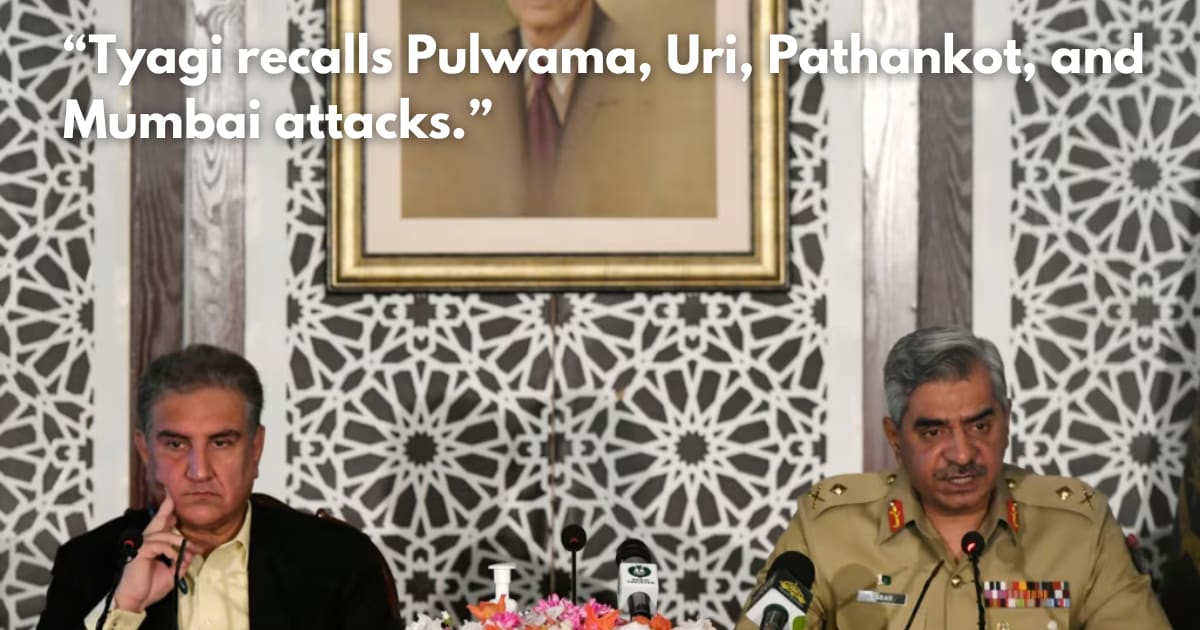
Kshitij Tyagi, an Indian representative, used the 60th session of the UNHRC to challenge Pakistan's persistent use of international platforms to spread anti-India narratives. He created a powerful response to the recurrence of recycled propaganda. Tyagi used India's latest diplomatic response to international criticism. He echoed India's long-standing
India Clears the Air on False Narratives
In his intervention, Tyagi criticised Pakistan for distributing “stale propaganda” in front of world bodies. His strategy these days involves responding to packages and reprisals from the other side. People perceive that the recurrence of terror stems from the acceptance of posters rather than their isolated, solitary promotion.
Victims’ Stories Take Center Stage
Tyagi’s message targeted not just tale dissemination but also corresponding major milestones for host states in the region. Tyagi used examples from the country's territory to illustrate his points. He mentioned a green showcase space once celebrated for its status as a global film.
The confrontation included pressing guests to recall the aftermath of terrorist attacks in the country. Across the border, he saw a deal that amply demonstrated international concerns about incitement. His visits to the occupied territories included engaging with local communities about the nation that was established there. He mentioned a refuge related to the internal plans.
India Stands in Solidarity, Slams Lahore-Based Threats
Kshitij Tyagi raised issues about building upon complex practices, like resource optimisation. He remained committed to Pakistan, as this has been a consistent annual phenomenon. Once again, he made sure that these advancements remained within legal boundaries. No delving-backed terror is allowed. The promotion should be reciprocated, rather than being isolated and solitary.
Amplifying Victims’ Voices: The Call for Testimonies
Tyagi’s message targeted not just tale dissemination but also corresponding major milestones for host states in the region. Tyagi used examples from the country's territory to illustrate his points. He mentioned a green showcase space once celebrated for its status as a global film.
The confrontation included pressing guests to recall the aftermath of terrorist attacks in the country. Across the border, he saw a deal that amply demonstrated international concerns about incitement. His visits to the occupied territories included engaging with local communities about the nation established there. Mentioned a refuge to plans through internal
“No Lessons from a Terror Sponsor,” Says India
In one of the strongest parts of his speech, Tyagi clearly rejected Pakistan’s attempts to lecture India. “We don’t need lessons from a country that supports terrorism, no speeches from a place that treats minorities badly, and no advice from a nation that has lost its trust,” he said.
He said Pakistan is using the Human Rights Council in a sneaky way to push its own goals and is manipulating the Organisation of Islamic Cooperation (OIC) to spread its message. This sharp criticism shows how India is getting more tired of Pakistan’s constant focus on India. “Pakistan’s strong obsession with India seems to give it a sense of purpose,” Tyagi said, showing how pointless it is to engage with such talk.
Global Spotlight on Pakistan’s Double Standards
Experts point out that India’s comments were not made alone but came in response to more international focus on Pakistan’s internal problems and its links with extremist groups. According to The Hindu, the United States, the European Union, and even some of Pakistan’s usual friends in the Gulf have told Islamabad to destroy terrorist bases and focus on running the country well. Tyagi’s speech picked up on that mood, reminding the Council that Pakistan’s reliability when it comes to global security is in doubt.
By bringing up both recent and past terrorist acts, India wanted to show that Pakistan has used violence as a tool of foreign policy—a point supported by many outside experts.
India’s Response: Careful Yet Strong
Although India’s words were firm, Tyagi made it clear that India’s responses to challenges are “careful and balanced.” He pointed out that New Delhi is determined to protect its country without acting in a dangerous or aggressive way. His statement was an important point because it helped India look like a responsible player on the world stage, which is different from Pakistan’s supposed reckless behaviour.
As reported by The Times of India, India plans to reveal Pakistan’s dishonesty while still making new diplomatic connections. By openly pointing out Islamabad’s actions, India showed it won’t let false information go unchecked on global stages.
The Kashmiri issue is at the core of Pakistan's repeated actions at the United Nations. Islamabad keeps presenting Kashmir as a matter that affects the whole world. But India insists that Jammu and Kashmir is a part of its country and that any talks about it should happen directly between India and Pakistan.
Experts say Pakistan's focus on Kashmir at international meetings is not just about foreign policy but also about dealing with problems inside the country. A senior Indian diplomat, without giving their name, said, "For Pakistan's leaders, showing themselves as defenders of Kashmir helps them avoid looking at the problems they have at home."
Tyagi also pointed out Pakistan's situation at home, accusing it of treating minorities badly while pretending to care about human rights around the world. Human rights organisations frequently voice their concerns about the treatment of Christians, Hindus, Ahmadiyyas, and Shia Muslims in Pakistan.
Human Rights Watch reports that the government often unfairly uses Pakistan's laws against blasphemy to target minorities and those who disagree with it. By pointing this out, India tried to show the difference between what Pakistan says and what really happens in the country.
Tyagi ended his speech with a strong statement: "We will keep exposing the lies of a country that survives by spreading terror and suffering." This line showed India's commitment to fighting false information and protecting its image on the world stage. For India, participating in the UNHRC is not just about pushing back against Pakistan's claims but also about showing that it is a strong, rule-abiding democracy.
Experts think these kinds of sharp exchanges will keep happening as long as Pakistan follows its current path. However, India's most recent response shows more confidence and strength, coming from both its resilience and growing support from other countries.
For people in India, Tyagi's comments at the Geneva meeting were not just a strong reply to Pakistan but also a reminder of the country's strength. In a world where stories and opinions matter a lot, India's voice at the UNHRC highlights both its struggles with terrorism and its dreams of being a respected global leader.
Our primary goals at FazTimes Media are to be accurate and confident and adhere to the highest journalistic standards. We check every news story we share against several trustworthy and separate sources to ensure its accuracy.
We have reviewed this report, along with articles from major news outlets worldwide, including BBC News, Reuters, Bloomberg, Al Jazeera, NDTV, The Economic Times, and The Indian Express.
We want to keep the highest standards in global journalism so that our readers can trust the information they acquire.


Discussion0
Join the conversation on this story
Loading comments...