
Why Nepal's Crisis Matters to South Asia & the World


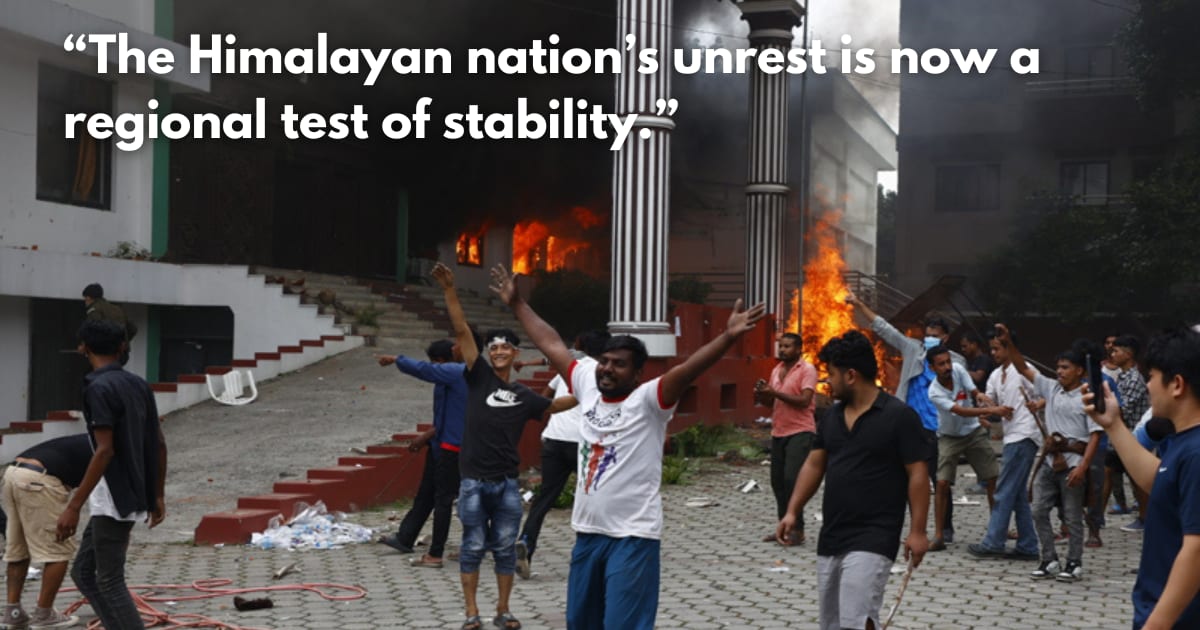

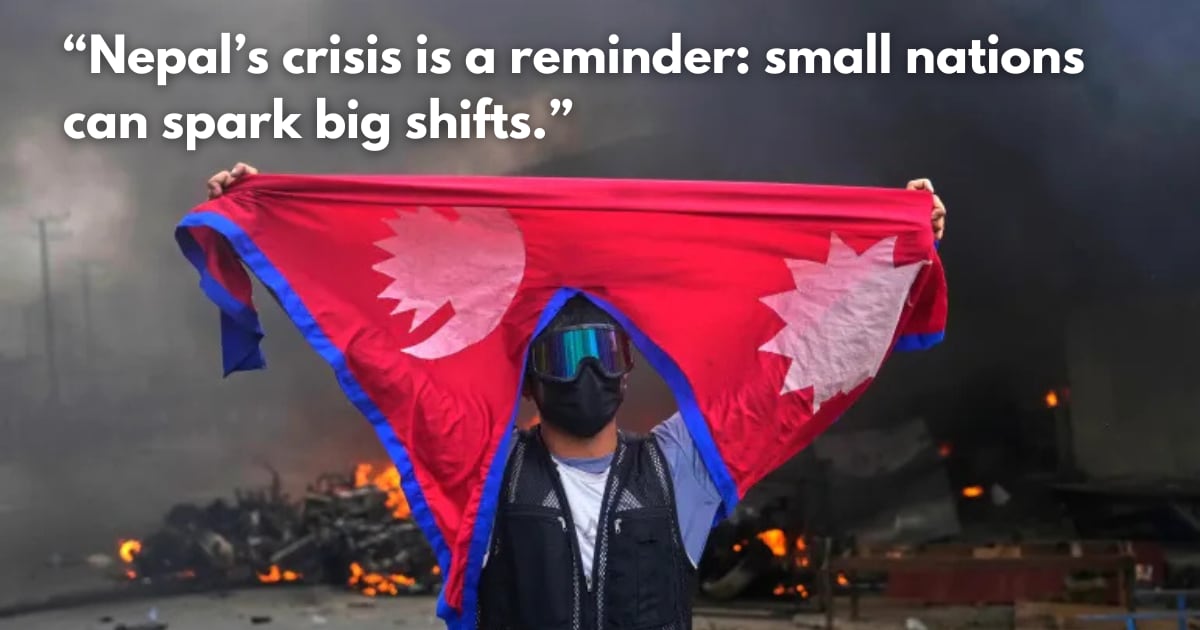
Nepal – (FazTimes Media): In just a few dramatic days, Nepal has moved from a period of calm to political chaos, causing effects that are now spreading across South Asia. The resignation of Prime Minister K.P. Sharma Oli, after violent clashes with protesters, has left the country at a major turning point. At the heart of this unrest is a youth-driven movement known as the Gen Z Movement, which has shaken not only Kathmandu but also the balance of power in the region.
This situation is not just a problem for Nepal’s 30 million people. It also affects India, China, Pakistan, and other global powers watching the situation closely. To understand why this instability in Nepal is important, you need to look at both its difficult past and its special location and diplomatic role.
The Protests That Shook Kathmandu
On September 8, thousands of young Nepalis took to the streets, angry about corruption, favouritism, and the government's ban on social media. The ban, considered an effort to stop people from speaking out, made already existing anger even worse.
When protesters tried to break through barriers near the parliament building, security forces used live bullets, water cannons, and tear gas. That day resulted in the deaths of at least 19 people. According to BBC News, the police response only made things worse, and within 48 hours, protesters burnt down parliament and set fire to the homes of several top politicians.
By September 9, Prime Minister Oli had resigned, but the movement kept pushing for more significant changes: dissolving parliament, holding new elections, choosing an interim government with their input, and justice for those who died in the shooting.
A Familiar Pattern in South Asia
“Nepal is part of a bigger wave of anger across South Asia,” said a political analyst from Kathmandu. “The message is the same everywhere: young people feel left out, unheard, and treated unfairly by the system.”
According to Al Jazeera, what makes Nepal’s situation unique is the combination of long-standing issues like corruption, favouritism, and economic problems with a new generation that uses online platforms to share information quickly.
A History of Political Unrest
Nepal hasn't had its first time dealing with student protests and political changes. In 1951, people stood up against the Rana rulers, who had controlled the country for a long time. This event led to the first try at running the country democratically.
By 1960, King Mahendra took power away from the elected government and started the panchayat system. This was a government run by the king and without political parties, and it lasted almost 30 years. In the 1980s, students led the way in ending the panchayat system, and in 1990, Nepal returned to having multiple political parties.
Between 1996 and 2006, a Maoist rebellion caused more than 10,000 deaths. The conflict ended when the public pushed the monarchy out of power. Since 2008, three major parties—Nepali Congress, Communist Party of Nepal-Unified Marxist-Leninist, and Maoist Centre—have taken turns leading the country. Prime Minister Oli's tenure of four terms has demonstrated the cyclical nature of Nepali politics, a fact that has frustrated many.
Why the Youth Are Angry
Rajneesh Bhandari, an investigative journalist in Kathmandu, told Al Jazeera, “This wasn’t a sudden thing. The youth have felt ignored for a long time. Corruption, favouritism, and arrogance from leaders made the change happen.”
For many young protesters, Prime Minister Oli’s joke about their movement on September 7 was the last straw. Within 48 hours, they forced him to step down, showing a big shift in Nepal's political direction.
The Regional Dimension
India has a strong influence on Nepal through culture, economy, and politics. This is because of open borders and a shared history. China has become more involved recently, especially under Oli's leadership, which some see as leaning more toward Beijing.
Now that Oli has resigned, there are questions about whether Nepal will go back to closer ties with India. Indian officials are cautiously hopeful that a new government might be more friendly, especially since some members of India's BJP have quietly supported Nepal's pro-monarchist groups.
China, on the other hand, is worried about losing Oli as an ally. Experts say Beijing is mainly concerned about keeping things stable, especially near its border with Tibet.
Pakistan's View
Nepal is less important to Pakistan than to India or China, but it has still helped Islamabad. In the 1960s, King Mahendra reached out to Pakistan partly to keep India from being too powerful.
Conclusion: A new generation is rising
The Gen Z protesters have shown that ignoring their voices can lead to big problems. Their call for honesty, fairness, and better chances shows the bigger frustrations that leaders in South Asia are ignoring. As one young protester told Al Jazeera: “We are not fighting for a seat in parliament. We are fighting for dignity, for fairness, and for a future where leaders work for the people, not themselves.”
Nepal has become a test case: can a movement led by young people change politics without causing more chaos?
The answer will matter not just in Kathmandu but across the entire South Asian region—and even beyond.
Our primary goals at FazTimes Media are to be accurate and confident and adhere to the highest journalistic standards. We check every news story we share against several trustworthy and separate sources to ensure its accuracy.
We have reviewed this report, along with articles from major news outlets worldwide, including BBC News, Reuters, Bloomberg, Al Jazeera, NDTV, The Economic Times, and The Indian Express.
We want to keep the highest standards in global journalism so that our readers can trust the information they acquire.


Discussion0
Join the conversation on this story
Loading comments...