
Detained Korean Workers Reject Trump's Offer to Stay, Head Home

FazTimes media, Seoul – In a surprising diplomatic move, former U.S. President Donald Trump recently offered to let hundreds of South Korean workers, who were arrested in a big immigration raid, stay in the United States. However, despite his offer, nearly all of the workers chose to return to South Korea. This incident shows growing worries about work visas, investments, and trust between South Korea and the U.S.
South Korean officials said only one worker took up the offer to stay. The rest boarded a special flight home after a 24-hour delay caused by Trump’s actions. The offer, which was meant to let the workers stay and help train American workers, ended up showing how shaky the relationship between the two countries is. Analysts said, as reported by BBC News, the move was supposed to make the raid look less harsh, but it might actually make South Koreans more doubtful about America’s reliability as a partner.
A Raid That Ignited Public Outrage
Hyundai Motor and LG Energy Solution were building a $4.3 billion battery plant in Georgia when the raid occurred. U.S. immigration officers detained about 300 South Korean workers and over 150 workers from other countries.
Witnesses and South Korean media depicted the operation as highly aggressive, involving the presence of armoured vehicles at the site and the initial cuffing of some workers. The images shown in Seoul made people furious, especially since South Korean companies are heavily investing in U.S. projects related to clean energy and electric vehicles.
Unlike usual deportations, the workers were eventually allowed to leave without being handcuffed—an outcome that South Korea had strongly fought for. Al Jazeera reported that South Korean officials called the use of shackles “humiliating” and not right for workers who were brought in to help build a major U.S. manufacturing project.
Trump’s gesture was meant to show charitable faith, offering detained workers the chance to stay in the U.S. to train American workers in special skills. But many in Seoul saw it more as a political move than a real effort to help workers.
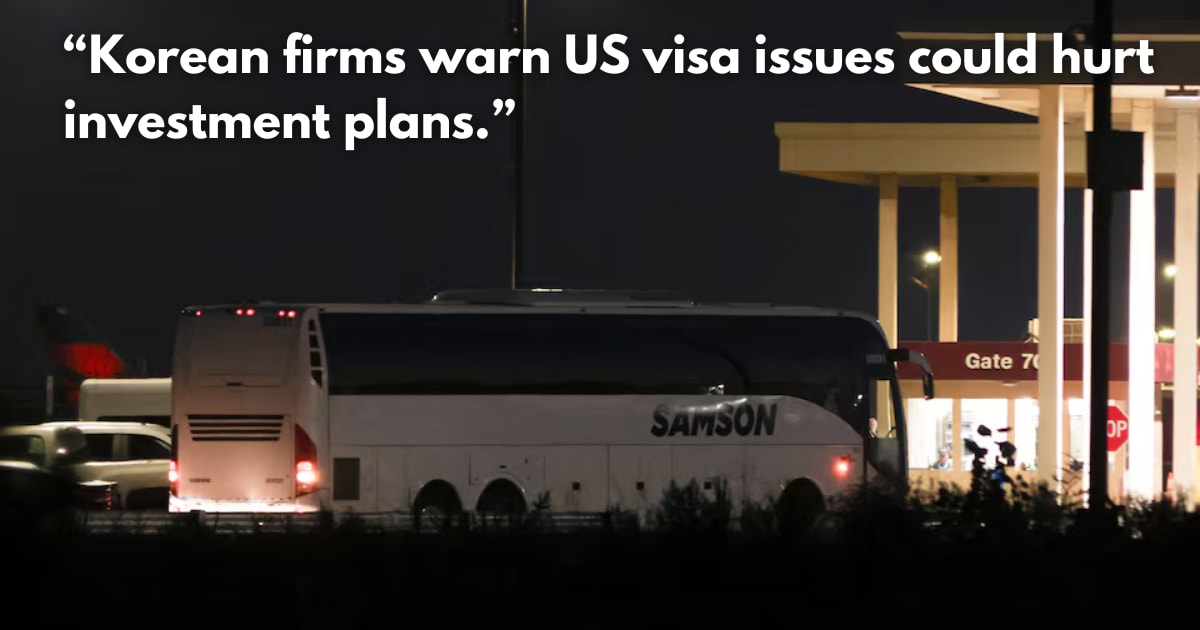
Park Min-kyu, a trade analyst in Seoul, said, “It was more about protecting investments than protecting workers. And the fact that only one person stayed shows how much mistrust there is.” The workers travelled by chartered plane from Atlanta on Thursday. The TV showed buses arriving at the detention centre at 2 a.m. to take the released workers to the airport. Many looked worn out, showing how stressful the situation had been.
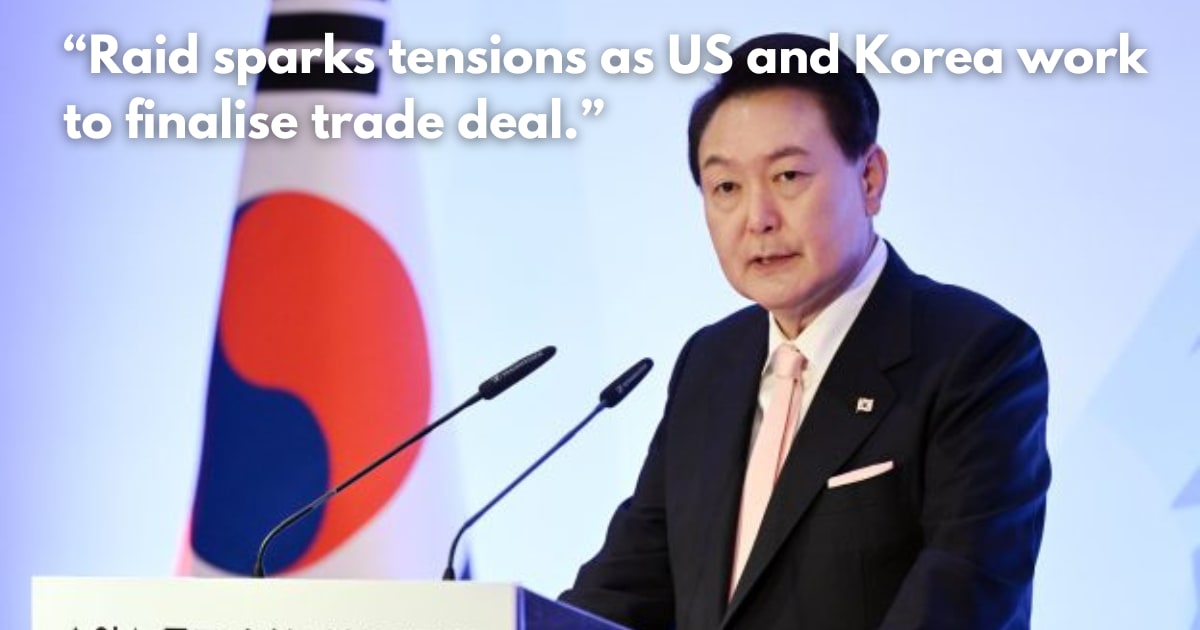
The raid has shaken business confidence in U.S.-South Korea relations. President Lee Jae Myung, in his first 100 days in office, said the incident caused big worries for businesses. “Our companies are confused now,” Lee said. “There’s a real risk this could stop future investments from South Korea.”
Reuters reported that the U.S. wants to attract South Korean money, especially in high-tech areas like battery production. But the raid, along with tough visa rules, may hurt efforts to build stronger economic ties. Adding to the problem are the ongoing trade deal talks between the U.S. and South Korea. U.S. Commerce Secretary Howard Lutnick told CNBC, “The Koreans didn’t sign. They either accept the deal or face tariffs. The situation is unambiguous.
His comments came just after President Lee expressed concerns about the raid, showing that Washington is pushing hard even with the incident. For South Korea, the timing is tough. South Korean companies are key in making batteries for electric cars, and any drop in investment could affect many industries.
Visa Troubles That Refused to Go Away
One of the main problems with this situation is the difficulty South Korean experts have getting U.S. work visas. For a long time, Korean companies have said that while Washington is pleased to accept big investments, it has not been as helpful when it comes to giving short-term visas for engineers and technicians needed to make projects work.
Earlier years saw a lenient interpretation of visa rules, enabling South Korean companies to send experts for limited periods. But the latest actions suggest that this period may be ending. “Many of these workers had jobs that local workers couldn’t do right away,” said Shin Ji-won, an immigration lawyer in Seoul. “The raid shows the U.S. may now be applying rules more strictly than before.”
A New Visa Policy Promises Relief—but Raises Questions
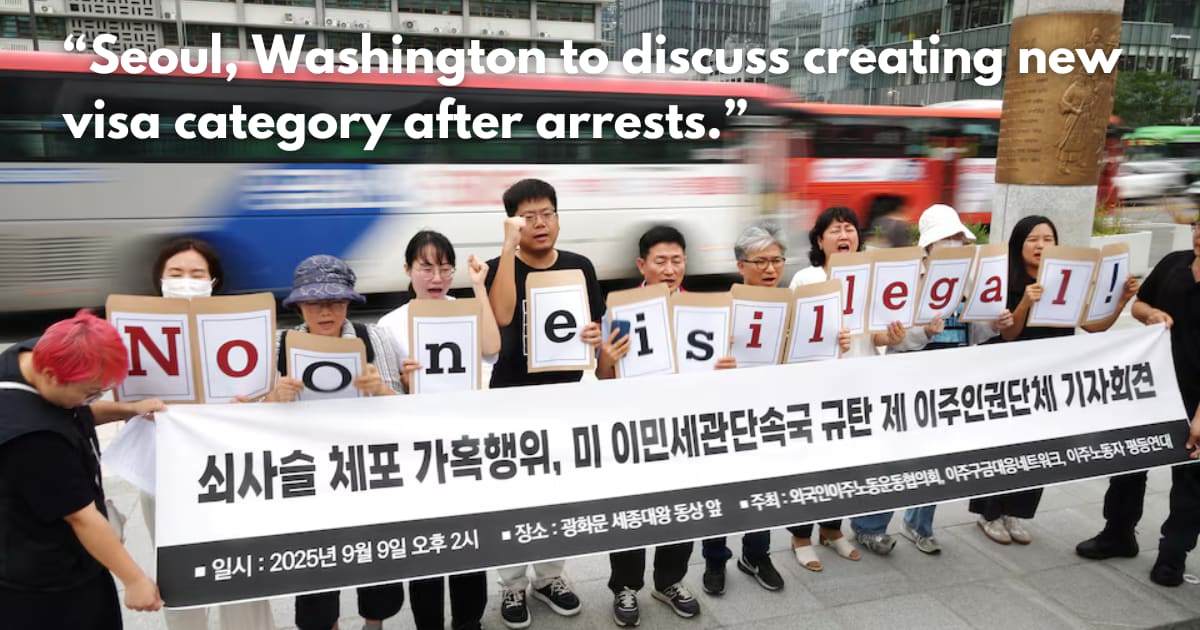
Because of the diplomatic issues, South Korean Foreign Minister Cho Hyun confirmed that the U.S. and South Korea are talking about creating a new visa type for Korean workers. The idea is that this new visa would make it easier for businesses to understand the rules and avoid future problems. However, even if these talks go well, it might take several months—or even years—before the new system is ready. “Our investors will be careful until they see real changes,” said President Lee.
Impact Spreads Beyond the Korean Community
The raid affected more than just South Korean workers. Japanese officials reported the arrest of three of their fellow countrymen. The Chinese foreign ministry reported that the raid also implicated a number of its employees.
Beijing has asked the U.S. to apply laws “fairly” and to respect the rights of Chinese workers. Japan also promised to take “necessary steps” to protect its citizens. This international angle shows that the issue isn’t just between the U.S. and South Korea. It could affect other countries’ investments in American projects, too.
Companies Scramble Amid Policy Uncertainty
After the raid, companies like LG Energy Solution have told their subcontractors to come up with backup plans, such as using local workers. Some workers at other U.S. sites have already left on their own, worried about more raids.
Industry experts warn that this could slow down project progress and raise costs. “It’s difficult to replace highly skilled workers with new ones,” said an executive in the battery industry.
Trust at Stake in Diplomatic Relations
For many people in Seoul, this situation is about more than just laws—it's about trust. South Korea has always been a key ally of the United States, helping through both military support and economic cooperation. Now, seeing their workers treated like rule-breakers instead of valued partners has made people think hard about what the issue means.
One article in a South Korean newspaper said, “As reported by BBC News, this issue isn’t really about visas—it’s about respect.” The writer added, “If the U.S. wants Korean investments, it also needs to treat Korean workers fairly and consistently.”
Conclusion: A Fragile Moment for Bilateral Ties
Despite President Trump's friendly offer to allow detained workers to stay, most affected workers declined it.
For them, going back home felt safer than dealing with the confusing U.S. immigration system.
Businesses and policymakers perceive this event as a vulnerability in the relationship between the U.S. and South Korea. Without clear visa rules and more stable policies, there's a danger that investments could drop—and with that, the strong economic link between the two countries could weaken.
Our primary goals at FazTimes Media are to be accurate and confident and adhere to the highest journalistic standards. We check every news story we share against several trustworthy and separate sources to ensure its accuracy.
We have reviewed this report, along with articles from major news outlets worldwide, including BBC News, Reuters, Bloomberg, Al Jazeera, NDTV, The Economic Times, and The Indian Express.
We want to keep the highest standards in global journalism so that our readers can trust the information they acquire.


Discussion0
Join the conversation on this story
Loading comments...