
Trump Becomes 'Messenger-in-Chief' After Charlie Kirk's Death



FazTimes Media, Washington, Sept 14 – The country is in shock over the shocking death of U.S. conservative activist Charlie Kirk, who was shot and killed in broad daylight on a Utah college campus.
Breaking News, Trump Style: Drama, Disruption, and Headlines
Before official law enforcement agencies could brief the public, Trump declared to the world that Kirk had been shot and killed. He then went further, alleging without proof that the “radical left” was responsible. This accusation was quickly echoed by many of his supporters, sparking heated online debates and even calls for revenge from some right-wing groups.
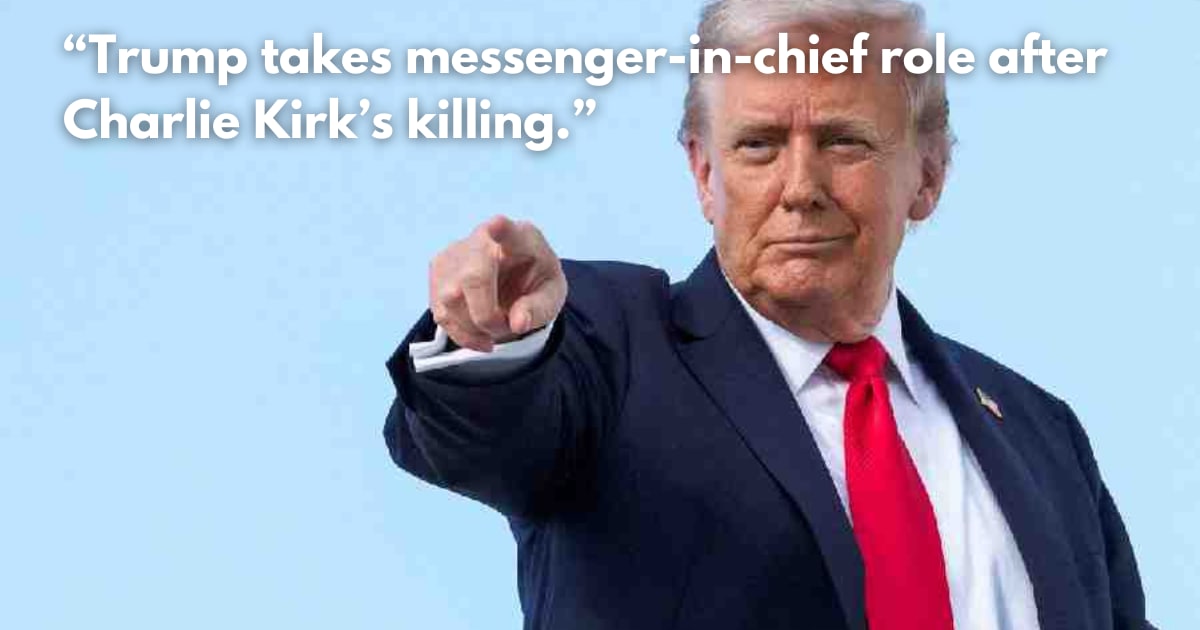
According to BBC News, Trump’s rapid-fire announcements reflected his long-standing style – seizing control of the narrative before others could shape it. By doing so, he placed himself at the centre of the national conversation on political violence, a space where past presidents have trodden carefully.
Who Was Charlie Kirk? The Man Behind the Movement
Kirk, only 31 years old, was already a polarising figure in American politics. Best known as the co-founder and president of Turning Point USA, a conservative student movement, he had built a loyal base of young followers. He was a popular podcaster, author of multiple books, and a frequent guest on right-leaning television networks.
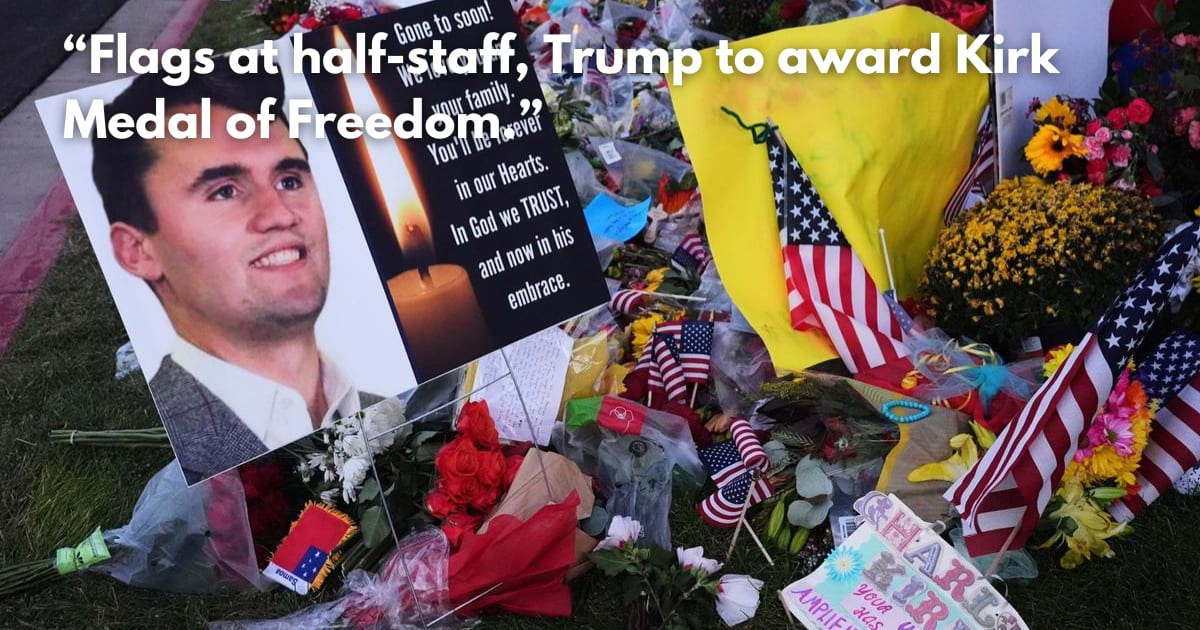
For Trump, Kirk was more than just a political ally. He once described Kirk as someone with “magic over the kids”, recalling how even his teenage son, Barron Trump, looked up to him. Trump swiftly ordered the flag to be flown at half-staff nationwide in honour of Kirk, and he also announced that the activist would be posthumously honoured with the Presidential Medal of Freedom, one of the highest civilian awards. Vice President J.D. Vance accompanied Kirk’s casket back to his home state in a gesture typically reserved for military or government leaders.
According to Al Jazeera, these actions indicate Trump’s deeply personal approach to mourning his ally, but they also blur the usual boundaries between official state procedures and partisan politics. The nation has reacted strongly to Kirk’s killing. Supporters flooded social media with tributes, while critics pointed out his history of inflammatory comments. Trump, however, walked a thin line. He urged his followers to remain non-violent, but also fuelled anger by repeatedly blaming the left without evidence.
During a press event, Trump stated that America had to "beat the hell out of them," referring to radical groups, though he didn’t directly name right-wing extremism as part of the broader issue.
His response has drawn criticism. Senator Elizabeth Warren accused him of selective empathy, contrasting his emotional response to Kirk’s killing with his quieter reaction earlier this year when Minnesota Democratic Representative Melissa Hortman was assassinated.
Political communication experts argue that Trump’s approach risks further inflaming divisions. “Even as he tries to console, his words also raise tensions by assigning blame before investigations are complete,” said Denise Bostdorff, a rhetoric professor at the College of Wooster.
Police arrested Tyler Robinson, a 22-year-old Utah resident, on suspicion of carrying out the shooting. Investigators are still piecing together his motives, but engraved messages on the bullet casings have left analysts puzzled.
However, Trump’s early statements have already influenced public perception, with many of his supporters convinced the killing was politically motivated by left-wing extremists.
Defining the Narrative: Controlling Stories, Shaping Minds
Trump's communication approach has always been atypical. As a former reality TV personality, he excels in direct interaction, unfiltered messaging, and controlling the news cycle. Mercedes Schlapp, who served as a top advisor during his first term, stated bluntly: "Trump wants to be the one to break the news. His administration is on the offensive from a media standpoint like nothing I've seen before."
Indeed, since the shooting, no formal press briefings have been conducted by Trump's aides. Instead, officials defer to him, avoiding any statements that might "get ahead of the president".
Critics caution this approach could interfere with ongoing investigations or cause confusion if facts later differ. Yu Ouyang, a political science professor at Purdue University Northwest, remarked, "Presidents traditionally avoid making breaking-news announcements because they understand the impact their words can have."
Nonetheless, for Trump, speed often takes precedence over caution. "Ronald Reagan was an orator," said Barry Bennett, a former Trump adviser. "But Donald Trump understands the speed of news – and how to get a story out there."
A Dangerous Era of Political Violence: When Words Spark Chaos
Kirk's death is only the latest in a troubling trend of political violence affecting the U.S. Trump himself has survived two assassination attempts in the past year. According to BBC News, both left- and right-leaning public figures have increasingly been targeted, yet public reactions often split along partisan lines. This cycle of selective outrage and finger-pointing risks making political violence seem almost normalised.
Trump's challenge now is not just to honour his friend but also to offer leadership that can calm, rather than inflame, an already divided society.
A Nation on Edge: Fear, Division, and Uncertainty Ahead
As preparations begin for Kirk's funeral, Trump has promised to attend in person, a rare move for a sitting president toward a non-officeholding political activist. Charlie Kirk’s assassination has left a painful scar on American politics, yet it has also brought to light the distinctive communication approach of Donald Trump. By taking on the role of messenger-in-chief, he has blurred the distinction between official presidential responsibilities and partisan allegiance.
As the investigation continues, the nation confronts pressing questions: can its leaders mend a divided society, or will incidents like this only deepen the rift?
For now, the answers remain unclear. Nevertheless, one thing is certain: in times of crisis, Donald Trump will always grab the microphone—whether to comfort, to direct, or to shape the narrative.
Our primary goals at FazTimes Media are to be accurate and confident and adhere to the highest journalistic standards. We check every news story we share against several trustworthy and separate sources to ensure its accuracy.
We have reviewed this report, along with articles from major news outlets worldwide, including BBC News, Reuters, Bloomberg, Al Jazeera, NDTV, The Economic Times, and The Indian Express.
We want to keep the highest standards in global journalism so that our readers can trust the information they acquire.


Discussion0
Join the conversation on this story
Loading comments...