
AAIB Submits Preliminary Report on Air India AI171 Crash - Key Findings & Updates
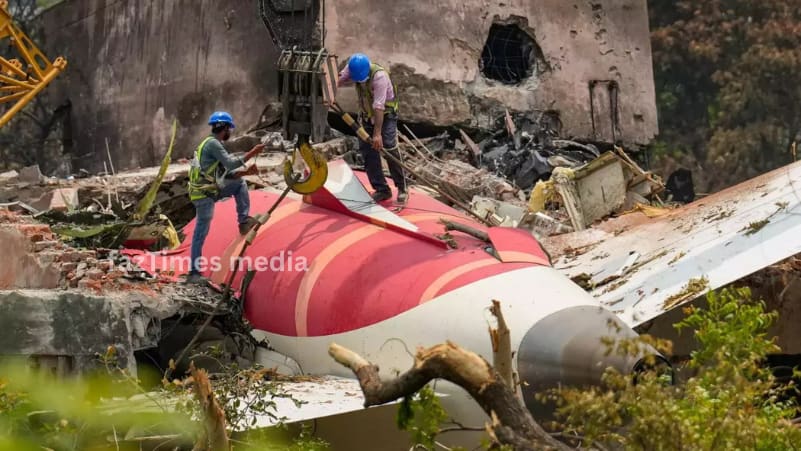
fazTimes media: New Delhi, July 8 – A major event that has captured the attention of the entire country is the release of a preliminary report by the Aircraft Accident Investigation Bureau (AAIB) on the tragic crash of Air India flight AI171. This report, based on initial findings and technical checks, gives the first clues about what caused one of India’s worst aviation accidents in recent times. The crash of flight AI171, which happened on June 12, claimed 260 lives—including 241 people on board the plane and 19 people on the ground—when the London-bound Boeing 787 Dreamliner crashed into a medical college hostel in Ahmedabad just a few minutes after taking off.
In a surprising turn of events, one passenger survived the crash, though they were seriously hurt and are currently being treated in a government hospital.
What We Know So Far
According to The Hindu, the AAIB has already sent out its first report this week, and it's about to be shared with the public. Officials from the ministry say the report includes early information from the plane's black boxes, what people saw, radar records, and communication between the control tower and the plane.
The report suggests that the main thing being looked into is whether both engines stopped working at the same time, which is uncommon but very serious in flying. This kind of problem usually happens because of a mix of technical issues and outside factors, like birds hitting the engines or fuel getting dirty.
As reported by BBC News, Indian officials are working with experts from around the world to check if a major engine failure happened just after the plane took off.
The AAIB responded swiftly and collaborated with various global agencies.
Within hours of the crash, the AAIB set up a team of different agencies led by its Director General and started working at the crash site. The Digital Flight Data Recorder (DFDR) and Cockpit Voice Recorder (CVR), commonly called the aircraft’s "black boxes," were found on June 13 and June 16, respectively.
Thanks to a recent improvement in India's investigation setup, the data was decoded at the newly built AAIB Laboratory in Delhi—a big step showing India's increasing ability to handle aviation safety on its own. Before this, India used to send these devices overseas for decoding because the country didn't have the necessary skills at home.
Al Jazeera reported, “Earlier, decoding black boxes was a slow and complicated process. But with the new lab in Delhi, India has made major progress in aviation independence.”
Why This Crash Is a Watershed Moment
The seriousness of this accident has brought a lot of attention to India's aviation safety and how ready the country is for emergencies. India has been quickly expanding its air travel, especially connecting smaller cities. The crash of AI171 is a big reminder that as the country grows, it must also make sure safety rules are followed strictly.
Aviation analyst Captain Mahesh Batra, a former Indian Air Force pilot, said:
India has made big progress in the number of passengers and airport facilities, but there's more work to be done in checking technical maintenance and how well emergency responses are handled. This incident should make everyone realize the importance of safety.
He also praised the quick teamwork between Indian and international agencies, calling it a “gold-standard example” of how working together across borders can improve aviation safety.
Inside the Investigation: Global Expertise at Work
A Survivor's Story Offers a Glimmer of Hope. Maybe the only positive thing from this sad event is that Neha Sharma, a 31-year-old software engineer from Pune, survived. She was traveling to London for a job when the accident happened. Doctors at Ahmedabad Civil Hospital said she had many broken bones and serious injuries, but she is starting to get better.
In a short message she gave from her hospital bed, Neha said:
“I don’t remember much after the loud noise. The next thing I knew, I was surrounded by broken things and in a lot of pain. I’m thankful to be alive, and I want to know what happened—we all want to know.”
Her survival has made people across the country feel strong emotions and is pushing the government to give clear and honest answers.
What Happens Next?
The initial report is just the beginning of a long investigation that will take several months. Expected to be ready in six to nine months, the final report will present clear results and suggest steps to enhance safety. In the meantime, Air India has stopped all its Boeing 787 Dreamliners from flying so they can be checked thoroughly, especially looking at the engines and software systems.
Pilots and workers on the ground are also taking extra training to handle emergencies better. After the crash, Air India Chairman Campbell Wilson made a statement saying:
“We are working fully with the officials and are giving them all the help they need. The loss is heartbreaking, and we pray for the families of those who were affected.”
People are very upset about the crash and are demanding changes in the aviation system. On social media, there are a lot of posts asking for better monitoring and responsibility in the airline industry. Hashtags like #AI171Crash, #JusticeForVictims, and #SafeSkiesIndia are getting a lot of attention on X (formerly Twitter).
Many people are also pushing for a permanent aviation ombudsman and a single safety authority that works independently from the Ministry of Civil Aviation.
Civil society groups are advocating for increased transparency in the procurement, maintenance, and training of planes.
Final Thoughts: A Moment of National Reflection
India's aviation industry is at a turning point. The first report from the AAIB on the AI171 crash isn't just a technical paper—it shows where things are working, where they're falling short, and how urgent it is to improve aviation safety. For the families of the 260 people who lost their lives, this crash is a heartbreaking loss they'll never get back. But for the country, it needs to be a wake-up call that pushes for real change.
As India works toward becoming the third-largest aviation market by 2030, the skies shouldn't just be full of planes—they should be safe for everyone.
fazTimes will keep watching this story and share new information as it comes in.
At FazTimes, we prioritize accuracy, confidence, and strong journalistic standards. We ensure every news story we share is real by verifying it with multiple trustworthy and independent sources.
We’ve compared this report with coverage from major news outlets around the world, including BBC News, Reuters, Bloomberg, South China Morning Post, Al Jazeera, NDTV, The Economic Times, and The Indian Express.
We are dedicated to maintaining the highest standards in global journalism so our readers can rely on the information they get.


Discussion0
Join the conversation on this story
Loading comments...