
General
Afghanistan-Pakistan Peace Talks Hit Deadlock Over Cross-Border Militancy
By Mohamed Areif Mubarack
Published: Oct 28, 2025, 01:04 PM

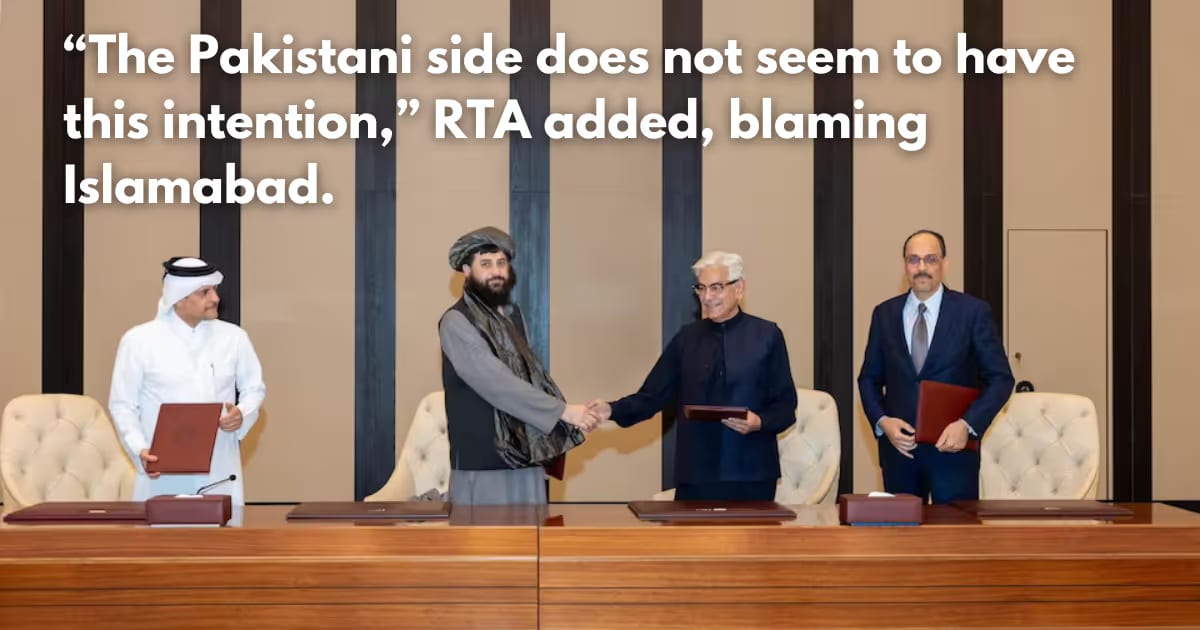


FazTimes Media, Istanbul, Türkiye, 28, Oct — Hopes for a breakthrough in the long-standing tensions between Pakistan and Afghanistan have faded after three days of high-stakes peace talks in Istanbul ended without agreement. Despite mediation by Qatar and Türkiye, the negotiations—aimed at reducing deadly cross-border hostilities—have reached an impasse, leaving both nations’ fragile relationship hanging by a thread.
According to officials from both sides, the key obstacle remains the presence of the Tehreek-e-Taliban Pakistan (TTP) on Afghan soil—a militant group responsible for numerous attacks inside Pakistan. Islamabad accuses the Taliban government in Kabul of providing sanctuary to TTP fighters, while Kabul insists it has “no control” over the group’s actions.
The Istanbul negotiations, which began over the weekend, were supposed to chart a path toward a long-term truce following weeks of escalating violence along the border. However, by Tuesday evening, both delegations left the table without a joint statement or a clear commitment to continue.
Turkish and Qatari mediators have reportedly been working behind the scenes to revive dialogue, but neither side has confirmed whether the talks will resume. The Associated Press cited sources stating that Turkish diplomats made a final attempt to reconcile the differences, while Pakistan Television reported that both delegations stayed in Istanbul for additional consultations.
However, Reuters cited unnamed officials saying the discussions had effectively “collapsed,” following “tense exchanges” over Islamabad’s demand for Kabul to act decisively against the TTP.
Islamabad argues that the Afghan Taliban—who seized power in Kabul in 2021—have turned a blind eye to the presence of TTP leaders and fighters on Afghan soil.
“The TTP operates freely from inside Afghanistan and launches attacks on Pakistani soil with complete impunity,” a Pakistani security official told local media.
Pakistan insists that it has provided intelligence sharing, diplomatic engagement, and even incentives to encourage Kabul to take concrete steps—but to little effect.
State-run Pakistan Television (PTV) reported that the Afghan delegation had initially “agreed to decisive action” against TTP hideouts but later “backtracked under instructions from Kabul.”
An Afghan source familiar with the talks, speaking to Reuters, said the discussions ended amid heated arguments. “The Pakistani side kept insisting that Kabul must restrain the TTP,” the source said. “But the Afghan representatives made it clear that they don’t control the group and cannot dictate their activities.”
In response, Taliban-controlled Radio Television Afghanistan (RTA) blamed Islamabad for the stalemate, claiming that “Pakistan came to the talks with preconditions rather than goodwill.”
Despite the failure of negotiations, both governments claim that the temporary ceasefire remains intact—though reports from the ground tell a more complicated story.
Over the weekend, five Pakistani soldiers and 25 militants were killed in skirmishes near the Kurram border region, according to Pakistan’s military. Officials identified the militants as "Fitna al-Khwarij," a designation for extremist fighters suspected of operating under foreign influence.
The renewed violence follows a bloody week earlier this month, when cross-border exchanges left dozens dead on both sides—the deadliest clashes since the Taliban’s return to power in August 2021.
Adding an international twist to the regional dispute, US President Donald Trump—now back in office—said on Sunday that he intends to “solve the Afghanistan-Pakistan problem very quickly.”
Trump, who has repeatedly touted his role in ending what he calls “endless wars,” suggested that Washington might soon offer mediation if both countries fail to reach common ground.
Analysts, however, view the statement with skepticism. “Trump’s comments are likely aimed at domestic audiences rather than an actual diplomatic initiative,” said Dr. Hina Aslam, a South Asia researcher at Islamabad Policy Forum. “The United States no longer has the same leverage it once had in the region.”
Nonetheless, the remarks have stirred debate over whether international players—particularly China, the US, and Russia—might once again seek influence in Afghanistan amid the growing power vacuum.
Experts say the impasse is not only about militancy but also about strategic mistrust and political sovereignty.
“Afghanistan sees Pakistan’s demands as interference in its internal affairs,” explained Professor Ahmad Rashid, an expert on Afghan politics. “Meanwhile, Pakistan views Afghanistan’s inaction against the TTP as a direct threat to its national security. Both sides are locked in a cycle of accusation and denial.”
Complicating matters further is the regional dimension. Both China and Iran have quietly urged restraint, fearing that renewed instability could disrupt trade routes and infrastructure projects under the Belt and Road Initiative and Chabahar Port development.
Link:
https://www.faztimesmedia.com/viewpost/afghanistan-pakistan-peace-talks-hit-deadlock-over-cross-border-militancy


Discussion0
Join the conversation on this story
Loading comments...