
General
Amit Shah: Hindi Must Be Language of Science & Judiciary
By Saquib Ansari
Published: Sep 15, 2025, 08:45 AM
Last updated: Sep 15, 2025, 09:41 AM

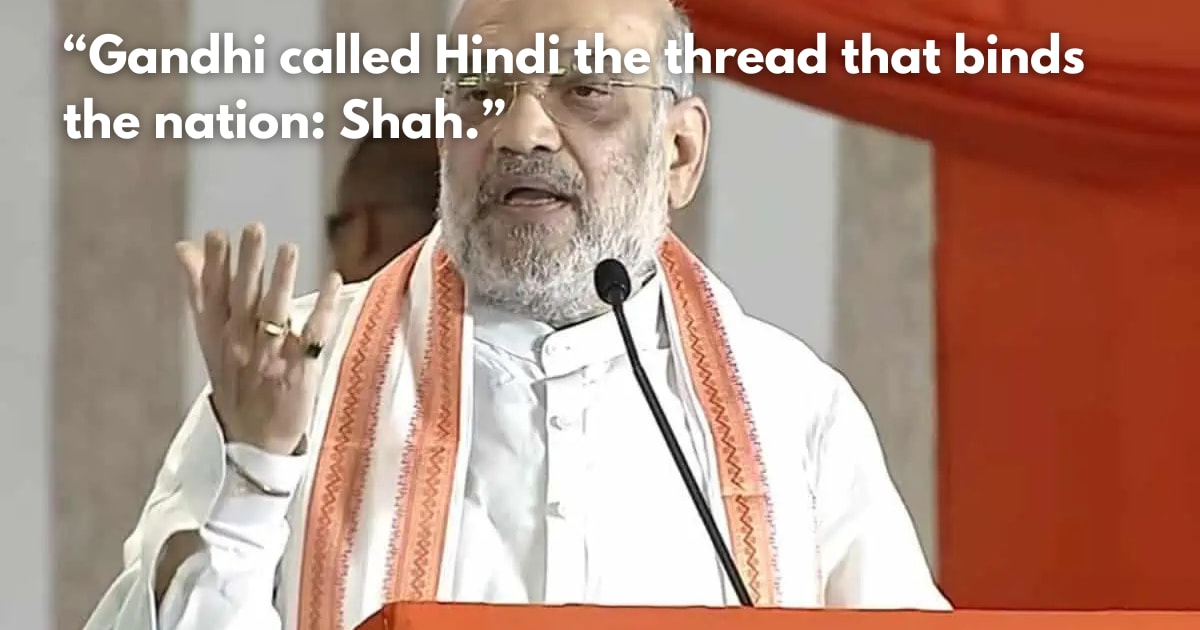
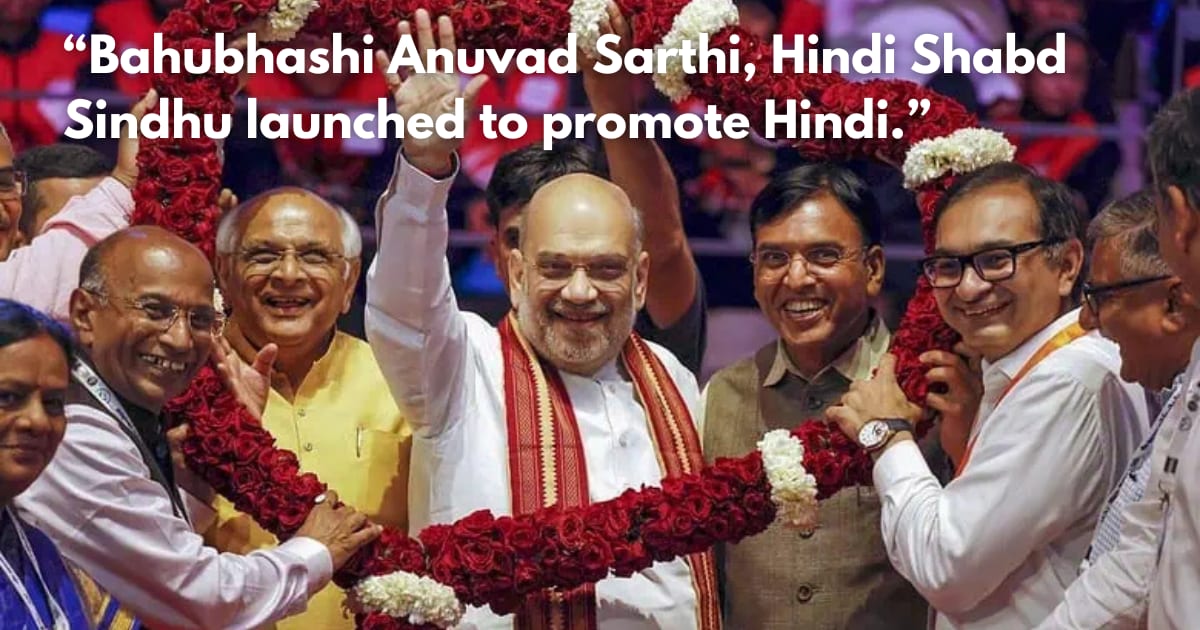


FazTimes Media, New Delhi: On Hindi Diwas, Union Home Minister Amit Shah once again made language a key topic in India's national discussion. At the opening of the 5th Akhil Rajbhasha Sammelan in Gandhinagar on Sunday, Shah said Hindi should not just be used in everyday conversation or government papers but should also be used in areas like science, technology, law, and police work.
He said, “Hindi is not competing with any other Indian language. It is a friend, not an enemy.” His message highlighted the importance of language bringing people together rather than making them feel divided. His remarks came at a time when debates about language, regional pride, and national unity are still happening all over the country.
Hindi as a Tool of Connection: Building Bridges Across Regions
Shah argued that using Hindi in advanced fields would help connect ordinary people with national institutions. “When the courts, police, and scientists work in Indian languages, people feel more connected. This naturally builds trust,” he said.
BBC News reports that language barriers often make it hard for common people, especially in rural and semi-urban areas, to understand technical or legal processes. Shah believes that a wider use of Hindi can reduce these barriers.
Gujarat: An Example of Coexistence and Cultural Harmony
“Gujarat is mainly a Gujarati-speaking state, yet leaders like Mahatma Gandhi, Dayanand Saraswati, Vallabhbhai Patel, and K. M. Munshi promoted Hindi along with Gujarati. Both languages thrived together,” he said.
In schools across Gujarat, Hindi is taught along with Gujarati, and children learn to read, write, and speak in both languages. Shah suggested that this shows promoting Hindi does not harm regional languages but can actually help them grow.
Gandhi and Shivaji: Historical Anchors of National Identity
Shah reminded everyone that Mahatma Gandhi, who was from Gujarat, said Hindi is "the language that holds the country together like one thread." He also took inspiration from Chhatrapati Shivaji Maharaj, who fought for Swaraj. Shivaji focused on three things: Swaraj (self-rule), Swadharma (own faith), and Swa-bhasha (own language). Shah said all three are connected to national pride. He said, "A country that doesn’t value its language can’t truly be free."
Government Initiatives to Boost Hindi: Policies, Push, and Promotion
Shah discussed two Central government projects that aim to enhance Hindi's accessibility and inclusivity.
Bahubhashi Anuvad Sarthi – a digital app that helps translate content into many Indian languages.
Hindi Shabd Sindhu – a giant dictionary that started with 51,000 words and now has over seven lakh entries.
By 2029, this dictionary is expected to be the largest in the world. Al Jazeera says projects like this are important for helping people in multilingual societies.
A More Inclusive Hindi: Language That Welcomes All Voices
Shah also addressed criticism that Hindi uses too many Sanskrit words. He said it’s okay to use Sanskrit terms, but Hindi should also include words from other Indian languages. "Only then will people from different parts of the country feel proud of Hindi," he said.
He added that language must keep changing with time: "Those who don’t adapt become history. Our language will not disappear because it is our past, our present, and our future."
The Bigger Debate: National Unity or Linguistic Domination?
India has 22 official languages and hundreds of dialects spoken across the country. The Hindu says southern states like Tamil Nadu and Karnataka have long resisted what they see as Hindi being forced on them. For them, pushing Hindi in courts, schools, or government jobs feels like ignoring their culture.
Parents and the Mother Tongue: The First School of Identity
The Home Minister also encouraged parents to speak to their children in their native language. He said, “Languages are not just ways to talk; they carry our culture and who we are. If families stop using their language at home, the next generation may lose an important part of their heritage.”
The Future Path: Striking a Balance Between Diversity and Unity
Making Hindi the main language in science, the courts, and police work will need proper policies, training, and resources for translation. Experts say this change can’t happen quickly. It would take many years of effort.
According to BBC News, countries like China and Japan have successfully used their languages in advanced fields by creating vocabulary, textbooks, and training for professionals. India could do something similar, as the Home Minister suggested.
Conclusion: A Debate Worth Having in Modern India
Amit Shah's message on Hindi Diwas wasn't just about celebrating a language but about thinking differently about how India communicates, learns, and makes decisions. His idea that Hindi is a “companion” to local languages, not something that replaces them, shows an effort to identify a middle ground in a country with many different languages.
For people living in local areas, his speech hits close to home. It speaks to everyday challenges—like parents trying to teach their kids in their native language or people dealing with courts and police where English is the main language. As Shah said, “Language is linked to self-respect. We should take pride in our own words, not rely on words from others.”
In a country as varied as India, the discussion about Hindi isn't going to stop anytime soon. But Shah's ideas offer a new way of thinking: a future where Indian languages are not only used in everyday talk but also in important fields like science, law, and government, creating an identity that is both modern and connected to tradition.
Our primary goals at FazTimes Media are to be accurate and confident and adhere to the highest journalistic standards. We check every news story we share against several trustworthy and separate sources to ensure its accuracy.
We have reviewed this report, along with articles from major news outlets worldwide, including BBC News, Reuters, Bloomberg, Al Jazeera, NDTV, The Economic Times, and The Indian Express.
We want to keep the highest standards in global journalism so that our readers can trust the information they acquire.
Link:
https://www.faztimesmedia.com/viewpost/amit-shah-hindi-must-be-language-of-science-judiciary


Discussion0
Join the conversation on this story
Loading comments...