
Apple's Foldable iPhone Buzz: Release, Specs, & What We Know So Far
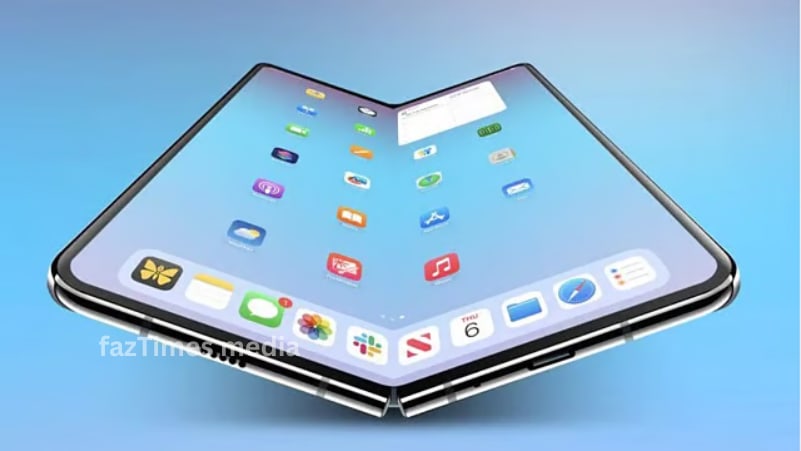
fazTimes media: Cupertino, California – After many years of talking about it and working on new ideas, Apple is getting closer to one of its biggest product releases ever—the foldable iPhone. People who follow tech, experts, and fans have been excited about this, and if it happens, it could change the way we use our phones again. Reports from MacRumors and Tom’s Guide say Apple might release the foldable iPhone by the end of 2026, and they could start making it as early as the third quarter of 2025. The long-awaited, much-discussed foldable iPhone may finally materialize and prove to be worth the wait.
What Makes Apple’s Foldable iPhone Different?
Apple has always waited before jumping into new technology. Unlike Samsung and Huawei, which launched foldable phones in 2019 and 2020, Apple has been quietly watching and learning. This is because Apple doesn’t usually go first in a new category—it waits until it can make something truly better.
According to The Verge, the foldable iPhone is expected to have a design similar to a book, opening up to a 7.
The device is anticipated to feature an 8-inch OLED screen. This puts it up against phones like the Galaxy Z Fold 6 and the Pixel Fold. When folded, the outer screen is said to be about 5.5 inches, letting users do basic tasks without having to open the phone completely.
One thing people are interested in is that Apple is reportedly working with Samsung Display to create a folding screen without a visible crease. This could fix a major problem with early foldable phones—the obvious line down the middle of the screen.
Design, Performance, and Usability
Leaked images and reports, including those from Apple Club, show that the foldable iPhone will have a stylish and high-quality look, matching Apple's usual design style. When folded, it is expected to be about 9 to 9.5 mm thick, and when open, around 4.5 to 5 mm thick, making it thin enough to stand up against today's top smartphones.
Inside, Apple is thought to use its M1 chip or a better version of it, which should provide a smooth and powerful experience for using the phone and handling multiple tasks at once. The phone is also said to include ProMotion technology, which can reach up to a 120 Hz refresh rate, making scrolling and gaming feel smoother.
On the software side, iOS is being adjusted to work well with the foldable screen.
Users might be able to move things between apps on split screens or use the bigger screen for better handling of documents and media. Tech analyst Ming-Chi Kuo said in a report shared by CNBC, "Apple’s multitasking interface for the foldable phone will set the standard. They are taking ideas from iPadOS, mixing productivity with ease of use."
Why Is Apple Entering the Foldable Market Now?
Apple has a history of coming in late but often hitting the right time. Right now, foldable phones make up about 2–3% of all smartphones sold worldwide. But as this category grows and becomes more stable, Apple sees a chance to make a bigger impact.
Jitesh Ubrani, an analyst at IDC, told Bloomberg, “Foldables are no longer a special category. Foldable phones are becoming a viable option for people who want both a compact size and a large screen. Apple’s move is likely to add trust and popularity to the foldable market, which has mostly been led by Android phone makers so far.
Expected Price Tag and Market Strategy
Producing a new product, particularly from Apple, is not an inexpensive endeavor. Early reports say the foldable iPhone might cost between $2,100 and $2,300. That would make it one of the most expensive phones in Apple's history. This price puts it in the ultra-premium range, which fits with Apple's plan to attract wealthy, tech-savvy customers.
Tom’s Guide says Apple thinks people will pay more for a reliable phone, good integration with other Apple products, and the peace of mind that comes with knowing the phone won’t break because of new technology.
The company is probably also going to offer special AppleCare+ plans, larger storage options starting at 512GB, and special deals for existing iPhone owners to help make the cost more manageable.
Release Timeline and Rollout Strategy
According to MacRumors, the foldable iPhone is currently undergoing Design Validation Testing (DVT), a process typically carried out prior to mass production. If everything goes smoothly, Apple might start putting the phones together by late 2025, and they could start sending them out in the fall of 2026.
The first batch is thought to be made in small numbers, around 3 to 5 million units, and will mainly target high-value markets like the U.S. The foldable iPhone is expected to be released in the U.S., China, the UAE, and parts of Europe. There’s also a guess that Apple might introduce the foldable iPhone at the same time as the iPhone 18 series, giving customers both a familiar phone and a new, futuristic one in one big event.
Some people are doubtful. Foldable phones have had problems before, like broken hinges and screens that come off. Apple usually only releases products that meet very high quality standards, so it's unlikely they'll rush something out without making sure it works well. He also suggested that Apple might test the new technology in other products first, like a foldable iPad or a tablet with two screens, which are also said to be in the works.
Final Thoughts: Will Apple Fold the Future?
The foldable iPhone is more than just a new shape—it could change the way we use phones completely. If Apple can bring its top design, high-quality materials, and smooth software together with the flexibility of folding screens, it might make a phone that’s just as big of a change as the first iPhone in 2007.
But whether 2026 will be the year of the “iFold,” as fans call it, or if the idea gets put on hold again depends on how sure Apple is about solving the main issues that still bother foldable phones—like how long they last, how easy they are to use, and how well they work over time. There is no doubt that the world will closely monitor Apple's release of a foldable phone.
At FazTimes, we prioritize accuracy, confidence, and strong journalistic standards. We ensure every news story we share is real by verifying it with multiple trustworthy and independent sources.
We’ve compared this report with coverage from major news outlets around the world, including BBC News, Reuters, Bloomberg, South China Morning Post, Al Jazeera, NDTV, The Economic Times, and The Indian Express.
We are dedicated to maintaining the highest standards in global journalism so our readers can rely on the information they get.



Discussion0
Join the conversation on this story
Loading comments...