
General
Bihar Elections 2025: AIMIM Pressures Mahagathbandhan Over Muslim Representation
By Mohamed Areif Mubarack
Published: Oct 25, 2025, 04:20 PM
Last updated: Oct 25, 2025, 04:20 PM


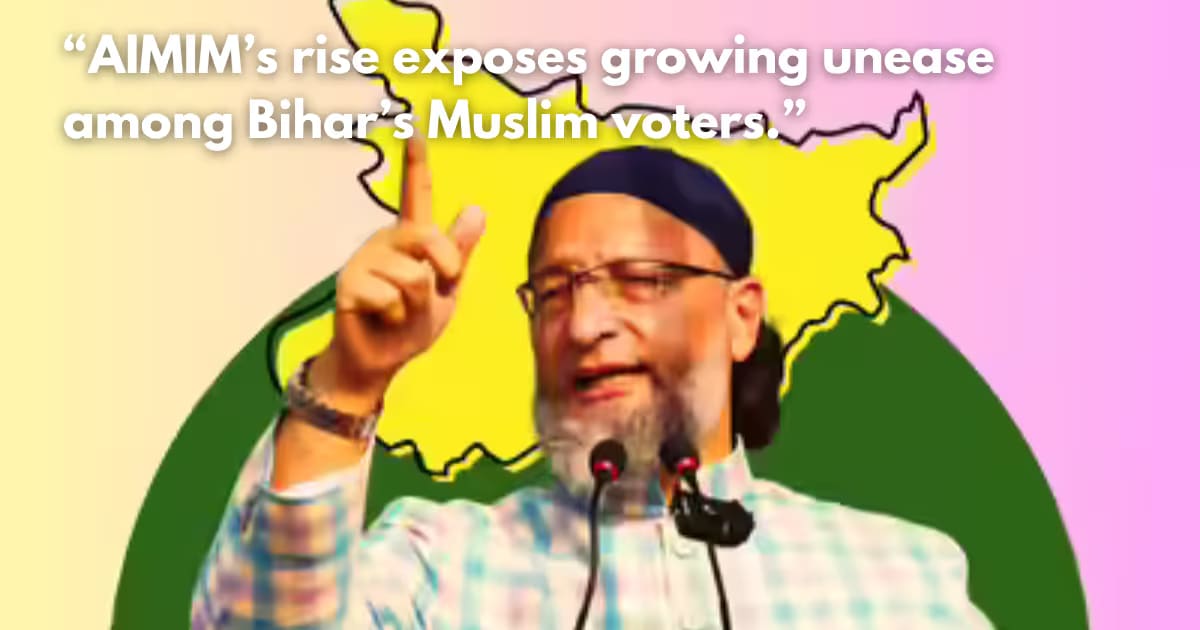
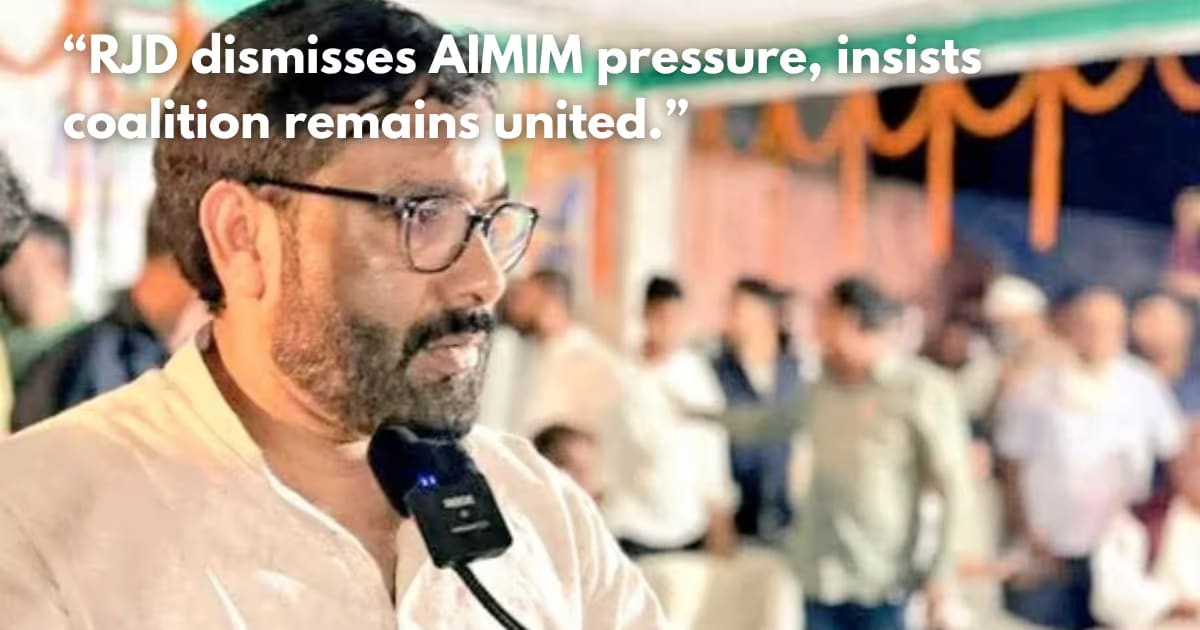
Patna, Oct 25 (FazTimes Media): As Bihar gears up for the 2025 Assembly elections, there is intense internal debate within the opposition Mahagathbandhan (Grand Alliance) regarding the representation of Muslims. Despite making up about 18% of Bihar's population, the political alliance led by the Rashtriya Janata Dal (RJD) and Indian National Congress (INC) has not appointed any Muslim leader to key roles, including the position of Deputy Chief Minister. The All India Majlis-e-Ittehadul Muslimeen (AIMIM) has questioned the alliance's openness because there aren't enough Muslim representatives. This makes AIMIM a strong voice for Muslim voters ahead of the elections.
AIMIM plans to run in 32 districts across Bihar, with a focus on the Seemanchal and Mithilanchal areas. There are a lot of different cultures in these places, and there are also a lot of Muslims living there. In the past, these areas have backed secular parties like the RJD and Congress. However, AIMIM wants to change this by addressing the feeling of neglect among Muslim voters.
AIMIM had a big win in Seemanchal in 2020, winning five seats. This was the party's first big success in Bihar politics.
But this momentum didn't last long because four of its MLA members later joined the RJD. This showed that AIMIM still has problems with keeping its members together and running smoothly.
Even though these problems have come up, AIMIM leaders are still sure that they will come back in 2025 with a stronger and more disciplined campaign.
“Representation is not charity—it’s a constitutional right,” said Owaisi at a rally in Kishanganj, criticizing the Mahagathbandhan for “symbolic secularism without structural inclusion.”
The Mahagathbandhan has chosen Mukesh Sahani, leader of the Vikassheel Insaan Party (VIP) and a representative of the Nishad-Mallah-Sahani community—making up almost 9 percent of Bihar’s population—as the face of their Deputy Chief Ministerial post. This decision has received both support and criticism.
Some people see this as a courageous step toward including more diverse groups in society, beyond just caste and religion. But others believe it omits the Muslim community, which has long supported secular alliances.
A senior RJD strategist, who spoke to FazTimes without revealing their identity, explained, “We are forming a coalition that includes all marginalized groups, not just one community. Muslims are still a key part of our vision, but we also need to reach out to other backward communities.”
But this explanation hasn’t fully satisfied minority groups. Political experts are concerned that the feeling of being left out could make Muslim voters who have traditionally supported the Grand Alliance feel unhappy.
Experts see Owaisi’s campaign as both an election fight and a way to push the Mahagathbandhan to better represent Muslim interests.
“Owaisi’s main goal is two-fold—he wants to be the Muslim voice in Bihar politics and also push the Mahagathbandhan to fix the representation issue,” said Dr. Prakash Singh, a political analyst based in Patna.
AIMIM is trying to connect with many young Muslim voters who feel ignored in political decisions. They talk about things like space and dignity in politics. Owaisi's rallies have attracted large crowds in places like Purnea, Araria, Katihar, and Kishanganj, where Muslim representation is still a big issue in elections.
The party does well in areas with a large Muslim population but struggles to gain support in more mixed regions, where traditional alliances have traditionally backed mainstream secular parties.
Even though AIMIM is becoming more powerful, RJD leader Tejashwi Yadav remains confident. He points out that four out of five AIMIM MLAs joined the RJD in 2020.
“This shows where their loyalty really is and where the people’s trust actually lies,” Yadav said during a campaign rally in Darbhanga.
However, some people within the party admit that AIMIM’s strong campaigning might split the Muslim vote, which could help the BJP indirectly.
“AIMIM doesn’t have enough strength to win big, but it can hurt us in tight races,” said an RJD insider.
Political scientist Harry Blair has said before that in Bihar, Muslim voters often support secular alliances in areas where different communities live together, similar to what happens in Uttar Pradesh and West Bengal. This could limit AIMIM’s influence beyond certain areas where Muslims make up the majority.
As the campaign intensifies, Mahagathbandhan leaders assert that AIMIM is providing covert assistance to the BJP. “Every time AIMIM runs, the BJP gains—this isn’t just luck,” claimed Congress spokesperson Prem Chandra Mishra, saying Owaisi’s presence divides the secular vote and weakens the opposition.
Owaisi has strongly disagreed with these claims, calling them a “lazy excuse” used by parties who don’t want to deal with real issues about representation. “If standing up for Muslim rights makes us the BJP’s friends, then what do you call those who forget about Muslims after taking their votes?” he asked during a rally in Araria.
Political analysts agree that the division between Hindu and Muslim voters helps the BJP’s majoritarian story, but they also note that AIMIM’s message might push secular parties to think more seriously about including minorities in their plans.
Muslims make up about 18% of Bihar's population of 130 million. This is a large group of people who have historically supported secular political alliances. Even though Muslims have been voting for them for a long time, Muslim leaders don't have much power in the state's political system.
Dr. Nazia Akhtar, a political sociologist at Patna University, said, "Muslims are strong at the polls but weak in politics." "The rise of AIMIM shows that people are unhappy with symbolic representation and want real leaders."
The Mahagathbandhan still says it will protect the rights of minorities, but the lack of visible Muslim leaders has become a major issue in the 2025 election campaign.
With only a few weeks until the polls, the race in Bihar is as much about getting the right message across as it is about getting more voters. The Mahagathbandhan keeps saying that it is a secular and open alliance that can beat the BJP-led National Democratic Alliance (NDA). At the same time, AIMIM wants to change what it means to be open in Bihar politics.
It's not clear if Owaisi's challenge will lead to more representation or just a split in the votes. Nevertheless, the discourse around Muslim political participation—a topic that has long been overlooked in Bihar—is now at the forefront of the state’s electoral conversation. Interviews with political analysts Dr. Prakash Singh and Dr. Nazia Akhtar, Patna University
FazTimes Media is a prominent independent news organization dedicated to reliable and impactful journalism. Our team of reporters and editors delivers fact-checked, in-depth analysis and balanced reporting on political, social, and global issues. FazTimes is committed to upholding accuracy, ethical standards, and transparency, ensuring all content meets international editorial benchmarks and complies with Google AdSense quality and originality guidelines.
Link:
https://www.faztimesmedia.com/viewpost/bihar-elections-2025-aimim-pressures-mahagathbandhan-over-muslim-representation


Discussion0
Join the conversation on this story
Loading comments...