



Bitcoin Pushes Above $80,000 as Weaker Dollar and Treasury Moves Lift Crypto
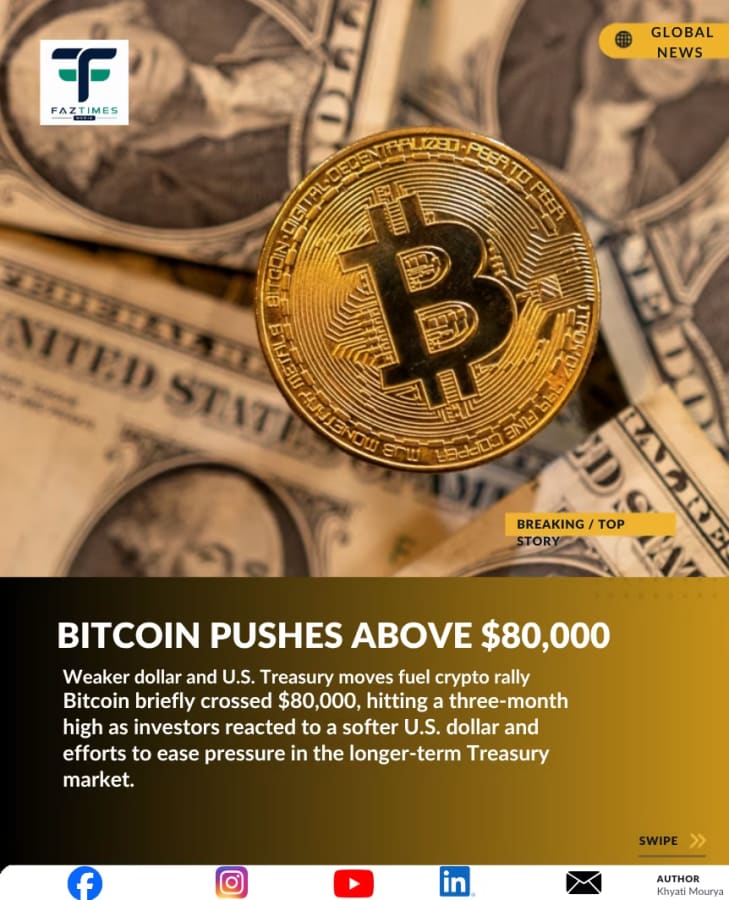
Bitcoin briefly climbed above $80,000 on August 25, reaching a three-month high as investors responded to a weaker U.S. dollar and moves by the Treasury Department to calm longer-term bond yields. The move has renewed interest in crypto as an alternative asset amid concerns about the value of the dollar and U.S. fiscal pressures.
Bitcoin's latest rally is being driven not only by crypto sentiment, but by a much bigger debate over the dollar, U.S. debt and where investors want to park money.
FazTimes Insights
Bitcoin Crosses the $80,000 Mark
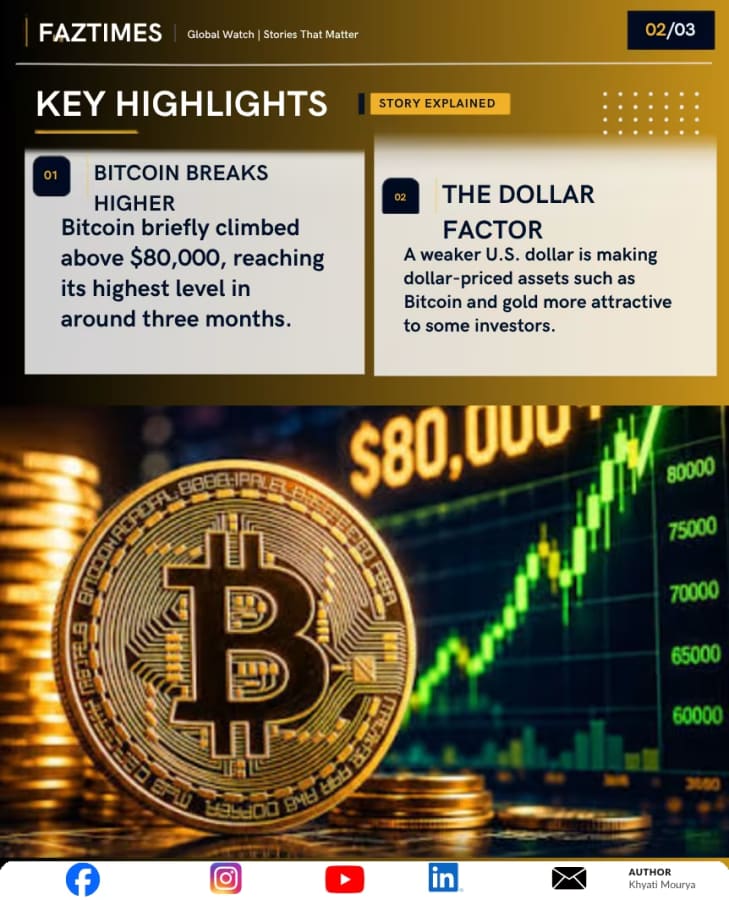
Bitcoin briefly moved above $80,000, reaching its highest level in about three months before giving back some of the gains. Reuters reported that the cryptocurrency was up about 28% in August, putting it on track for its strongest monthly performance since November 2024.
The move comes after a period of weakness in crypto markets, making the latest rebound particularly notable.
The Dollar Is Part of the Story
The latest Bitcoin rally is closely connected to movements in the U.S. dollar.The dollar weakened as investors assessed Washington's expanded sanctions on Iran and the Treasury's efforts to reduce pressure in the longer-term bond market. A weaker dollar can make dollar-priced assets such as Bitcoin and gold more attractive to investors looking for alternatives.
Treasury Buybacks Add to the Market Reaction
U.S. Treasury Secretary Scott Bessent has expanded Treasury buybacks of longer-dated government debt.The Treasury plans to increase buybacks of 10- to 30-year bonds to at least $4 billion per operation, an effort aimed at improving liquidity and easing pressure in the long-term bond market.
Lower bond yields can also influence how investors allocate money between traditional fixed-income assets and riskier investments such as cryptocurrencies.
Why Investors Are Talking About “Debasement”
A major theme behind the latest rally is what investors call the “debasement trade.”The concern is that persistent U.S. fiscal deficits and policies that could weaken the dollar may reduce the purchasing power of cash over time. Bitcoin and gold are increasingly being viewed by some investors as alternative stores of value in that environment.
That does not mean Bitcoin has become a low-risk alternative to traditional assets. Its price remains highly volatile.
Regulation Is Another Tailwind
Investor confidence has also been helped by expectations of clearer U.S. cryptocurrency regulation.
President Donald Trump has called on Congress to advance the Clarity Act, which would establish clearer rules around whether different digital assets should be treated as securities or commodities.
For crypto investors, clearer regulation could reduce some of the uncertainty that has surrounded the industry.
The Bigger Picture
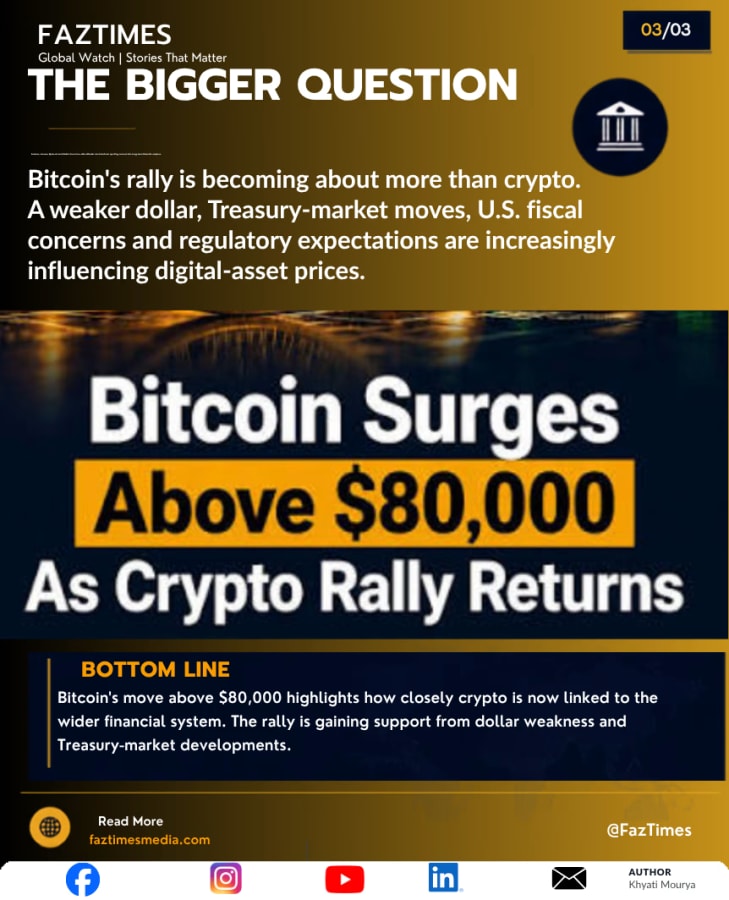
Bitcoin's latest move above $80,000 shows how closely cryptocurrency markets are now connected to traditional financial markets.
The rally is being influenced by the dollar, Treasury yields, government policy, regulation and global risk sentiment, rather than crypto-specific developments alone.
If the dollar remains weak and long-term Treasury yields stay under pressure, Bitcoin could continue attracting investors looking for alternative assets. But a reversal in bond markets, a stronger dollar or a renewed risk-off move could quickly change the picture.
The Bottom Line
Bitcoin's move above $80,000 reflects a broader shift in investor sentiment around the dollar, Treasury markets and digital assets. The rally has strengthened the case for Bitcoin among investors seeking alternatives to traditional assets, but its high volatility means the latest surge does not remove the risks surrounding cryptocurrencies.
FAQs
Q. Why did Bitcoin rise above $80,000?
The latest move was supported by a weaker U.S. dollar, Treasury efforts to ease pressure on long-term bond yields and renewed demand for alternative assets.
Q. What are Treasury buybacks?
They involve the U.S. government buying back previously issued Treasury securities. The latest increase is intended to improve market liquidity and help stabilize longer-term bond markets.
Q. What does “debasement trade” mean?
It refers to investors buying assets such as gold or Bitcoin because they are concerned that government policies, deficits or currency weakness could reduce the purchasing power of traditional money.
Q. Is Bitcoin now a safe-haven asset?
Not necessarily. Some investors treat Bitcoin as an alternative store of value, but its price remains considerably more volatile than traditional safe-haven assets such as government bonds.
Q. Is the Bitcoin rally connected to U.S. crypto regulation?
Yes. Expectations of clearer cryptocurrency regulation have helped improve sentiment toward digital assets.
Q. Could Bitcoin fall again?
Yes. Bitcoin remains sensitive to interest rates, bond yields, the dollar and overall risk appetite. A stronger dollar or renewed market concerns could put pressure on the price.



Discussion0 comments
Join the conversation on this story
Loading comments…