
General
Cat. 3 Hurricane Melissa Threatens Catastrophic Flooding in Jamaica & Haiti
By Mohamed Areif Mubarack
Published: Oct 26, 2025, 08:43 AM



FazTimes Media, Kingston, October 26, 2025— Hurricane Melissa has rapidly become a Category 3 major hurricane, putting parts of Jamaica, Haiti, and the Dominican Republic at risk of severe flooding, landslides, and damage. Meteorologists are warning that this strong and slow-moving storm could bring one of the most dangerous weather events to the northern Caribbean in recent years.
According to the U.S. National Hurricane Center, Melissa is expected to hit Jamaica within the next 36 hours. The storm could bring sustained winds up to 185 kilometers per hour (115 mph) and heavy rainfall, with some areas getting up to 76 centimeters (30 inches) of rain.
Hurricane Melissa was located about 200 kilometers south-southeast of Kingston and 455 kilometers west-southwest of Port-au-Prince, Haiti, as of late Saturday. The storm’s slow movement has raised concerns about long periods of rain and flash floods, especially in mountainous areas where landslides are a big risk.
Jamaican Prime Minister Andrew Holness is urging people to take the situation very seriously.
“I urge Jamaicans to take this weather threat seriously. Take all necessary precautions to protect life and property,” he said in a televised address.
In Kingston, the Norman Manley International Airport has already been closed. Officials in Montego Bay are looking at closing Sangster International Airport, depending on how the storm moves.
The Office of Disaster Preparedness and Emergency Management has set up more than 650 shelters across the island and is providing emergency supplies. Officials have confirmed that they have put thousands of food packages and medical kits in key places in case of long power outages or blocked roads.
Melissa has already caused deaths in neighboring Haiti, where years of unstable politics and natural disasters have left the country's buildings and roads in terrible shape. At least three people have died, and one more is missing, after heavy rains hit the northern and central parts of the country. This incident caused rivers to flood and bridges to wash away.
In Sainte-Suzanne, a town in northeastern Haiti, a major bridge collapsed because the riverbanks broke. Ronald Delice, a director from Haiti’s Civil Protection Department, said that officials are trying to give food and emergency kits to people, but many residents are still not willing to leave their homes even after warnings.
Delice said, “The storm is moving slowly, which makes it more dangerous. We are dealing with constant rain and rising river levels that are difficult to control.”
At least 200 homes in the Dominican Republic have sustained damage, and flooding has disrupted the water supply systems, impacting over 500,000 people. Landslides and fallen trees have blocked several highways, thereby cutting off access to some communities. Electricity outages have been reported in many provinces as officials work to get services back up and running.
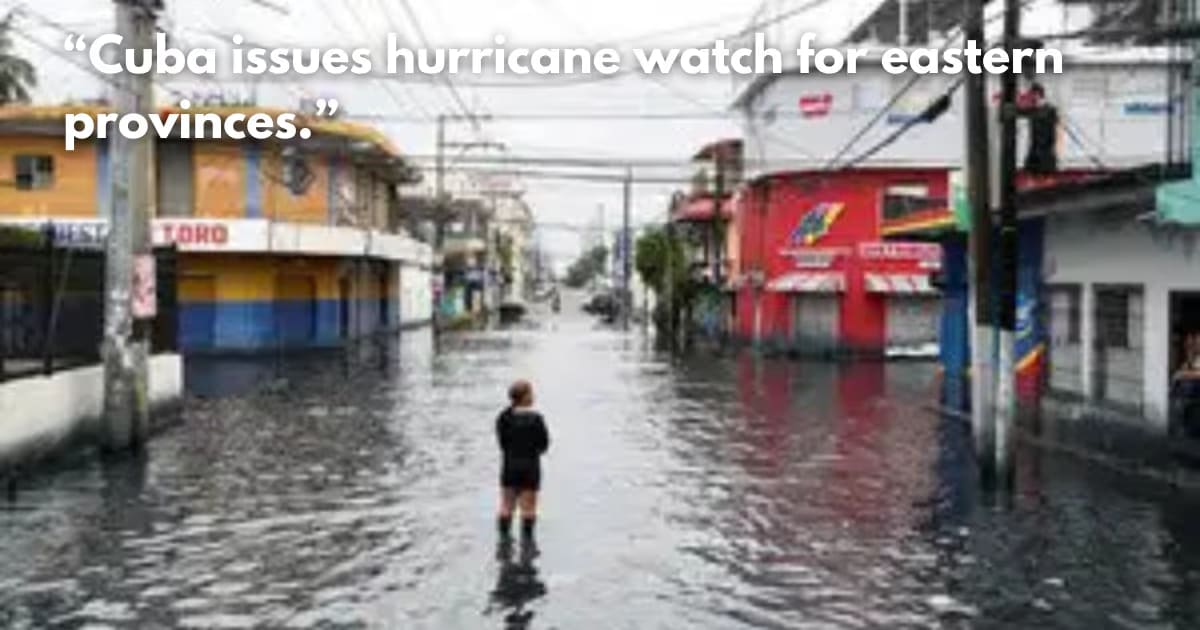
The Cuban government has issued a hurricane watch for its eastern provinces—Granma, Santiago de Cuba, Guantánamo, and Holguín—as Melissa is expected to move north in the coming days. Cuban weather experts warn that even if the storm weakens before hitting land, heavy rain and coastal flooding could still cause “significant damage” to rural areas.
Meanwhile, the Bahamas Department of Meteorology said that tropical storm or hurricane conditions might reach the Turks and Caicos Islands and parts of the Central and Southeast Bahamas by early next week.
Residents in these areas have been told to stock up on supplies, secure boats and vehicles, and stay indoors once the wind speeds get stronger.
Melissa is the 13th named storm of the 2025 Atlantic hurricane season, which starts on June 1 and ends on November 30.
Experts say this year’s hurricane season has been “exceptionally active.” This is because the Atlantic waters have been unusually warm, which is connected to climate change and the El Niño weather pattern.
Melissa is dangerous because it’s strong and moving slowly, according to Jamie Rhome, who is the Deputy Director at the U.S. National Hurricane Center.
Rhome said, “It’s bad news for the communities in its path because the storm is moving slowly. That means there will be a lot of rain, and flooding could spread widely.”
Local disaster groups and international organizations are working together to help the areas affected by the storm.
The Red Cross, the UN Office for the Coordination of Humanitarian Affairs (OCHA), and the World Food Program (WFP) have sent emergency teams to both Jamaica and Haiti.
In Haiti, officials are worried that shelters are full and that there might not be enough clean water if the flooding continues.
The Haitian Ministry of Health has warned that there could be more cases of cholera, which is a problem that often occurs after heavy rains.
In Jamaica, the government has started a public campaign to tell people to avoid crossing rivers, unplug electrical devices, and follow evacuation orders.
Early estimates say the damage could be over hundreds of millions of dollars, depending on where the storm ends up and how much rain falls.
Environmental experts warn that deforestation in Haiti’s mountains could lead to more landslides, and rising sea levels make coastal areas more at risk from flooding.
Dr. Carla Morrison, a climate scientist at the University of the West Indies, told FazTimes Media that Melissa’s development pattern shows “a concerning trend of extremely powerful, wet storms forming more quickly than before.”
She added, “We are now seeing the real effects of climate instability. Every hurricane season brings more rain, stronger winds, and more damage.”
Meteorologists predict that Hurricane Melissa will start to weaken as it moves toward Cuba and the Bahamas during the middle of the week. However, even if the storm becomes less strong, it could still cause heavy rain and flooding.
Officials in the Caribbean are asking people to stay alert because flooding is still the main danger even when the winds are not as strong anymore.
For now, the Caribbean is preparing for another fight with nature—a challenge that will test the strength of its people, buildings, and government systems as the climate becomes more unpredictable.
FazTimes Media is a well-known independent news outlet that focuses on honest and important reporting. Our team of editors and reporters gives you balanced, in-depth analysis and fact-checked news on political, social, and global issues. FazTimes is dedicated to maintaining accuracy, ethical standards, and openness. This means that all of its content meets international editorial standards and follows Google's AdSense quality and originality rules.
Link:
https://www.faztimesmedia.com/viewpost/cat-3-hurricane-melissa-threatens-catastrophic-flooding-in-jamaica-haiti


Discussion0
Join the conversation on this story
Loading comments...