
China Urges Russia for Joint Middle East Peace Efforts Amidst Regional Tensions
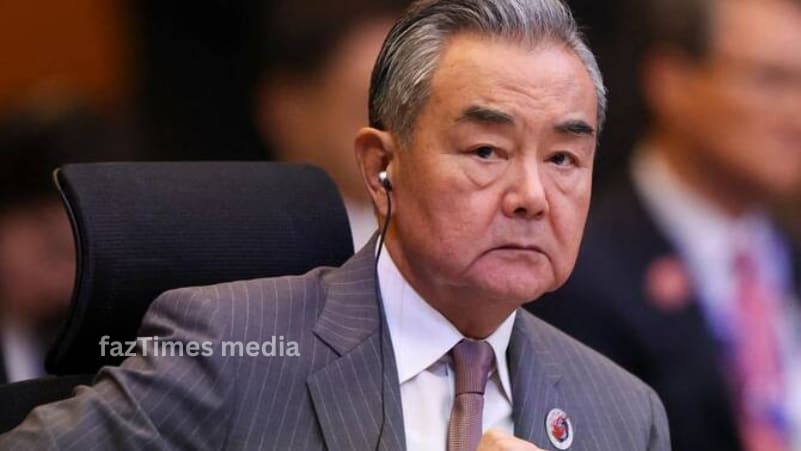
fazTimes media: Beijing/Kuala Lumpur — In a world where conflict and changing relationships are becoming more common, China and Russia are now taking a stand as supporters of peace in the Middle East. During a top-level diplomatic discussion in Kuala Lumpur on Thursday, China's Foreign Minister Wang Yi spoke with his Russian colleague Sergei Lavrov, saying both countries need to “work more closely together” and work together to find peaceful solutions to the problems in the region. As reported by BBC News, the meeting covered several key international issues, including the growing conflict between Israel and Palestine and the ongoing issues related to Iran’s nuclear program.
In an official statement, the Chinese foreign ministry quoted Wang as stating, "We cannot achieve peace through force, and applying pressure won't solve problems." Talking and negotiating are the only way forward.”
A Strategic Shift?
China and Russia have usually been considered forces that balance the power of the U.S. The U.S. and its allies maintain a balance of power. But now, their shared position shows a new direction.
The main topic of Thursday's discussion was the Iranian nuclear issue. Both Wang and Lavrov said bringing back the Joint Comprehensive Plan of Action, or the Iran nuclear deal, is essential for peace in the region and around the world. The IAEA's latest reports, according to Al Jazeera, reveal that Iran possesses enough enriched uranium to produce a nuclear weapon.
However, Tehran says its nuclear program is only for peaceful purposes. Lavrov said during the meeting, “China and Russia both want to go back to the original terms of the JCPOA. We don’t like using one-sided sanctions and believe talking things out is the best way forward.”
A New Axis of Mediation?
The narrative is becoming clearer: China and Russia are not merely criticizing the United States. China and Russia are not only criticizing U.S. policies but also attempting to demonstrate their ability to provide effective solutions for conflict resolution.
In the Middle East, places like Syria, Libya, and the Israel-Palestine area are still very unstable. Israel and Palestinian groups in Gaza have fought more, Lebanon has more issues, and the Ukraine war may spread.
Michael Singh, who leads the Washington Institute for Near East Policy, said, “Beijing and Moscow are thinking long-term.
They believe the U.S. is losing trust in the Middle East, especially after events in Afghanistan and Iraq. So they are moving in with offers of talks, business deals, and alliances that support a world with more than one power.
India has strong ties to Russia and the Middle East, but it has been careful about public comments. The country still buys oil from Iran, has defense agreements with Israel, and has a large population of Arab countries living abroad. To Indian experts, the closer relationship between China and Russia in the region brings both good and bad things.
On the positive side, a calm Middle East would mean more stable energy supplies and safer paths for Indian trade. However, if China leads efforts to resolve conflicts, it might change the balance of power in the region and reduce the role India plays in diplomacy.
“India is probably going to stay watchful but not get into arguments,” said Professor Anita Nair from Jawaharlal Nehru University. “The region is crucial, and keeping things quiet is probably better for our interests.”
Is Peace Possible?
Some people doubt that peace is really possible, even though leaders make hopeful speeches. "It's easy to make promises, but it's hard to act on them," stated a top UN official who wished to remain anonymous.
“The big test for China and Russia will be turning these words into real, meaningful results,” they added. As The Guardian recently wrote, “What we are seeing is not just a fight for power, but a battle over who gets to set the rules for peace, stability, and what is considered acceptable international behavior."
If China and Russia can show themselves as solutions rather than just causes of trouble, they might be able to change how the world interacts and sets global standards.
At FazTimes, we prioritize accuracy, confidence, and strong journalistic standards. We ensure every news story we share is real by verifying it with multiple trustworthy and independent sources.
We’ve compared this report with coverage from major news outlets around the world, including BBC News, Reuters, Bloomberg, South China Morning Post, Al Jazeera, NDTV, The Economic Times, and The Indian Express.
We are dedicated to maintaining the highest standards in global journalism so our readers can rely on the information they get.


Discussion0
Join the conversation on this story
Loading comments...