
Cuba Accuses Netanyahu of 30 Years of Lies on Iran Nuclear Program
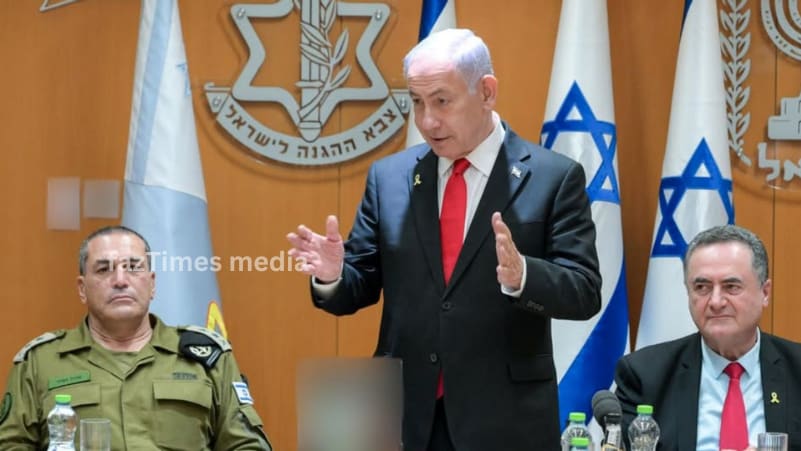
FazTimes media: Tehran/Riyadh – Cuban Foreign Minister Bruno Rodriguez made a strong criticism of Israeli Prime Minister Benjamin Netanyahu, which elicited a significant reaction in international diplomacy. He accused Netanyahu of purposely spreading false information about Iran's nuclear program. According to Iran's state news agency IRNA, Rodriguez said Netanyahu's story is part of a long effort to justify attacking Iran and pulling the United States into a bigger war with the Islamic Republic.
"Netanyahu and his followers have been lying for over 30 years about Iran having nuclear weapons," Rodriguez wrote on the social media platform X, formerly known as Twitter.
"Their aim is clear: to destroy an ancient nation that has always supported the establishment of an independent Palestinian state."
Cuba’s statement is not just words—it shows a major agreement with Iran at a time when the Middle East is already at war, facing regional chaos, and dealing with growing global tensions. The main issue is Iran's nuclear program, which has been under international watch for many years. Iran says its nuclear work is for peaceful purposes, like making energy and doing medical research. But Israel has always believed that Iran is secretly trying to build nuclear weapons.
According to BBC News, Israeli officials say new satellite images and intelligence show secret efforts to enrich uranium. Iran, supported by countries like Cuba and other allies, denies these claims, calling them "false information meant to start a war."
The United Nations' International Atomic Energy Agency (IAEA) has noted some violations by Iran of the 2015 nuclear deal, which the United States is involved in. The United States withdrew on its own in 2018. But the IAEA hasn't found proof that Iran is currently developing nuclear weapons. The disagreement between what Israel says and what international inspectors find is causing more tension and division.
The Trigger: June 13 Attack and Iran’s Retaliation
Tensions got high on June 13 when Israeli forces carried out a military strike on Iran’s civilian nuclear sites.
Iran called the attack unprovoked, saying it targeted people like military leaders, scientists, and regular civilians. The strike reportedly killed more than 900 people.
Iran then responded with Operation True Promise III, launching 22 missiles and drone attacks into Israel. The Iranian government said their attack was purely defensive and meant to show they would not back down. The situation developed quickly, causing several countries to become more alert. Al Jazeera reported that Iran’s missiles hit both military and important sites in Israel, leading to fear and increased military activity.
Gaza: The Forgotten Frontline
Even though people are focusing on Iran and Israel, the situation in Gaza has gotten much worse. On Monday, Israeli forces reportedly killed at least 22 Palestinians and injured more than 20 others. Many of those injured were trying to get food and help in southern Gaza. The Associated Press and Gaza's Health Ministry shared these numbers.
Israel asserts that its actions in Gaza are necessary to eliminate Hamas fighters and safeguard its borders.
However, the use of force has drawn criticism from human rights groups and some international organizations for its perceived harshness.
Al Jazeera reported that various attacks have killed at least 80 Palestinians since early Monday. Israeli troops, using tanks and big guns, have moved further into the Zeitoun area of Gaza City. Important places like schools, hospitals, and shelters have been hit, even though there were warnings telling people to leave. Mariam Al-Ashqar, a displaced person in
International Fallout: A World on Edge
The Cuban minister’s direct comments show a rising frustration among several countries in the Global South.
Many of these nations feel that the Western view of Middle East politics is unfair and focused on military actions.
“Cuba is speaking out for what many countries have been thinking but have not dared to say,” said Dr. Hisham Qassimi, a political science professor at the University of Doha. “They are questioning the usual story that paints Iran as the constant aggressor while ignoring the actions of Israel.”
The Guardian reports that peace activists and UN observers are urging a stop to fighting and quick diplomatic efforts to prevent the conflict from growing into a larger war that could spread across the Gulf, the Mediterranean, and other regions.
What Does This Mean for Saudi Arabia and the Region?
For Saudi Arabia and its neighboring countries, this situation creates a tough problem. Riyadh has always wanted a peaceful and stable Middle East without any nuclear dangers. Although relations with Tehran have improved a little recently, there is still not much trust between them.
A fight between Iran and Israel could cause big economic problems, more people fleeing their homes, and make areas like Yemen, Lebanon, and Syria even worse. Mohammed Al-Saidi, a regional expert in Jeddah, said, “There is no military way to solve this crisis.
The international community, including Gulf countries, needs to support diplomacy. If they don’t, every Arab capital will face the effects.”
The Bigger Picture: Misinformation and Media Warfare
Rodríguez’s accusations also bring up another key part of modern conflicts: the battle over information. In today’s connected world, influencing how people see things is just as important as fighting on the ground.
Both Israel and Iran have run big public relations campaigns, each painting the other as the one starting the violence.
Social media is full of conflicting videos, often hard to check, showing scenes of destruction, missile attacks, and people suffering. The ongoing conflict has made it challenging for many people in the Middle East to tell what’s real from what’s just propaganda.
“It’s hard to know what to believe anymore,” said Ali Hassan, a university student in Riyadh. “We see so many videos, statements, and reports—some from governments, some from activists. The only clear thing is that innocent people are dying.”
Conclusion: Where Do We Go From Here?
The situation between Israel and Iran is getting worse, and now Cuba and other countries are adding to the tension. This is a big challenge for diplomacy around the world. There’s a real danger of a bigger war, and the cost will be felt by regular people in Tehran, Tel Aviv, and Gaza, not just by leaders.
Even though Netanyahu’s government keeps talking about Iran as a major threat, people like Bruno Rodríguez are offering a very different view.
We must take this difference in opinions seriously and engage in honest global discussions. After another round of airstrikes, one thing is clear: the world can’t just ignore what’s happening. False information could lead to even bigger problems, putting too many lives in danger.
At FazTimes, we prioritize accuracy, credibility, and journalistic integrity. Every piece of news we publish is thoroughly verified through multiple trusted and independent sources.
This report has been cross-referenced with coverage from globally recognized news organizations, including BBC News, Reuters, Bloomberg, South China Morning Post, Al Jazeera, NDTV, The Economic Times, and The Indian Express, and we are committed to upholding the highest standards in global journalism to ensure our readers receive reliable and fact-checked information.


Discussion0
Join the conversation on this story
Loading comments...