
'Death in Installments': The Human Cost of Gaza's Crisis

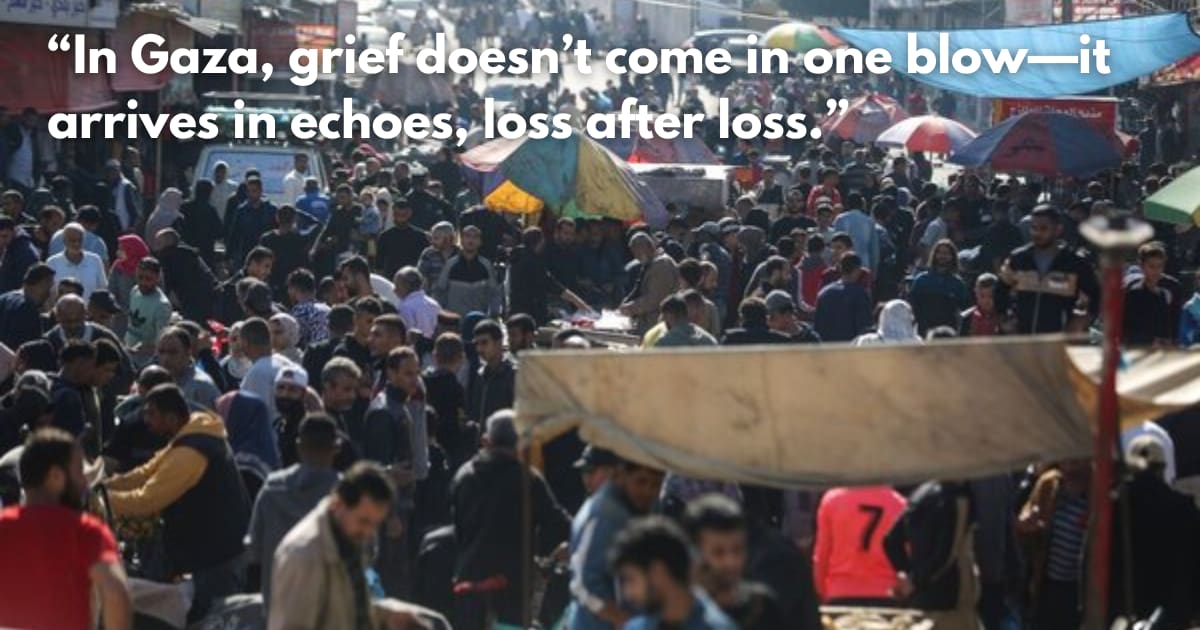
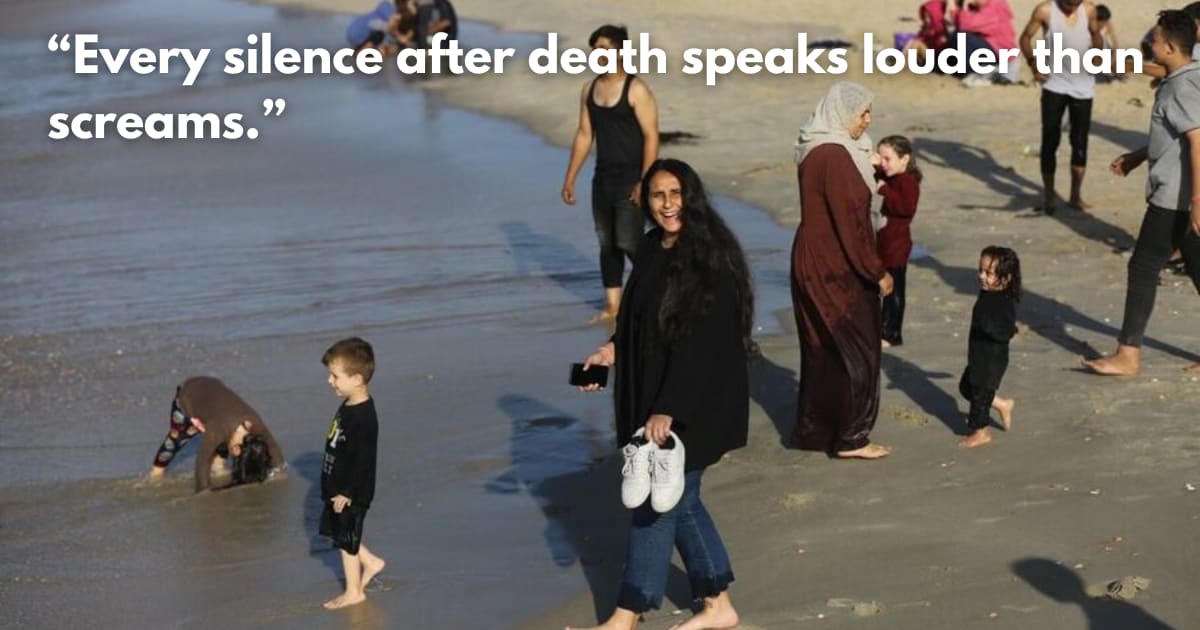


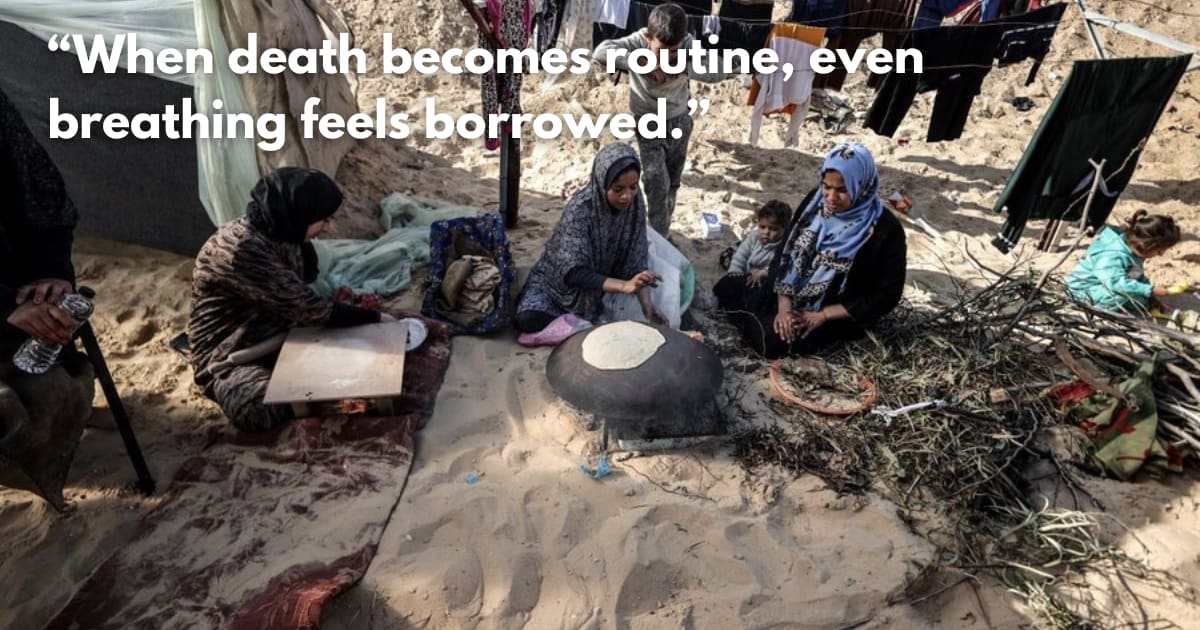
FazTimes Media: Death doesn't happen in one moment in Gaza. Death comes slowly for a lot of families here, taking loved ones one by one in painful waves. Every new loss makes the pain that never goes away even worse. The recent killing of journalist Mohammed Noufal and his colleagues from Al Jazeera has once again shown how tragic this reality is. When I heard the news, my mind went straight to his sister, Janat, a young woman I only slightly remember from university. She studied digital media at the Islamic University of Gaza and ran a small online shop selling girls’ accessories. She was a quiet, kind-hearted person with a warm smile.
Now, she has become another voice in Gaza’s long and sad story of loss.
A Family Torn Apart
Loss has shaped Janat’s life. On October 30, 2023, a missile hit her family’s home in Jabalia. Although Mohammed suffered serious injuries, she and her siblings survived. Her aunt and uncle didn’t. A year later, on October 7, 2024, another tragedy struck. Her eldest brother, Omar, was killed while helping the injured after another bombing. He was hit in what locals call a “double tap” strike—when rescuers are targeted immediately after the first attack.
Then, on June 22, 2025, her mother, Muneera, was killed while visiting relatives. Shrapnel pierced her body during an air raid. She stayed alive for 39 hours in the hospital before passing away. As if that wasn’t enough, on August 10, 2025, Israeli airstrikes hit a media tent near Al-Shifa Hospital. Mohammed, her brother, and six other journalists were killed instantly.
From what was once a lively home, only her father, Riyad, brother, Ibrahim, and sisters, Ola, Hadeel, and Hanan, remain.
A Father’s Breaking Silence
Janat shared heart-wrenching memories of her father’s pain:
When Omar died, Riyad let out a loud groan: “You’ve broken my back, O God.” When Muneera passed, he murmured, “We have been struck down.”
But when Mohammed, the journalist, was killed, he said nothing. No tears, no shouts, no words. That silence terrified Janat more than his visible sorrow. “I feared that his silence might break him forever,” she told me.
Carrying the Legacy
After Mohammed’s death, Janat asked her brother Ibrahim to stop doing journalism. He was now the only son left, and she worried about losing him, too. But Ibrahim refused. “Nothing will happen to us except what God has written,” he said. He wanted to continue Mohammed’s work, sharing the truth about Gaza. For him, journalism wasn’t just a job anymore—it was a way to honour his brother and the others who had died.
A Constant Shadow of Fear
For Janat, life isn’t about safe moments anymore but the time between losses. “Whenever we thought we could catch our breath, another loss would pull us back into the same darkness,” she explained. “Fear isn’t just a feeling anymore. It’s now part of our daily lives, sitting quietly in every part of our world.”
Her words reflect the tiredness of many families in Gaza, where sadness has become a daily part of life.
Families Erased from Existence
The pain isn’t only for one family.
The Government Media Office in Gaza says that as of March 2025:
The civil records have been completely deleted for 2,200 Palestinian families.
More than 5,100 families have only one person left.
These numbers aren’t just statistics. They represent homes that no longer exist and families whose names will not be remembered in the future.
BBC News reported that many aid groups have called this “social genocide”, where families are destroyed, leaving survivors with nothing to rebuild their lives on.
My Family’s Parallel Story
This story feels familiar to me. There were eight cousins of my father: Mohammed, Omar, Ismail, Firas, Khaled, Abdullah, Ali, and Marah. They were always there for our big family get-togethers, which were full of fun and laughter.
But we lost them one by one when the war started. Each funeral felt similar to the previous one, as if sadness repeatedly returned, trapping us in a cycle of pain. Now, only the widows of Omar and Ismail and their two children are left. My father holds his sorrow inside, not saying much about it, trying to keep things quiet.
The New Offensive
Gaza is facing another Israeli attack in the north. Al Jazeera reports that these new attacks have already forced thousands to leave their homes. Last year’s bombing killed tens of thousands. The hardest hit were those who did not relocate to the south. This time, even families who were strong before are getting ready to leave.
Janat’s family will also have to leave their damaged house in Jabalia.
My family, who went through the horrors of the north last year, has decided not to risk it again. “We can’t take any more death,” Janat said. Her words show how tired people are of constantly facing destruction and loss.
Life Under Siege
Life in Gaza has always been hard—there’s not enough food, water, medicine, or electricity. But war has made it even worse. Parents put their kids to bed without knowing if they’ll wake up the next day. Families prepare their documents, clothes, and a bag of bread in case they need to flee at any time.
An aid worker told Reuters, “Here, people don’t live—they wait. They wait for bombs, they wait for death, and they wait for news of another relative who’s gone.”
The human cost goes beyond numbers.
Every number hides a story, like Janat's. A father who says more with his silence than with words. Janat's daughter can't smile anymore. A journalist kept recording until he died.
In conclusion, the survivors' hope is fragile.
But one big question remains: how many more deaths will Gaza have to suffer before the world pays attention?
As reported by The Guardian, international groups keep trying to reach an agreement to stop fighting, but the war keeps coming back. For families like Janat's, hope is weak, but it's the only thing they have left.
Our primary goals at FazTimes Media are to be accurate and confident and adhere to the highest journalistic standards. We check every news story we share against several trustworthy and separate sources to ensure its accuracy.
We have reviewed this report, along with articles from major news outlets worldwide, including BBC News, Reuters, Bloomberg, Al Jazeera, NDTV, The Economic Times, and The Indian Express.
We want to keep the highest standards in global journalism so that our readers can trust the information they acquire.


Discussion0
Join the conversation on this story
Loading comments...