
Delhi's Garbage Mountains Are 'Heat Bombs' for Waste Pickers


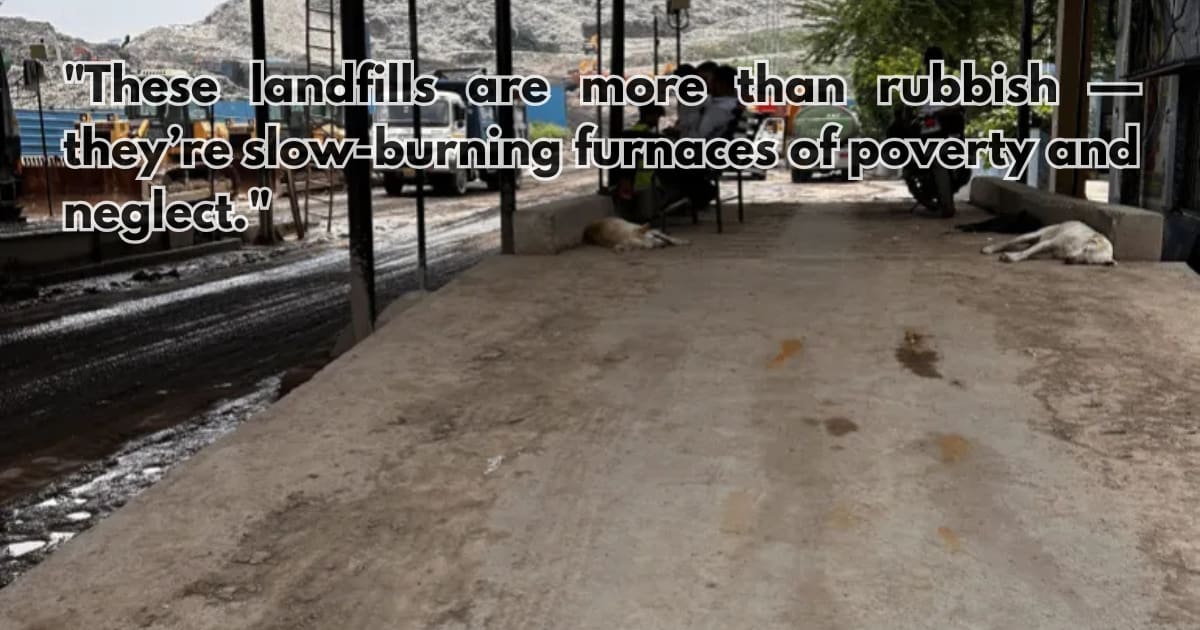
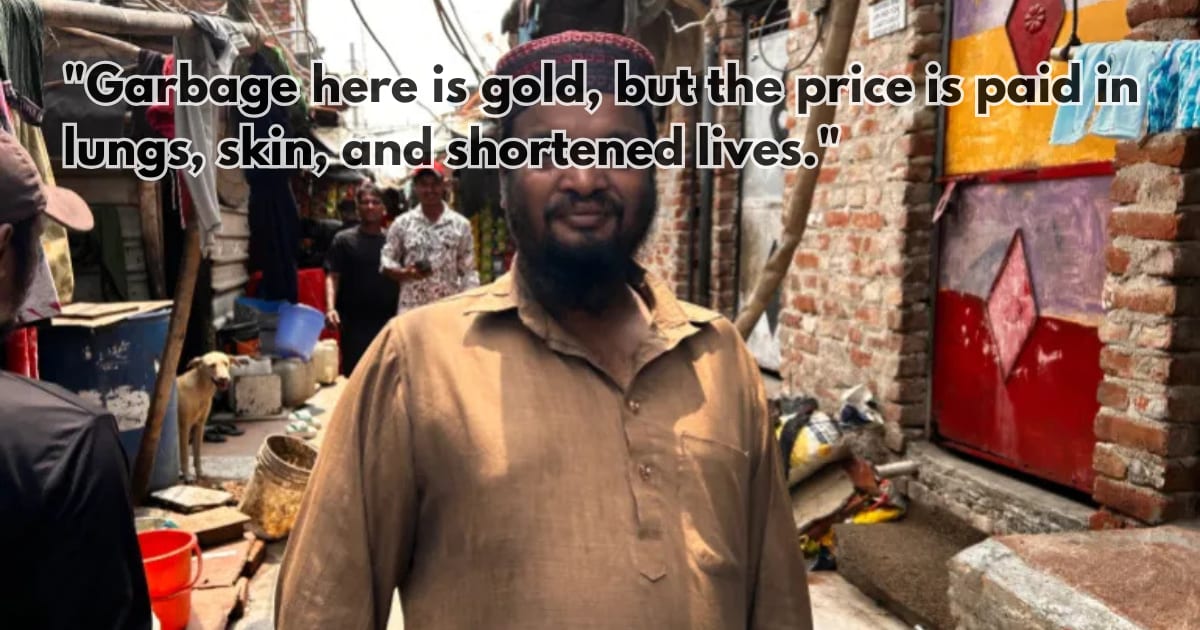

FazTimes Media, New Delhi: In the tangled, narrow streets around Delhi’s Ghazipur landfill, 38-year-old Sofia Begum sits quietly on a worn-out chair. Her right eye is watery and swollen. She wears a faded kurta—green and yellow, once bright, now dull from time and dust. “I had to stop going to the dump last year,” she says, wiping her eye. “When the heat gets too strong, it swells and hurts badly. I can’t handle it.”
Begum married at 13, and for over 25 years, she and her husband have made a living by sorting through tonnes of trash to find recyclables like plastic, glass, paper, and metal. They sell these items to scrap dealers. But in 2022, she got infected after coming into contact with discarded medical waste. Now, under the harsh summer sun, her eye keeps getting worse, making it hard for her to work as much and collect as much as before.
“I used to carry 40 to 50 kilos of scrap every day,” she says. “Now I can only manage half of that—if I’m lucky.”
Waste Mountains in a Hot City
Delhi’s landfill sites—Ghazipur, Bhalswa, and Okhla—are packed full, smelly, and growing like giant, toxic buildings. This June, as the India Meteorological Department issued “orange alerts” with temperatures hitting 49°C (120°F), the piles became heat traps—spewing out methane, smelly gases, and invisible threats.
According to Al Jazeera, these waste piles, some taller than 20-storey buildings, are more than just ugly. They are serious health risks. Inside, decaying organic material creates enough heat to raise the surface temperature of big dumps to 60–70°C (140–158°F) during the summer.
“Imagine them as gas chambers in the open sky,” says public health researcher Anant Bhan. “Waste pickers work in this stifling heat, breathing in methane and other harmful fumes. Over time, it harms the lungs, skin, and even the heart.”
The Ghazipur dump, standing at about 65 metres (213 feet), is now one of the most visible signs of Delhi’s climate and waste problem.
Fighting Heat with Desperation
For many waste pickers, the only way to survive the heat is to change when they work. Tanzila, a 32-year-old woman who lives in the same slum as Begum, now works only at night. She remembers, “I fainted from dehydration last year.” “Now I stay away from the sun completely. But at night, it's more dangerous—there are trucks, tractors, and big machines around. You have to wear a light on your head so they can see you.”
Whether it's day or night, the work is risky. Gases can come out suddenly, and fires can start anytime because of trapped heat and methane. Sheikh Akbar Ali, who started a group called Basti Suraksha Manch, says, “There’s no safe landfill.” “And yet, these people are left to take care of themselves with very little help.”
Promises from the Top, Little on the Ground
The Delhi government has made promises before about clearing the dumps. In May 2025, the Environment Minister, Manjinder Singh Sirsa, said the waste mounds would be gone by 2028. But this isn't the first time such promises were made—earlier this year, he claimed they would “disappear like dinosaurs” in five years.
Meanwhile, the data shows a worrying situation. A group that monitors air quality using satellites found Delhi had over 120 big methane leaks since 2020. One of the worst happened in Ghazipur in 2021, where about 156 tonnes of methane were released into the air every hour.
For waste pickers, the job is both their source of income and a slow poison. “Garbage is our bread,” Tanzila says simply. “We don’t even smell it anymore. Without it, our kids will go hungry.”
The Invisible Workforce
Although they are important for recycling and cutting landfill waste, Delhi's waste pickers aren't officially recognised. Most of them work without health insurance, steady pay, or even basic safety tools. Gloves and good masks are hard to find—too expensive for many.
Ali explains, “Some people buy old masks for five or ten rupees. But they get sweaty very quickly, so it’s hard to breathe. Gloves make hands slippery, so they just don’t use them.” The result: constant exposure to infections, heat stress, and bad air.
A Clash of Climate and Poverty
According to BBC News, city officials are planning to build waste-to-energy incinerators to deal with the landfill issue. Four plants are expected to be set up in Okhla, Narela, Tenkhand, and Ghazipur. But experts are raising concerns that this could make health problems worse.
These incinerators produce harmful chemicals like dioxins and furans, which are known to cause cancer, harm reproduction, and damage the immune system. Also, this approach might take away jobs from waste pickers, replacing their informal recycling work with burning waste.
“Incinerators are a double problem,” says Bharati Chaturvedi, founder of the Chintan Environmental Research and Action Group. “They hurt the environment and remove jobs from thousands of people who rely on sorting trash.”
She believes that real change comes from managing waste locally—separating trash at home, composting organic waste in communities, and involving waste pickers in proper recycling systems with fair pay and legal rights.
“This is more than just cleaning up trash,” Chaturvedi says. “It’s about dealing with poverty, climate change, and environmental fairness all at once.”
The Case for Inclusion
Health professionals say that a community-based approach would be more effective in the long term.
Composting at the neighborhood level could lower costs and reduce emissions. Training and supporting waste pickers could improve recycling and protect their health.
Getting legal recognition could give them access to health benefits, pensions, and better work conditions—turning waste picking from a way to survive into a respected job.
Life at the Edge of the Dump
At Ghazipur, the situation hasn’t changed much. The air is heavy with the smell of rotting waste, mixed with the faint smell of smoke from a recent fire. Plastic sheets flap like flags over temporary homes. “Things here won’t improve,” says Shah Alam, Tanzila’s husband, who now spends part of his time picking up waste and driving an e-rickshaw. “In summer, more people fall sick, and we miss work, but where else can we go?”
For families like theirs, every day is a struggle between risk and need—balancing the dangers of breathing in polluted air with the need to feed their families.
The city’s waste problem may be measured in tonnes and cubic metres, but for Delhi’s waste pickers, it’s counted in swollen eyes, fainting, and sleepless nights under a burning sky. Until policies, infrastructure, and care come together, the mountains of garbage will keep growing—along with the human cost.
Our primary goals at FazTimes Media are to be accurate and confident and adhere to the highest journalistic standards. We check every news story we share against several trustworthy and separate sources to ensure its accuracy.
We have reviewed this report, along with articles from major news outlets worldwide, including BBC News, Reuters, Bloomberg, Al Jazeera, NDTV, The Economic Times, and The Indian Express.
We want to keep the highest standards in global journalism so that our readers can trust the information they acquire.


Discussion0
Join the conversation on this story
Loading comments...