
General
Denmark Bans Civilian Drone Flights Over Military 'Hybrid Attack'
By Mohamed Areif Mubarack
Published: Sep 28, 2025, 04:46 PM
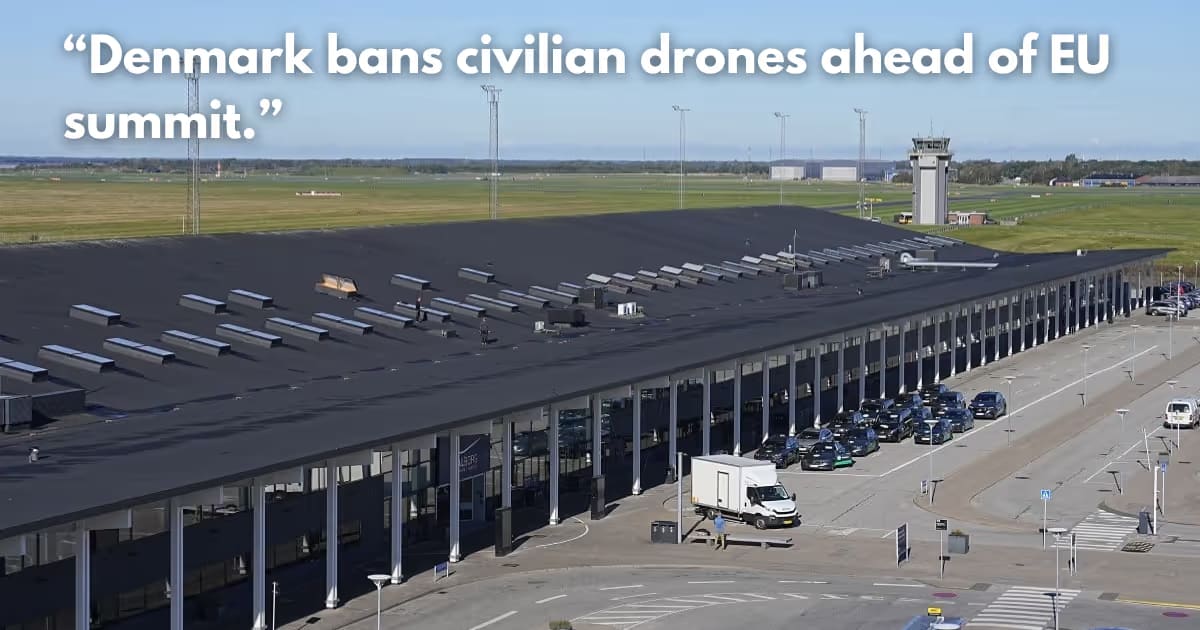
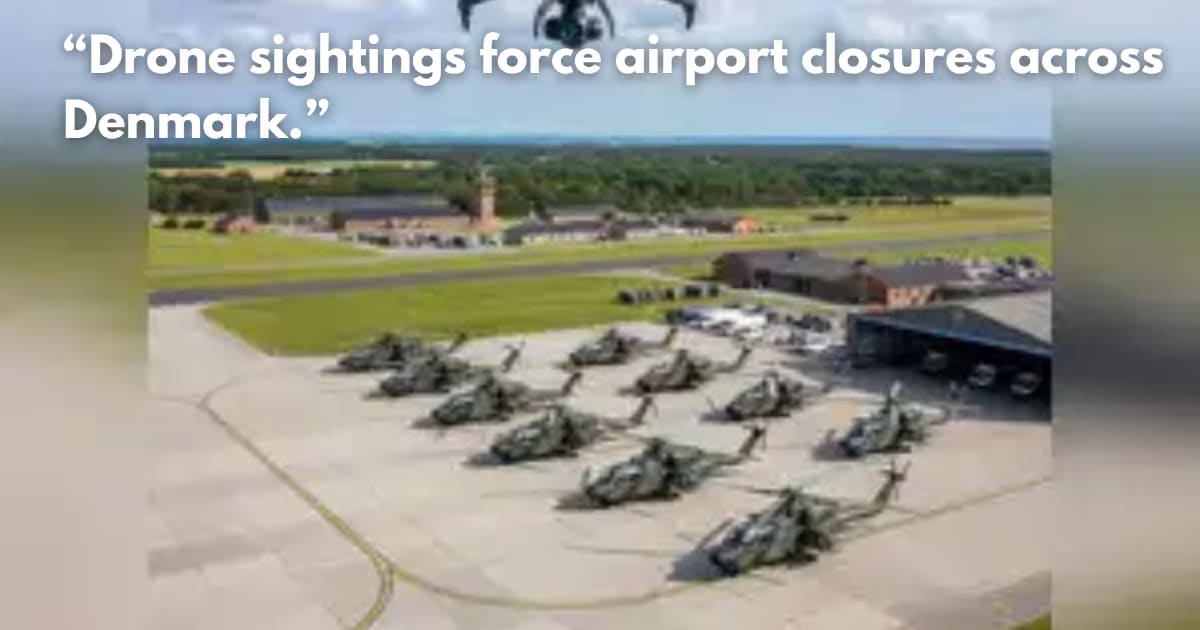

FazTimes Media, Copenhagen, Denmark, has taken the unusual step of banning all civilian drone flights for an entire week, following a series of mysterious drone sightings over sensitive military areas and major airports. The decision, announced just days before the nation hosts two critical European summits, highlights rising concerns about hybrid threats and aerial security in Northern Europe.
The Danish government confirmed late Sunday that the restriction will remain in force from Monday through Friday, aligning with the upcoming European Union Summit and the European Political Community gathering in Copenhagen. Both events are expected to draw dozens of heads of state, senior diplomats, and security officials, making Denmark a temporary hub of European politics.
“We are currently facing an extraordinary security challenge. It is our duty to ensure that the armed forces and police can carry out their responsibilities without additional risks during such an important week,” Defence Minister Troels Lund Poulsen said in an official statement.
According to the Ministry of Defence, “multiple capacities” have already been deployed in response to the drone sightings, though it stopped short of providing details about the number of incidents, the types of drones observed, or their specific locations. Officials only said the activity was “serious enough” to trigger an immediate nationwide ban.
As reported by Reuters, the latest drone sighting occurred on Saturday night, raising alarms at more than one military facility. Recent days also saw the suspension of operations at smaller regional airports, both civilian and military.
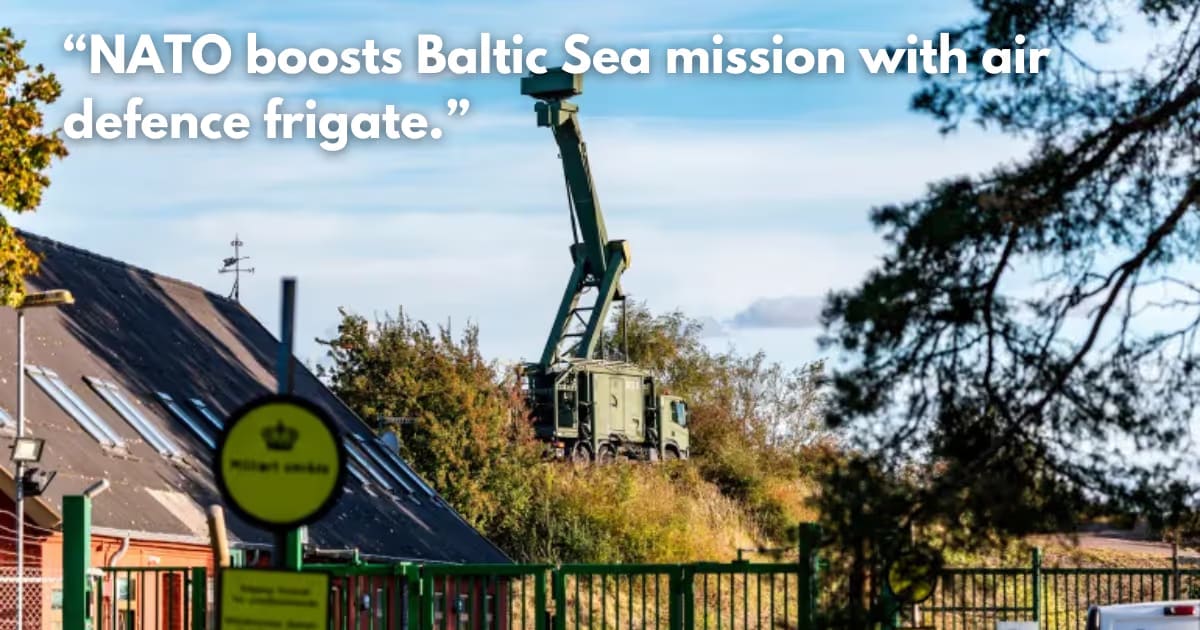
NATO has taken notice of the incidents. The alliance announced fresh security measures, including the deployment of a German air defense frigate to Copenhagen and expanded surveillance across the Baltic Sea region.
In a statement sent to international media, NATO confirmed it would conduct “enhanced vigilance with multi-domain assets,” such as reconnaissance aircraft and advanced intelligence platforms. “These measures demonstrate our readiness to defend the region and prevent any attempt to destabilize Europe,” the statement read.
While responsibility remains uncertain, NATO Secretary-General Mark Rutte acknowledged the possibility of Russian involvement. Moscow, however, has strongly denied any connection, calling such allegations “baseless and politically motivated.”
Danish officials have characterized the incidents as a possible “hybrid attack.” While they have not directly blamed any nation, Prime Minister Mette Frederiksen has suggested that Russia remains the most likely source of such interference.
“We cannot accept a situation where unidentified drones sow confusion and disrupt daily life,” Transport Minister Thomas Danielsen emphasized. He added that the new ban aims to prevent legal civilian drones from being mistaken for hostile activity.
The ministry has warned that violating the restriction could result in fines or even imprisonment for up to two years.
Recently, nations across Europe, including Norway, Sweden, and Finland, have reported suspicious aerial activity near airports, pipelines, and military zones. Security experts say the incidents point to a growing trend of unconventional tactics designed to unsettle European defenses.
The drone ban coincides with Denmark’s role as host for two high-profile international meetings. On Wednesday, leaders of the European Union will gather in Copenhagen to discuss pressing issues ranging from economic policy to regional defense cooperation.
The following day, representatives from the broader European Political Community (EPC)—a 47-member grouping created after Russia invaded Ukraine—will meet to strengthen ties between the EU and neighboring states.
With such high-stakes diplomacy underway, ensuring airspace security has become a top priority for Copenhagen. “Denmark cannot afford any disruption that would undermine the safety of these summits,” said political analyst Lars Kjeldsen, speaking to local media.
The drone mystery comes amid worsening relations between Russia and its European neighbors. Just last week, Estonia accused Moscow of sending three MiG-31 fighter jets into its airspace, an incident that prompted NATO’s Italian jets to escort them out. Russia denied the violation, dismissing it as “fabricated.”
At the United Nations, Russian Foreign Minister Sergey Lavrov lashed out at Western countries for what he described as “fearmongering” about a potential global conflict. “President [Vladimir] Putin has repeatedly said that Russia does not seek confrontation with NATO,” Lavrov said.
Yet many European leaders remain unconvinced. “These drone incursions are not random events. They fit into a wider pattern of hybrid warfare, where adversaries use unconventional means to test our defenses,” explained Katarina Holm, a security expert at the University of Oslo.
For ordinary Danes, the ban has sparked mixed reactions. Drone hobbyists and businesses that rely on aerial photography or surveying expressed frustration at the sweeping restriction. “It’s understandable, given the current security climate, but it also affects many legitimate operators who now face sudden disruption,” said Jens Petersen, owner of a drone-based agricultural monitoring company.
At the same time, many citizens voiced support for the move. Maria Andersen, a resident of Copenhagen, stated that if banning drones contributes to the safety of our leaders and country during the summit, it's a worthwhile investment.
People are increasingly viewing drone technology, once perceived as a tool for innovation and convenience, as a potential weapon of disruption.
Security analyst Holm noted that hybrid warfare blurs the boundaries between peace and conflict. “Even small, inexpensive drones can create significant chaos if used strategically.”
While the identity of the operators behind the mysterious flights remains unknown, the incidents have already achieved one outcome: placing drone security firmly on the agenda of European leaders.
As Defence Minister Poulsen put it, “Denmark will not allow our skies to be used for intimidation or disruption. We stand ready to defend our sovereignty, alongside our allies, against any threat—no matter how unconventional.”
Our primary goals at FazTimes Media are to be accurate and confident and adhere to the highest journalistic standards. We check every news story we share against several trustworthy and separate sources to ensure its accuracy.
We have reviewed this report, along with articles from major news outlets worldwide, including BBC News, Reuters, Bloomberg, Al Jazeera, NDTV, The Economic Times, and The Indian Express.
We want to keep the highest standards in global journalism so that our readers can trust the information they acquire.
Link:
https://www.faztimesmedia.com/viewpost/denmark-bans-civilian-drone-flights-over-military-hybrid-attack


Discussion0
Join the conversation on this story
Loading comments...