
Dharmasthala Probe Takes Twist as Whistleblower Arrested for Perjury


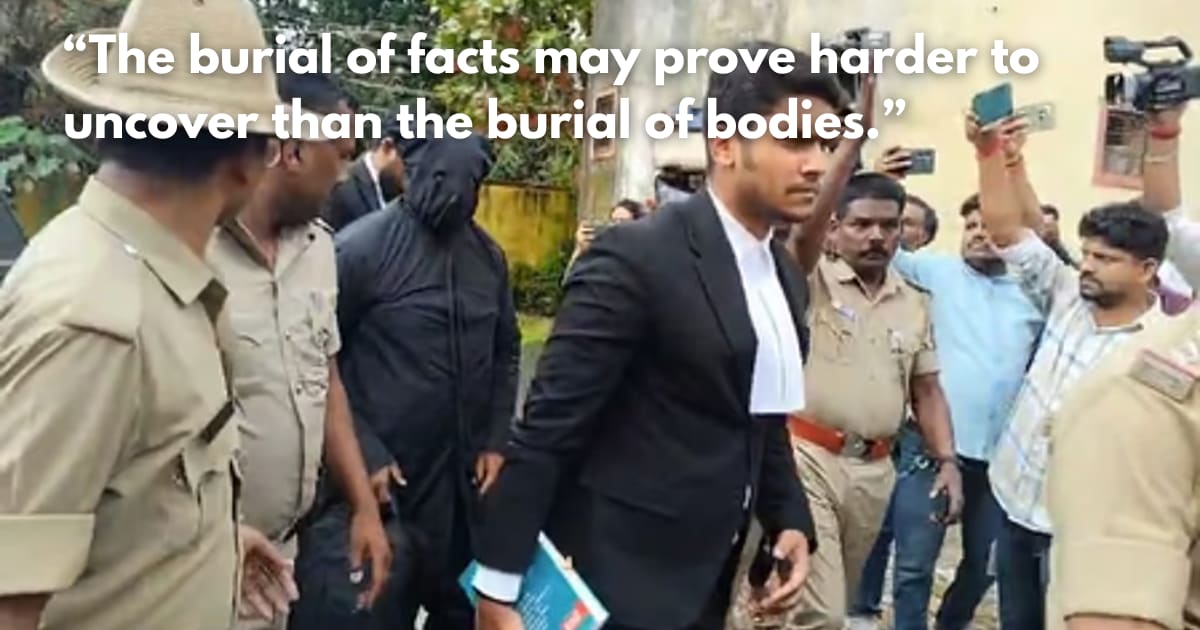
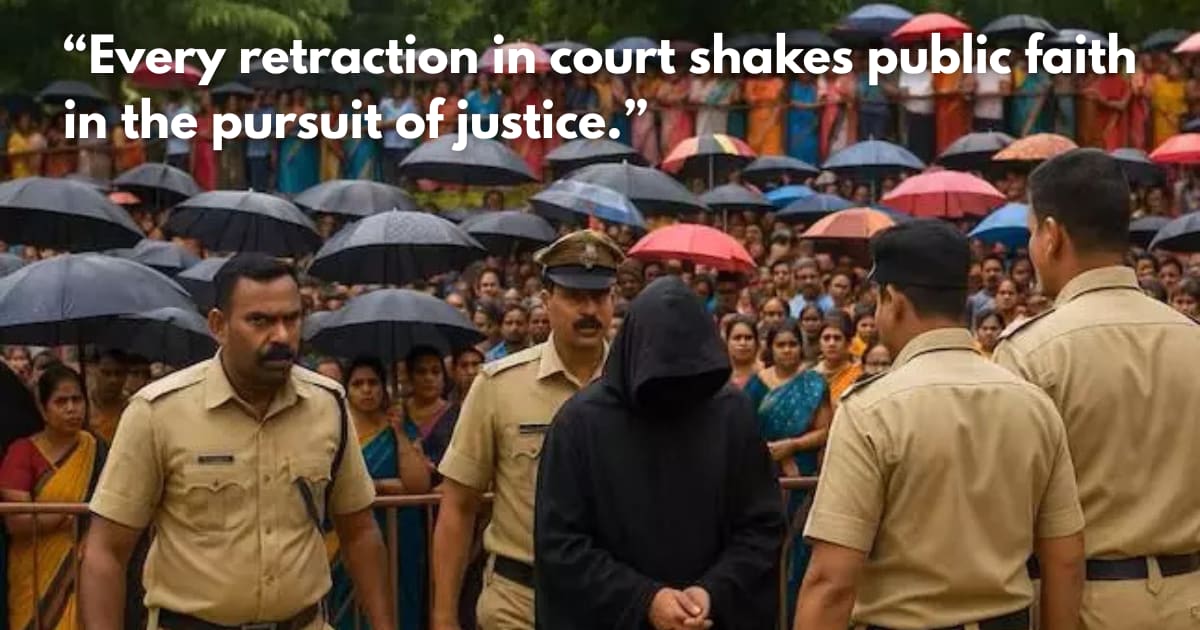

FazTimes Media, Dharmasthala (Karnataka): The investigation into claims of illegal burials in Dharmasthala has taken an unexpected turn after a whistleblower was arrested. This person had previously accused the temple authorities of secretly burying victims of assault and suspicious deaths. He was arrested on August 23 after changing parts of his earlier statement before a magistrate, which investigators believe is lying under oath.
From Whistleblower to Accused
The person at the centre of this controversy once said he was forced to perform dozens of secret burials.
He claimed that women and children, who had signs of sexual assault, were buried without proper legal procedures. His statements in early July led the state government to form a Special Investigation Team, led by senior IPS officer Pranab Mohanty.
However, in his new testimony before the SIT, the whistleblower seemed to change his story. He admitted that although “a few burials” might have gone against the law, most of the bodies he handled had been cleared with post-mortem reports and were therefore legal. This change in his story was seen as conflicting with what he had previously told a magistrate, where he had said all burials were illegal.
SIT officials told local media that this contradiction made the investigation less reliable and that misleading the court is a serious issue. One investigator said, “Lying in a case like this can’t be ignored.”
Skeletons and Doubts
Since July 11, when the whistleblower gave the police skeletal remains, claiming they were dug up from the temple, his story has been questioned. Forensic tests later suggested that these remains may not have come from the temple area at all but might have come from a medical lab, raising doubts about the evidence being fake.
According to The News Minute, SIT sources suggested that these events point to an effort to create false proof, which weakens the original claims. This has led to questions about whether the whistleblower’s actions were genuine or if other people were trying to influence the investigation.
Excavations Yield Little Evidence
The Special Investigation Team (SIT), acting on the early tips from the whistleblower, started digging at several places in Dharmasthala. The searches grabbed a lot of public attention, but so far, the results have not been very promising.
Only one human skeleton and a few separate bones have been found, and soil samples from the suspected areas are now being carefully studied by forensic experts. Officials are saying that the lack of strong evidence so far doesn’t completely rule out the whistleblower’s claims, but it definitely makes things harder to understand.
As reported by BBC News, the investigation has been more about guessing than finding solid facts.
Investigators are struggling between meeting public hopes and dealing with what the evidence actually shows.
Confusion Among Complainants
The case took another strange turn when another complainant, Sujatha Bhat, gave conflicting statements to the media. At first, she said someone had killed her own daughter and hid her body in Dharmasthala. But the next day, she changed her story and said the victim was actually her friend’s child.
These conflicting accounts have made things even more confusing, leading many to wonder if fake stories or political involvement are getting in the way of the SIT's work.
Political Reactions: Parties Close Ranks
Leaders from different political groups, including the ruling Congress and the opposition BJP, have held marches, meetings, and made public statements defending the temple’s name. Deputy Chief Minister D.K. Shivakumar went as far as to say, “Any attempt to damage the image of Dharmasthala will be treated as a conspiracy, and serious action will be taken.” This united support has caused some discussion.
Faith, Reputation, and Justice
Al Jazeera reports that similar issues in India often show how delicate the balance is between faith and responsibility. Any accusation against a religious place can quickly turn into a politically and culturally sensitive issue.
Was this person making things up out of desperation?
Or was he forced to take back his claims?
Could he have been used as part of a bigger plan that involved making up evidence?
Human rights organisations have often said that whistleblowers in India face many dangers, including legal problems and being shunned by society. The Dharmasthala case, no matter what happens, highlights the need for better laws to protect whistleblowers so that real information isn’t lost in political interference or false stories.
What Happens Next?
The Special Investigation Team now has a credibility problem. The case is at risk of falling apart because the main witness was locked up for lying, and the people who filed the complaint gave conflicting accounts. But the discovery of some skeletal remains means the investigation can’t be entirely ignored.
Forensic reports that are expected soon will be important in deciding whether more bodies are buried under Dharmasthala or if the controversy will fade away as another sensational but unproven story in India’s history.
Our primary goals at FazTimes Media are to be accurate and confident and adhere to the highest journalistic standards. We check every news story we share against several trustworthy and separate sources to ensure its accuracy.
We have reviewed this report, along with articles from major news outlets worldwide, including BBC News, Reuters, Bloomberg, Al Jazeera, NDTV, The Economic Times, and The Indian Express.
We want to keep the highest standards in global journalism so that our readers can trust the information they acquire.


Discussion0
Join the conversation on this story
Loading comments...