
Diwali gift for auto sector: Govt likely to reduce GST on cars, two-wheelers from 28% to 18%
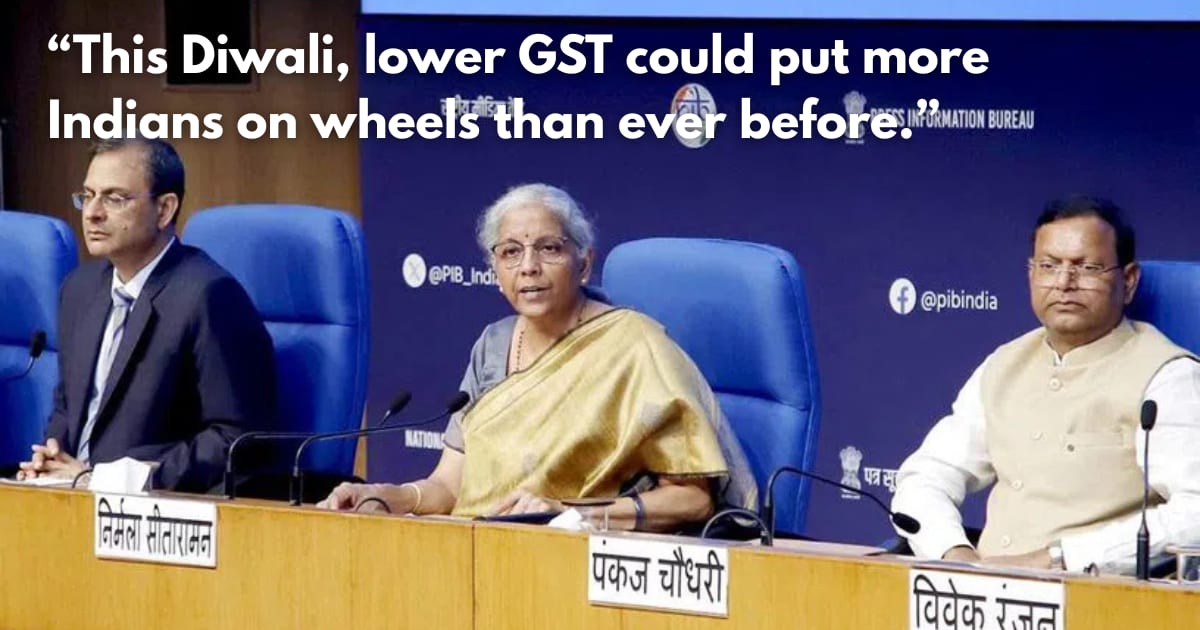


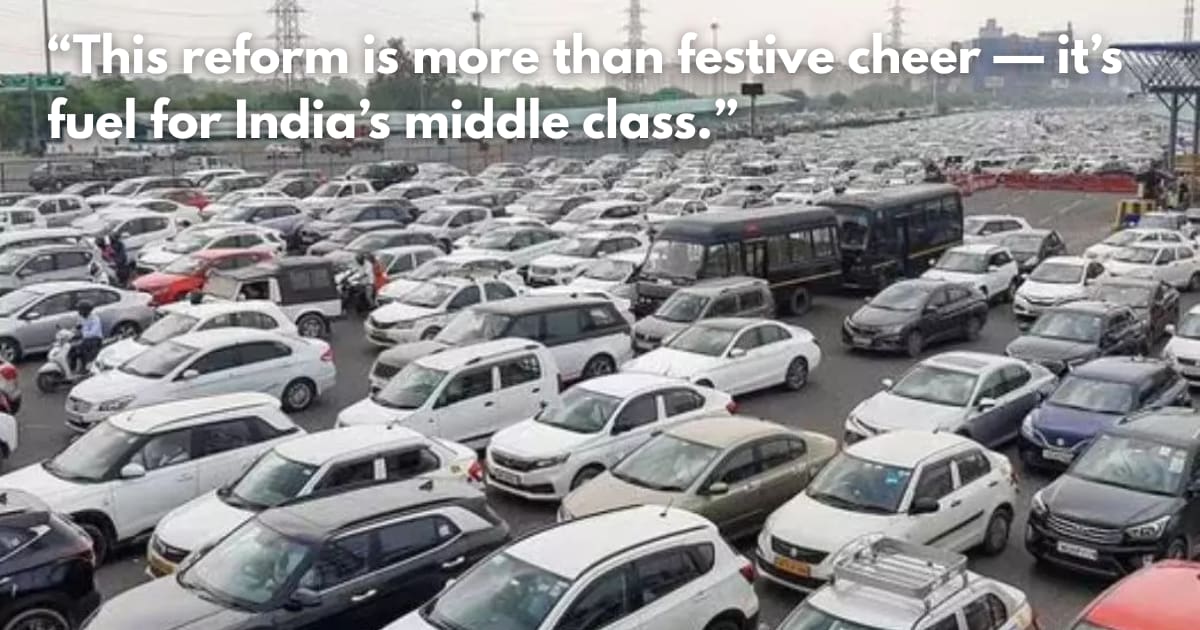
FazTimes Media, Mumbai: As India gets ready for the festive season, there's a lot of positive news coming for people who buy cars. The Union government is set to announce a major update to the Goods and Services Tax (GST) system. This change could make cars and two-wheelers more affordable just in time for Diwali. This GST rate adjustment is part of what officials are calling the “next generation of reforms”. These reforms aim to reduce the financial pressure on regular people. While luxury cars may still face higher taxes, we expect regular cars and two-wheelers to become significantly more affordable.
This change is seen not just as a seasonal relief tool but also as a long-term plan to support manufacturing, increase sales, and build momentum in India's car industry. Currently, passenger vehicles are taxed at 28 per cent under GST, plus a compensation cess that ranges from 1 per cent to 22 per cent. The rate depends on the car's engine size, length, and design. In some cases, the total tax can go up to nearly 50 per cent, which is among the highest in the world.
For two-wheelers, the GST is a fixed rate, and an additional cess applies to motorcycles with engines larger than 350 cc. Middle-class families often purchase smaller models, which lack these additional costs but remain pricier than in many other countries.
Electric vehicles, on the other hand, are taxed at just 5 per cent with no extra cess, showing the government's support for eco-friendly transport.
Many in the industry have been saying that the current tax system hurts affordability. A senior official at the Society of Indian Automobile Manufacturers (SIAM) said, “When even basic models are taxed like luxury cars, people don’t buy as much.”
What Does the New GST Reform Propose?
The new reform is planned to remove the 12 per cent and 28 per cent tax rates, making the tax structure simpler with fewer groups. This change might put mass-market cars and two-wheelers into a lower tax group, while keeping expensive and luxury items in a higher tax group, up to 40 per cent.
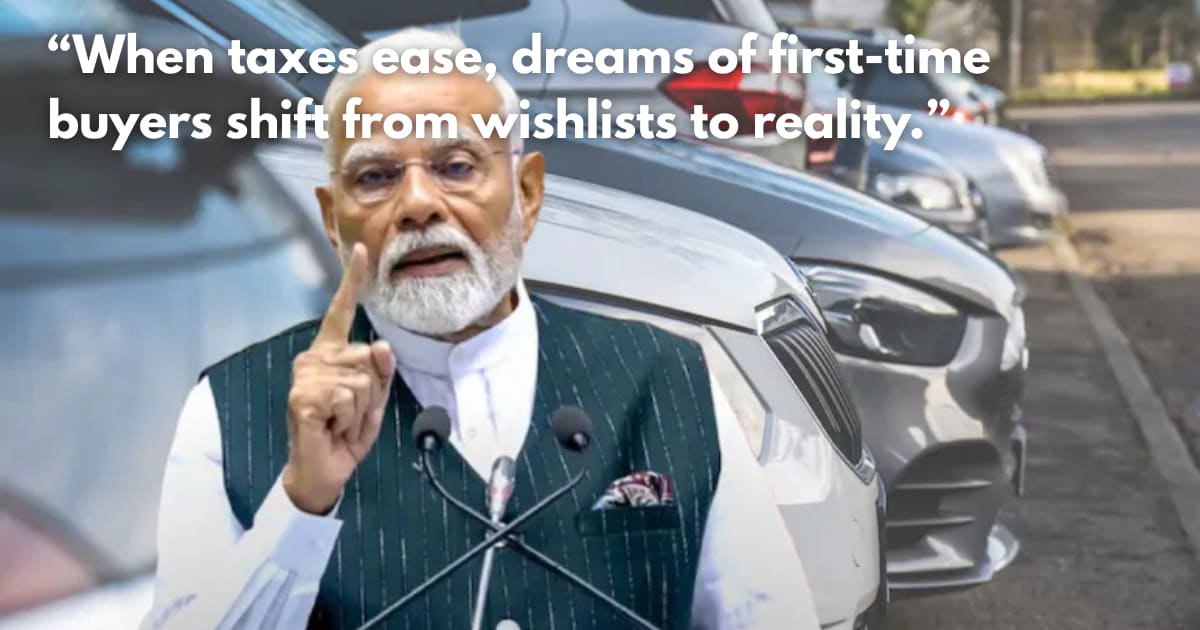
Prime Minister Narendra Modi recently mentioned this reform, calling it a “Diwali gift for the middle class and small business owners.”
In a speech, he said:
“We are bringing a new generation of GST changes, which will be a gift for you this Diwali. People's taxes will significantly decrease, leading to improvements in numerous services. Our small businesses and entrepreneurs will get a big advantage. Everyday products will become much cheaper, and the change will also help the economy in a new way.”
This reform is expected to help entry-level hatchbacks, commuter bikes, and scooters, which have not seen much growth recently because of higher prices, strict rules, and inflation.
Why the Reform Matters Now
The auto industry, which makes about 7 per cent of India’s total economic output, has been growing slowly, especially for small cars and commuter bikes. Likewise, basic cars, which used to be the main sellers in India, are now losing market share. Maruti Suzuki, the country’s biggest car company, even stopped making some affordable models because they were not profitable under the current tax rules.
Experts think that reducing the GST rate could help bring more buyers back to these struggling areas and bring more balance to the car market.
Industry and Market Reactions
Before the official news came out, the stock market showed a positive reaction. The Nifty Auto Index rose by 4.61 per cent in the morning trade because people expected a tax cut. Shares of companies like Maruti Suzuki, Hero MotoCorp, and Bajaj Auto went up a lot.
Leaders from top carmakers supported this change. A senior person from Maruti Suzuki India said, “We have been asking the government to lower the GST on small cars from 28 per cent to 18 per cent for a long time. If the reduction happens, cars will be more affordable for millions of families, and the market will get a new boost.”
Hero MotoCorp, which is India’s biggest two-wheeler maker, shared the same view. They said reducing taxes would not only help sell more bikes but also help other industries like auto parts, repair services, and dealerships.
Wider Economic and Social Impact
In India, the festive season is usually a time when people buy expensive things, especially vehicles. If the GST cut is done, it could lead to a big increase in demand, which would help the economy a lot. According to BBC News, changes in the car industry often have a big effect on other areas, like steel, tyres, electronics, logistics, and finance.
For the urban middle class, lower car prices would mean easier access to safer and more dependable transport, which could reduce the need for crowded public transport systems.
Challenges Ahead
Although the reform brings many advantageous things, experts warn that the government must carefully manage the loss of income while bringing benefits to the economy. GST collections are a big part of the income for both the central government and the states. A big drop in these collections could cause problems with the government’s finances in the short term.
In the past, some companies didn’t pass on the tax savings to customers, instead using them to make more profit. The government might need to closely watch the situation to stop such an incident from happening.
Looking Ahead: A Festive Push for Growth
The GST reform could have a big effect on India’s auto industry. By making vehicles more affordable, it could bring joy to millions of families during the holidays and also improve the government’s image as being supportive of the middle class and open to change.
The future will depend on how well the policy is carried out and whether it finds the right balance between affordability, growth in the industry, and government income. But one thing is clear: this Diwali, everyone will be watching the GST Council closely.
Our primary goals at FazTimes Media are to be accurate and confident and adhere to the highest journalistic standards. We check every news story we share against several trustworthy and separate sources to ensure its accuracy.
We have reviewed this report, along with articles from major news outlets worldwide, including BBC News, Reuters, Bloomberg, Al Jazeera, NDTV, The Economic Times, and The Indian Express.
We want to keep the highest standards in global journalism so that our readers can trust the information they acquire.


Discussion0
Join the conversation on this story
Loading comments...