
Don't Put Democracy in the ICU: A Call for Action


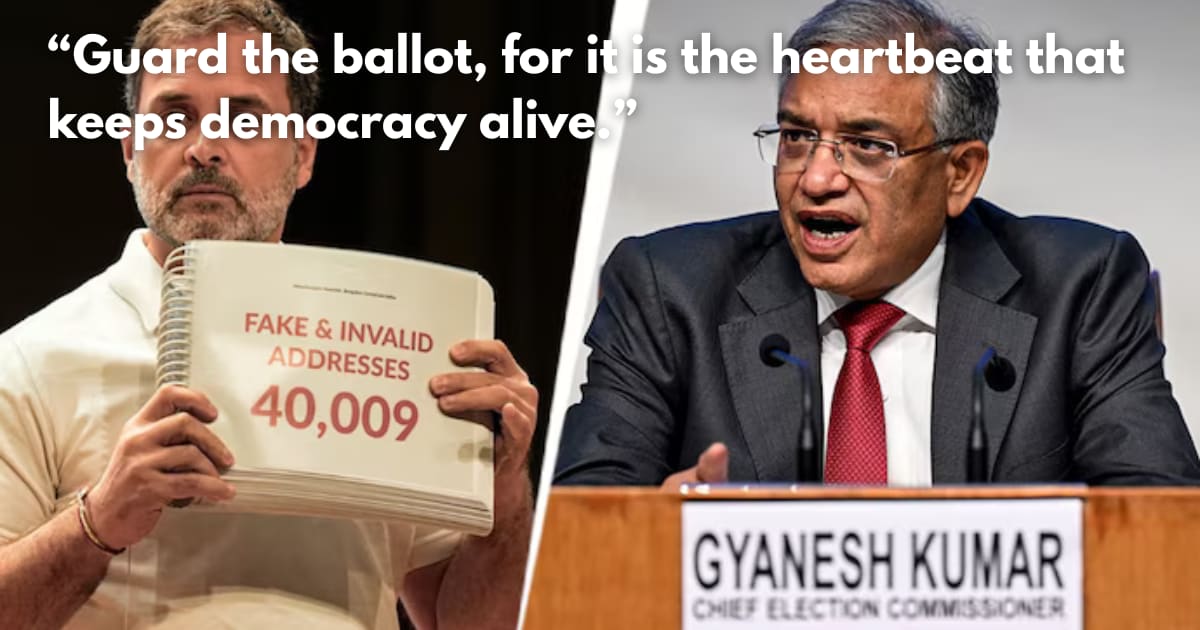
FazTimes Media: Democracy is often considered the key to a country's strength. When that key starts to break, the whole system begins to fail. The phrase “Don’t put democracy in the ICU” is more than just a saying—it’s a warning about the difficulties facing democratic systems today. Around the world, from the United States to India, people are worried about unfair elections, limited freedom of speech, and less trust in how governments work. These issues greatly affect India, a country that considers itself the world's largest democracy.
Remembering the Legacy of T. N. Seshan
Older people still remember the time of T. N. Seshan, a respected Chief Election Commissioner (CEC) in India. His time was a big change because people started to see the Election Commission as more than just a formality—it became a strong protector of fair elections. He made sure to follow rules strictly, stopped illegal spending during campaigns, and made the system more transparent. Today, people still respect his work as an example.
Now, in the present, many are wondering if history will treat the current Chief Election Commissioner, Gyanesh Kumar, and his team the same way.
Unfortunately, people's views are changing in the other direction. More and more people are saying that the Election Commission has not stayed neutral and may be helping the ruling party instead.
Allegations of Manipulation
Several reports, including coverage by Al Jazeera, have criticised the Election Commission for possibly working with the government to influence election results. Recently, Opposition Leader Rahul Gandhi made a strong public accusation, saying the Commission turned elections into a controlled show.
At a major press event, Gandhi showed piles of official voter data from the Commission. He pointed out clear problems, like duplicate voters, many people registered at the same address, missing photos, and names added without proper checks. He also claimed that this kind of manipulation had happened in previous Lok Sabha and state elections, including in Haryana and Maharashtra.
For the first time in many years, these claims came with real data, making what could have been just political talk into a big national discussion. While mainstream national media, often seen as favouring the ruling party, didn't pay much attention to the findings, social media shared them a lot, which made people more sceptical.
The Commission’s Weak Response
After days without a reply, the Election Commission finally held a press conference. People expected clear answers, but the event made them even more sceptical. The Commission didn’t clearly explain the issues or give facts to counter the claims. Instead, it seemed defensive, asking Gandhi to apologise for “false accusations”.
When it came to specific complaints, like unusual voter additions in Bihar’s special verification process, changes in the voter list format, and requests for CCTV footage, the Commission either didn’t answer or said it was about privacy.
Erosion of Public Trust
Surveys from 19 states show a big drop in people's trust in the Election Commission. In Madhya Pradesh, trust went down from 57% to just 17%. In Delhi, it dropped from 60% to 21%, and in Uttar Pradesh, it also fell a lot. These numbers indicate that the group responsible for protecting democracy is now facing a big problem in being trusted.
According to BBC News, the decline in trust in elections indicates a deeper issue within democracy. People begin to question what the government produces through the system when they don't think it's fair.
What Opposition Parties Are Demanding
Opposition leaders want the Election Commission to share digital voter lists, make sure the verification process is open, and involve all political parties in major decisions. They say that if democracy belongs to the people, no group or organisation should use it for their political benefit.
Rahul Gandhi's "Vote Theft Yatra" in Bihar, covering almost 1,600 kilometres, brings these worries directly to the people. Whether people agree with him or not, his campaign has placed the issue of fair elections at the heart of the national conversation.
Why Citizens Must Stay Alert
Democracy isn’t something you get and keep forever. It needs constant care, involvement, and checking. Citizens should ask significant questions like:
Why were voter lists changed without any reason?
Why was surveillance video not shared, just because of privacy rules?
Could we please address the concerns from the opposition more clearly, rather than overlooking or dismissing them?
These aren’t just political questions. They are key to keeping democracy alive.
The ICU Warning
Calling democracy a patient in the ICU isn't too strong a way to put it. If trust in institutions breaks, the media becomes biased, and people start doubting their votes, democracy can become just a show. Former CEC T. N. Seshan once said, “The strength of democracy doesn’t come from government power, but from the trust of the people.” That trust is now fading fast. Without changes, India’s democracy may only get worse.
The Way Forward
Changes are needed quickly. Voter lists should be digital and open to all parties. Independent people should scrutinise major election processes. Most importantly, the Election Commission should always put the Constitution and the people first, not any single government.
Citizens also have a role. If people don’t care, institutions can weaken. But if people are active, they can monitor leaders, ask for reforms, and protect democracy.
Conclusion
India has always been proud of its active democracy. From busy polling places in villages to lively debates in Parliament, democracy has been the country’s strength. According to BBC News, democracies worldwide are strong due to faith in the systems that protect them, not just elections. For India, it is essential to restore trust in the Election Commission to safeguard the foundational principles the nation relies upon.
Our primary goals at FazTimes Media are to be accurate and confident and adhere to the highest journalistic standards. We check every news story we share against several trustworthy and separate sources to ensure its accuracy.
We have reviewed this report, along with articles from major news outlets worldwide, including BBC News, Reuters, Bloomberg, Al Jazeera, NDTV, The Economic Times, and The Indian Express.
We want to keep the highest standards in global journalism so that our readers can trust the information they acquire.


Discussion0
Join the conversation on this story
Loading comments...