
Famine in Gaza: Half a Million People Face Catastrophic Hunger

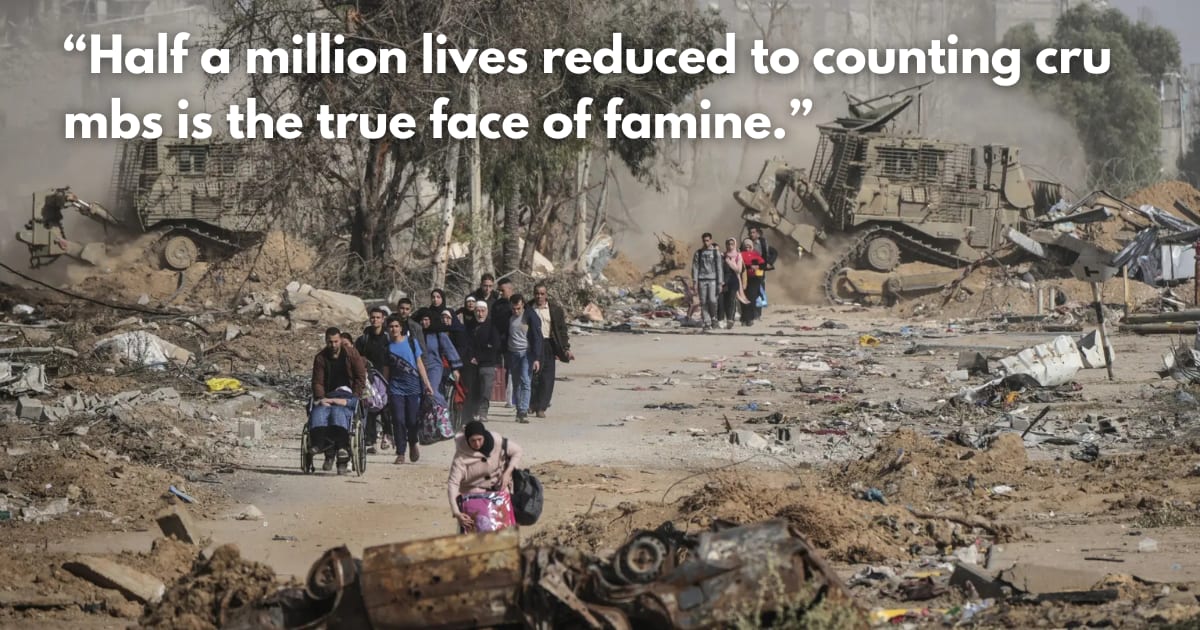


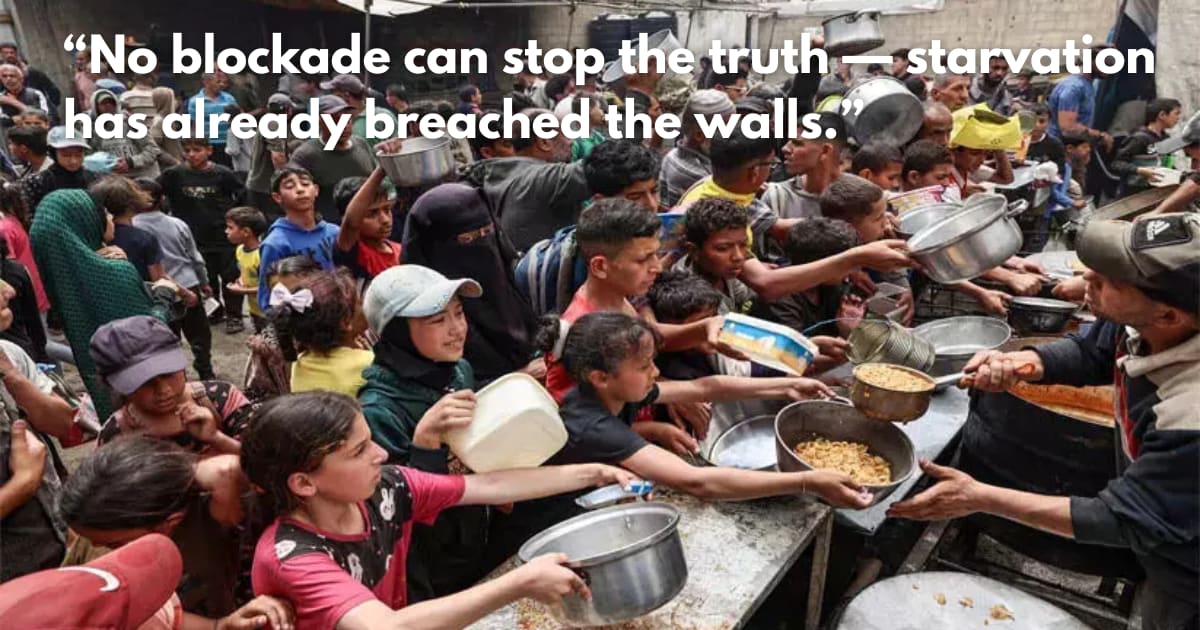
FazTimes Media: Gaza City is now the main place where a big humanitarian problem is happening. The Integrated Food Security Phase Classification (IPC), a well-known group that monitors hunger situations worldwide, reports that over 500,000 Palestinians—about one out of every four people in Gaza—are facing very severe food shortages. This means their lives are in danger, and many may die from hunger or problems that come with it.
The IPC's report has worried people all over the world, as Gaza has now become the first place in the Middle East where the group has officially said famine is happening. Experts are worried that unless fighting is stopped or aid is allowed to move more freely, the food crisis could quickly spread across the whole area.
The Heart of the Hunger Crisis
The IPC report says that famine is already happening in Gaza City, which is the most populated area in the territory. There are hundreds of thousands of families there struggling to survive, often eating small portions or going without food for days. Aid groups warn that this problem is not just in one place—famine could reach the southern cities of Deir al-Balah and Khan Younis by the end of next month if things don’t get better.
For people in Gaza, this news just confirms what they are already going through every day. Families wait for hours, sometimes days, in line for food, but often get only a little. Mothers prepare weeds and animal feed for their children, while fathers scour destroyed buildings and empty homes for edible food.
BBC News reports that children are suffering the most from this crisis. Many Palestinian kids are very malnourished, and they show signs of being too short for their age, having weak immune systems, and losing weight quickly. Doctors in Gaza describe sad situations where young children are collapsing from extreme tiredness caused by not having enough food.
From Warnings to Reality
This famine didn’t come suddenly. For months, groups like the United Nations and other international aid groups have been warning that Gaza was moving toward a major humanitarian disaster. Last month, the IPC said the worst-case scenario of famine was about to happen, but they didn’t formally declare it. Now, with more people dying from starvation and the food supply system completely breaking down, the warning has turned into a terrible reality.
According to Al Jazeera, the food problem in Gaza is because of the ongoing war, Israel’s blockade of aid, and the damage to local farming. Fields have been bombed, fishing near the coast is limited, and bakeries – which used to provide bread – have been destroyed or closed because of a lack of flour and fuel.
War and Hunger: A Deadly Connection
The start of this disaster goes back to the war that began on October 7, 2023, when Hamas attacked Israel. Israel then launched a large military operation against Hamas in Gaza, and the war has now lasted almost two years.
The Israeli government has kept saying they are only targeting Hamas areas and not intentionally starving civilians. Prime Minister Benjamin Netanyahu has called famine claims “lies spread by Hamas.” But the situation on the ground is unique—children are very thin, many are dying from hunger, and families are struggling to find food.
Photos and stories shared online have pushed the world to pay more attention to Israel’s actions. After strong reactions to pictures of very thin children, Israel said it would let more aid in. However, aid groups say the additional assistance isn’t enough. According to a UN official, the current aid entering Gaza is significantly less than what is actually required.
Life in Gaza has become a struggle for survival. The war has driven millions from their homes, destroyed everything, and left basic services in ruins. With farmland burnt and markets empty, families depend almost entirely on food supplies brought in by aid trucks. However, these aid deliveries frequently encounter obstacles, and many of them fail to reach the individuals in need.
Food production has completely stopped. Farmers who used to grow vegetables or raise animals have lost everything due to bombings and a lack of supplies. Those who still try to grow food do so in secret, fearing their crops will be destroyed. Fishing boats sit motionless along Gaza’s coast, as strict rules prevent access to the sea.
The suffering is terrible. Hospitals are overcrowded with war injuries and are now also dealing with patients who are too weak or hungry to recover. Medical workers say they see children with bloated bellies from extreme hunger and old people collapsing from weakness. Malnutrition has caused many more people to become ill, pushing the healthcare system to the brink of collapse.
The world is getting more worried. Aid groups, foreign countries, and human rights groups have all spoken out against the terrible situation in Gaza. Experts, according to The Guardian, attribute the famine to political and military decisions rather than natural causes. The IPC has declared famine, which is likely to push countries to take more action. The United Nations and some Western governments want an immediate end to the fighting and free access for aid. However, negotiations remain stalled, with both sides assigning blame to one another.
Meanwhile, people in Gaza feel forgotten. A father of four, who was forced to leave his home in Rafah, told the Associated Press, “We are not dying from bombs anymore; we are dying from hunger.” His words show the feeling of many who believe the world has let them down.
Gaza’s hunger is more than just a crisis—it’s a powerful symbol. For many, it shows the long history of suffering and control over Palestinians. Hunger is being used as a weapon, weakening communities without the need for violence.
Local activists say this terrible situation should force the world to pay attention. A Palestinian activist, quoted by Al Jazeera, said, “Starving children should never be a bargaining chip in politics. The world cannot stay silent when a population is being pushed into famine.”
The Road Ahead: What Can Be Done?
Experts are saying that the time to stop more suffering is running out. If food, water, and medical help are not allowed to get into Gaza, many more people could die in the next few weeks.
Aid groups are suggesting quick actions:
Negotiate ceasefire agreements to create safe routes for humanitarian aid.
It would be beneficial for international groups to ensure that aid reaches those in need.
Push all groups to put saving lives first instead of focusing only on politics.
Currently, regular people in Gaza are still waiting for food, for help, and for peace. While world leaders talk and governments make speeches, families in Gaza are facing the worst: another night without food, another day of hunger, and another life lost before it should have ended.
Conclusion
The hunger crisis in Gaza is not a distant issue — it is occurring right now, and everyone can witness it. The IPC's statement has broken any false hope — this isn't a problem that's coming soon; it's already here. As the BBC reports, the hunger crisis in Gaza is “a man-made disaster with terrible effects on people.” The pictures of hungry children, the shouts of worried families, and the quiet of empty shops remind us that political fighting has once again made regular people the victims. Now the big question is whether the world will step in and help or let the hunger in Gaza get worse without stopping it.
Our primary goals at FazTimes Media are to be accurate and confident and adhere to the highest journalistic standards. We check every news story we share against several trustworthy and separate sources to ensure its accuracy.
We have reviewed this report, along with articles from major news outlets worldwide, including BBC News, Reuters, Bloomberg, Al Jazeera, NDTV, The Economic Times, and The Indian Express.
We want to keep the highest standards in global journalism so that our readers can trust the information they acquire.


Discussion0
Join the conversation on this story
Loading comments...