


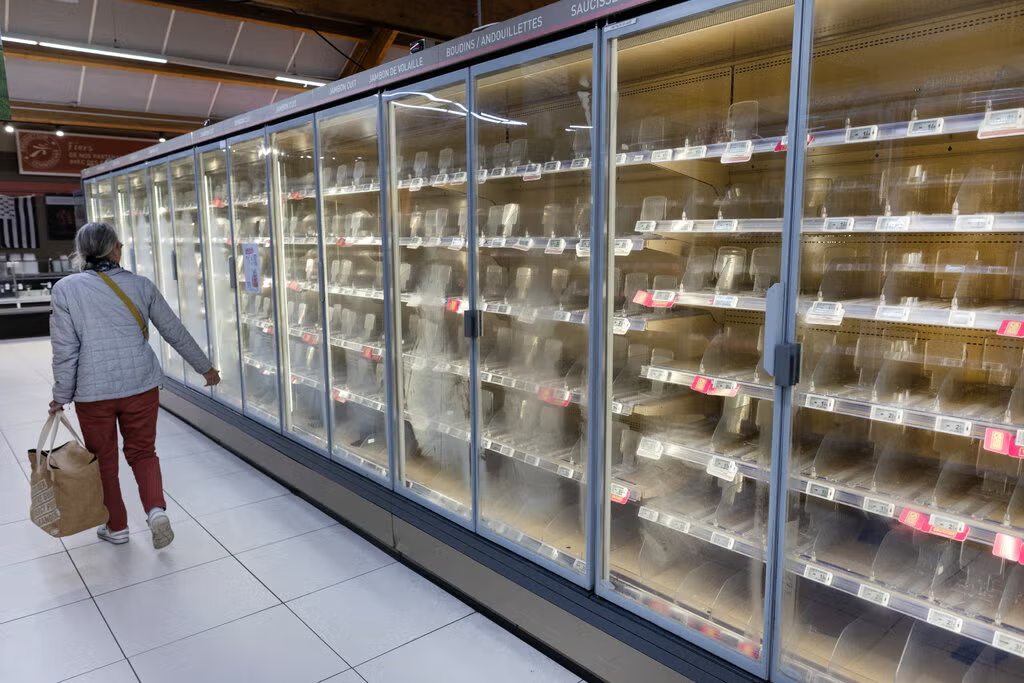
Paris, October 13, 2026: France’s Supermarket Fridge Hack Mystery - Hundreds of Stores Hit as Investigators Hunt Cyberattackers. A major cybersecurity investigation has been launched in France after refrigeration systems at hundreds of supermarkets were reportedly compromised, causing fresh and frozen food to spoil and fires to be reported at some locations. The attackers have not been identified, and no group has publicly claimed responsibility for the incident.
The cyberattack has raised fresh concerns about the security of internet-connected equipment used in essential commercial operations, as investigators attempt to determine how the refrigeration systems were accessed and who was responsible.
Hundreds of Supermarkets Affected Across France
The incident, which occurred overnight between October 11 and 12, affected several major French supermarket groups, including Carrefour, Monoprix, Intermarché and Coopérative U. Other retailers, including E.Leclerc and Netto, were also named in reports concerning the disruption.
According to the reports, at least 350 supermarkets were caught up in the incident. The precise number of affected locations has varied across reports as additional information has emerged.
Refrigeration units were remotely manipulated, causing temperatures to rise and large quantities of perishable goods to become unusable. Some supermarket employees were reported to have discarded spoiled meat and frozen products as the damage was assessed.
How Were the Refrigeration Systems Compromised?
The attack reportedly involved refrigeration-control systems supplied by Danish company Danfoss. These systems are used to monitor and manage commercial cooling equipment.
According to the reports, the attackers manually overrode refrigerator temperature settings. Other reports have described the activation of defrost functions, which can cause temperatures to rise when refrigeration equipment is not operating as intended.
Some affected systems reportedly reached temperatures of approximately 50°C (122°F), resulting in substantial food losses and equipment damage. Fires were also reported at some locations.
However, the precise method of intrusion has not been conclusively established publicly. The involvement of refrigeration-control equipment does not, by itself, prove that a particular software vulnerability was exploited.
Outdated Software Under Scrutiny
Danfoss said on October 12 that some affected units had reached the end of their supported life and no longer received software or security updates, while others were running outdated firmware.
The company said customers had been advised to keep supported systems updated with the latest firmware and to migrate older equipment to current-generation solutions.
The disclosure has placed renewed attention on the risks posed by ageing industrial and commercial technology. Systems that remain connected to the internet without adequate security controls can potentially be accessed by unauthorised parties.
Nevertheless, investigators have yet to publicly establish the exact entry point used in this incident or confirm that a specific previously documented vulnerability was exploited.
No Ransom Demand or Claim of Responsibility
The absence of a public claim of responsibility or a reported ransom demand has complicated efforts to establish the attackers' motives.
According to the reports, a source familiar with the investigation said the lack of either development had puzzled investigators. Cybercriminal groups sometimes seek financial gain, while hacktivist groups may publicise attacks to advance political or ideological objectives.
Neither explanation has been established in this case. No individual, organisation or group has been publicly identified as responsible.
French Authorities Investigate the Cyberattack
An investigation has been initiated by French authorities following the disruption. The Paris prosecutor's office has acknowledged the large-scale attack on connected refrigeration systems, with food losses and fires among the reported consequences.
France's national cybersecurity agency, ANSSI, has also been involved in the response, following instructions from Prime Minister Sébastien Lecornu, according to the reports.
Investigators are expected to examine how the systems were accessed, whether security weaknesses were exploited, and whether similar equipment at other locations could be at risk.
As of October 13, no publicly confirmed attribution has been announced.
Why This Incident Matters Beyond Supermarkets
The incident illustrates how cyberattacks can disrupt physical operations without necessarily targeting customer databases or payment information.
Refrigeration systems are essential to the preservation of meat, dairy products, frozen food and other temperature-sensitive goods. When their controls are compromised, the consequences can extend beyond digital disruption to food waste, financial losses, equipment damage and potential safety concerns.
The case also highlights the importance of maintaining supported software, restricting remote access, monitoring connected equipment and replacing legacy systems that no longer receive security updates.
For supermarket operators and other businesses using internet-connected industrial equipment, cybersecurity is increasingly a matter of operational resilience as well as data protection.
Investigation status: The attackers' identities, motives and precise method of intrusion remain unconfirmed as of October 13, 2026.
FAQs
1. What happened in the French supermarket cyberattack?
Refrigeration systems at hundreds of French supermarkets were reportedly compromised, causing temperatures to rise, food to spoil and fires to be reported at some locations.
2. How many supermarkets were affected?
Reportedly, at least 350 supermarkets were caught up in the incident as of October 13, 2026. The final total has not been conclusively established.
3. Which supermarket chains were affected?
Intermarché, Netto, Coopérative U, E.Leclerc, Carrefour and Monoprix were named in reports, although confirmation differed between retailers and publications.
4. Who was behind the cyberattack?
The attackers have not been publicly identified, and no group has claimed responsibility, according to the reports.
5. How were the supermarket refrigerators hacked?
The refrigeration controls were reportedly manipulated remotely. Older Danfoss equipment and outdated firmware have come under scrutiny, but the precise intrusion method has not been publicly confirmed.
6. Did the attack cause fires and food losses?
Yes. Food losses and fires were reported, and affected retailers had to remove spoiled fresh and frozen products.
7. Are investigators still investigating the attack?
Yes. French authorities have opened an investigation to identify those responsible and establish the extent of the damage.
References



Discussion0 comments
Join the conversation on this story
Loading comments…