
Google DeepMind Launches AI Weather Lab with Advanced Cyclone Forecasting
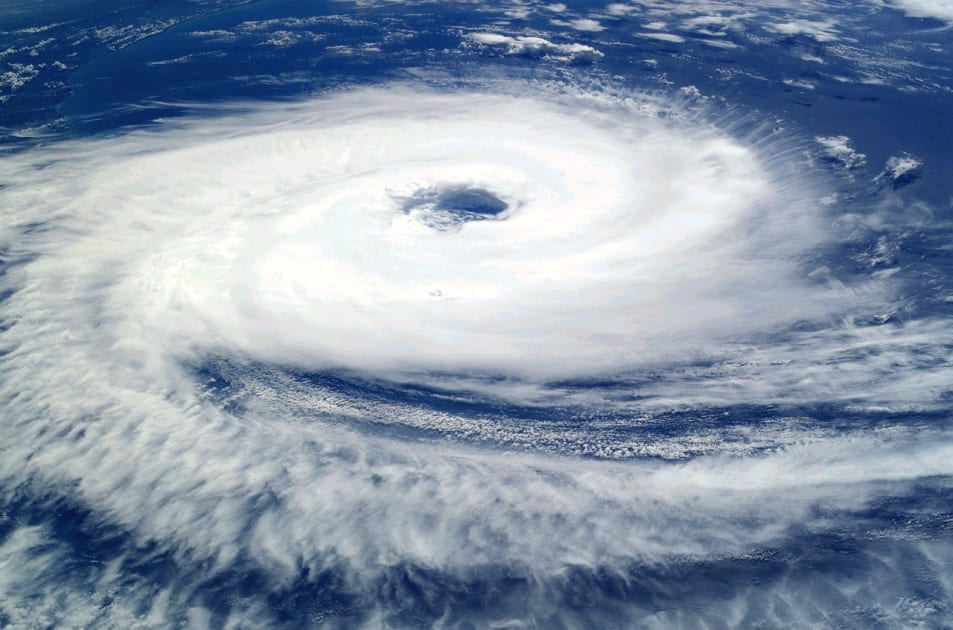
fazTimes media: When was the last time you checked the weather? It could soon be time to pay closer attention not to your traditional weather app, but to the new Weather Lab from Google DeepMind. A revolutionary step in forecasting, this platform uses artificial intelligence (AI) to predict weather patterns, including tropical cyclones, up to 15 days in advance. The pilot launch has intrigued meteorologists, climate experts, and everyday users alike, raising hopes for more accurate warnings as extreme weather becomes more common. And while still under research, this could soon help people like you stay one step ahead of storms.
A Fresh Approach: AI Meets Mother Nature
Traditional weather forecasts rely on physics-based models: vast equations run by supercomputers to map out how air, moisture, and heat behave. But predicting cyclones' massive spirals of devastation has always challenged even the best models. These storms are unpredictable in intensity, size, and path, making timely warnings a complex puzzle.
Enter the Weather Lab. This AI-powered tool brings different models—WeatherNext Graph, WeatherNext Gen, and a pioneering cyclone model—under one roof, offering 50 cyclone scenarios up to 15 days ahead (deepmind.google, gadgets360.com). The National Hurricane Center (NHC) is already collaborating on validation efforts (observervoice.com), a clear sign that this tool could sway official forecasting decisions in the future.
Why This Matters for South Asia
In regions like Mumbai, Chennai, and Kolkata, cyclones can turn everyday life upside down, disrupting fishing, commerce, power, and safety. Early and precise warnings are critical for keeping families and communities safe.
The deep-learning system powering the cyclone model studied 5,000 cyclone events across 45 years, drawing from global records like ERA5 (gadgets360.com). Recent tests across the North Atlantic and East Pacific show the AI model's 5-day forecasts are, on average, 140 km closer to the actual cyclone track than Europe's ECMWF model (observervoice.com), a sensational breakthrough that could translate to hours, even days, of extra preparation.
Seeing the Forecasts in Action
One of the coolest parts of Weather Lab is that everyone can use it. The website lets you compare AI-driven forecasts with traditional models, so you can watch where storms might go and how strong they could become (gadgets360.com).
This isn't a tool for issuing formal warnings, but it’s a window into next-gen science, offering two years of archived forecasts where users can spot patterns and improvements (madhyamamonline.com). Whether you’re a weather hobbyist, student, or local disaster-response volunteer, Weather Lab offers a chance to think about preparedness in a fresh way.
Stronger Than Physics-Based Models But Not a Replacement
AI has made big strides in tasks like image recognition and language chatbots, but weather forecasting is next-level hard. DeepMind’s GenCast and GraphCast models have already shown that machine learning can rival physics-driven models, especially for heatwaves, rainfall, and broad weather patterns (ft.com). Now, the cyclone model adds another feather to the AI forecasting cap. Reviewers have noted that it handles both the path and strength of storms in one shot, a challenge where physics-based tools need separate systems (madhyamamonline.com).
Still, experts caution that AI should support, not replace, traditional forecasts. Weather Lab is not for public weather alerts, emphasizes DeepMind, which makes clear it's a research tool (gadgets360.com).
What Experts Are Saying
AI’s leap in weather forecasting is being welcomed by scientists worldwide. On Reddit, a researcher noted:
“The system outperformed NOAA’s … intensity prediction, an area where AI models have historically struggled.” (reddit.com)
Another Reddit user commented:
“Making tropical cyclone predictions is hard … DeepMind’s experimental model claims to solve both problems simultaneously.” (reddit.com)
Officially, the NHC is testing the model in real-time, comparing how AI forecasts stack up against ECMWF, U.S., European, and Asian weather agencies (9to5google.com). And institutions like the UK Met Office and Japan’s Weathernews are also exploring partnerships (9to5google.com).
What’s Next and Why It Matters Locally
Weather Lab is still in public preview, and the cyclone model is undergoing peer review from scientific communities (gadgets360.com). But even now, it's turning heads, especially in areas prone to monsoons and cyclones. Imagine if Mumbai, Chennai, or coastal Maharashtra got two extra days of accurate cyclone forecasts. Preparations like evacuations, boat dockings, power shutoffs, and hospital readiness could begin earlier, saving lives and livelihoods.
DeepMind also cites dramatic efficiency improvements: what takes hours on supercomputers could take minutes on specialized AI chips (venturebeat.com). That speed could help local agencies access critical information quickly, no matter their computing infrastructure.
Challenges and Cautions
Still, challenges remain. AI scorches through computational demands but requires huge, high-quality datasets. Models like GenCast and GraphCast were trained with decades' worth of ERA5 data (ft.com). The cyclone model mirrors that sync. Not every country has that level of weather archives, so data access can be a barrier.
Additionally, while forecast accuracy is up, AI's intensity predictions of how hard a cyclone will hit can still lag behind physics-based models, especially without bias correction (reddit.com).
Finally, AI is a powerful tool, but only when combined with on-the-ground observation, local meteorologists, and strong early-warning systems. If used correctly, it strengthens but doesn’t replace the human role in weather preparedness.
A Vision for Safer Storm Seasons
As climate change brings more frequent and severe weather, the impact of innovations like Weather Lab becomes clearer. Imagine a future where:
AI-powered early warnings arrive with extra lead time.
Local disaster teams access AI-based trend maps alongside official bulletins.
Weather education includes tools that highlight uncertainties and probabilities, thanks to AI ensemble forecasts.
Tech companies like Google partner with national meteorological agencies to make forecasting better, faster, and fairer.
That vision reflects how technology can empower ordinary locals, whether you're a fisher, farmer, student, or shopkeeper, by giving them real tools to protect homes, lives, and livelihoods.
Final Word
Google DeepMind’s Weather Lab and its cyclone model mark a bold step forward in weather forecasting. This isn’t just another tech project; it’s potentially a lifesaving tool in an increasingly volatile climate. Yet it’s the careful blend of AI innovation, scientific scrutiny, and on-the-ground collaboration that will truly determine its impact. For now, communities can admire the progress while pushing for its responsible adoption.
Stay with fazTimes for real-time updates, analysis, and ground reports on the unfolding situation in the Middle East.



Discussion0
Join the conversation on this story
Loading comments...