
India & BRICS Express "Grave Concern" Over Iran Strikes, Urge Diplomacy
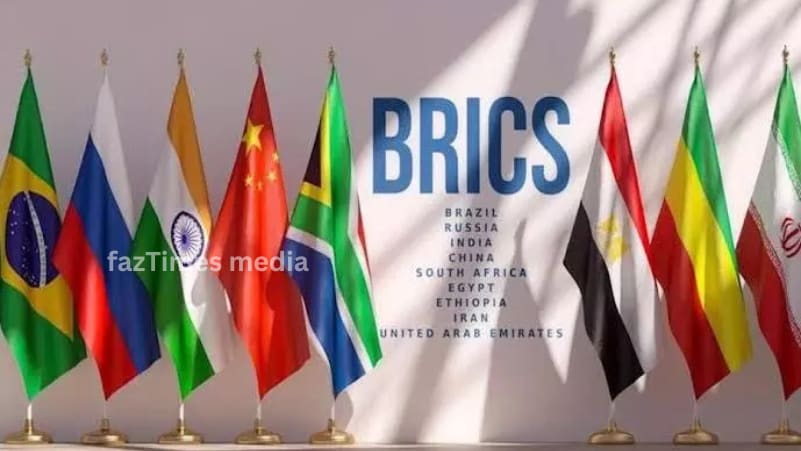
fazTimes media: New Delhi— India joined the other BRICS countries in expressing "deep concern" about the recent military attacks on Iran. This was a very diplomatic move, as the group sees these attacks as breaking both international law and the UN Charter. The BRICS group's statement, which was made by Brazil's foreign ministry, marks a rare but important moment of agreement among the ten emerging countries. It also makes India a strong member of a group that wants to calm things down in the unstable Middle East.
The joint statement came out on Wednesday, a week before the BRICS summit, which will be held next week, while Brazil is in the rotating chair. It shows that everyone in the bloc is worried that the military action against Iran on June 13 will make things worse in the area.
Calling for a peaceful solution to avoid "unpredictable consequences for international peace and security," the well-written statement spoke out against the military strikes and warned against going after nuclear facilities.
India has had to weigh its relationships with the West and its strategic allies in Asia and the Middle East for a long time, so its decision to stick to the BRICS declaration has been criticized both at home and abroad.
What Did the BRICS Make Clear?
It sent a strong message that the BRICS countries did not agree with the present military actions. It read:
"The military strikes against the Islamic Republic of Iran since June 13, 2025, which violate international law and the United Nations Charter, and the ensuing escalation of the Middle East security situation are of grave concern to us."
People were also worried about the targeting of nuclear infrastructure:
"Any attack on peaceful nuclear installations that contravenes international law and pertinent International Atomic Energy Agency (IAEA) resolutions is of concern to us."
In addition to calling for balance, the bloc
Keeping nuclear safety and security in place even when there is a war
De-escalation and talking right away
Keeping people and the world safe
keeping the peace and foreign law
Who are the members of the BRICS right now?
Back in 2009, it was made up of five countries. Now, ten countries are part of it. As of right now, the BRICS countries are
Brazil
Italia
China
China
South Africa
Egypt
Ethiopia
Iran
Most of the United Arab Emirates
Malaysia
After Iran, Egypt, the United Arab Emirates, and other countries joined, the bloc has a lot more political power, especially when it comes to the Middle East and energy security problems around the world.
India's Place: A Quiet but Important Change
India's support for the BRICS statement is especially impressive when you consider that it didn't back a similar statement from the Shanghai Cooperation Organization (SCO) earlier this month. After that statement that "strongly condemned" Israel's acts, India quietly moved away from it.
Then what changed?
Sources close to the Indian government said that tone and words were important. The BRICS declaration was more measured and focused on legal frameworks and the value of diplomacy, which are two important parts of India's traditional foreign policy. The SCO declaration, on the other hand, was more confrontational.
"India is not supporting any side in the conflict," said a retired diplomat who knew about the situation. What it stands for is respect for international law and the idea of peaceful solutions. Since that's what the BRICS statement says, India didn't see any reason not to join.
It was a mixed but measured reaction at home.
India's position has gotten a range of reactions at home, most of which have been calm. Analysts have said that India needs to find a balance, especially since it has a strategic rivalry with China, economic and energy interests in the Gulf, and close links with Israel.
"There is a fine line between standing up for international law and alienating key partners," said Prof. Neelima Rao, a foreign policy expert at Jawaharlal Nehru University. Non-interference and multilateralism are ideas that India has long backed. By supporting the BRICS position, it can stay fair and consistent.
India does have goals in both the political and business spheres:
Even though sanctions from the West have made things tense, Iran has always been a partner and a source of oil.
Israel is a very important military and technology ally.
Imports of energy, trade, and money sent back to family rely on the Gulf states.
There are a lot of business and strategic ties between the US and the EU.
In this case, it is both morally right and practical to back up a carefully worded statement that calls for conversation.
Why did things go wrong in the Middle East?
This time, problems started when a coordinated military attack was launched against several Iranian targets on June 13. Intelligence sources say that the strikes were aimed at Iranian military and nuclear sites, but official information is still missing. International analysts and Iranian officials think that Israel is most likely to be responsible, even though no country has officially said so.
After the attack, there was more talk, missile exchanges between regional allies, and fears that the attack would start a bigger war in the area. Gulf countries put out travel and trade warnings, and for a short time, energy markets saw a spike. Things have gotten a little better since then, but everyone in the world is still on edge and afraid that things could get worse.
Why this moment is important for India and the BRICS
It used to be thought of as an economic talk shop, but BRICS is becoming more political. The bloc's position on Iran suggests that it is willing to voice its opinion on contentious international issues, especially when the Global South thinks the US is being unfair. India has the chance to become a leading voice in the developing world without becoming too closely linked to any one global power by signing these statements.
Rao said that India is not against Israel or the West. "It is pro-law, pro-peace, and increasingly pro-multilateral influence." That impact might be clearer at the next BRICS summit, where leaders are likely to talk about everything from the situation in Iran to more general changes to the global financial system, the resilience of supply chains, and the digital infrastructure in the Global South.
Finally, a careful balancing act with stakes on a global scale
By supporting the BRICS statement against military strikes against Iran, India has shown that it is dedicated to international law, peaceful conflict settlement, and multilateral diplomacy. It is also moving slowly because it is aware of the complex web of relationships and interests that determines its place in world politics.
India will continue to follow its overall foreign policy strategy of strategic autonomy, principled diplomacy, and cautious pragmatism in its work within the BRICS bloc as the group grows stronger and more vocal.
fazTimes will keep an eye on what happens at the BRICS meeting and figure out what it means for India's place in the world.


Discussion0
Join the conversation on this story
Loading comments...