
India's Rare Earth Magnet Challenge: Supply Chain Disruptions & China's Dominance
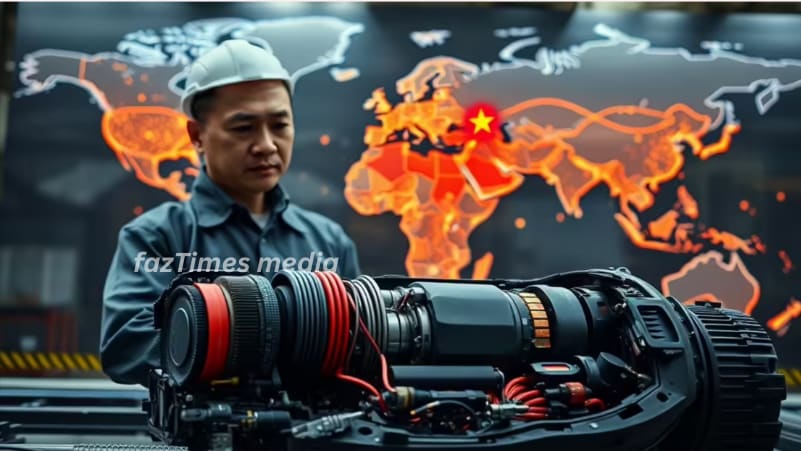
fazTimes media: New Delhi— In a rare and surprising statement, India’s Finance Ministry has officially pointed out the increasing problems in global supply chains—especially for rare earth magnets, semiconductor chips, and other important materials—as a major economic issue. In its July 2025 economic report, the ministry urged quick action to help India adjust to new global supply routes, warning that the country’s future growth may depend on how well it adapts. While India’s economy is still on a steady path, it now faces serious risks from the very materials that are driving the global shift toward digital and green technologies.
The Rare Earth Puzzle
At the heart of today's supply chain issues are rare earth elements—17 minerals that are important for making strong magnets used in electric vehicles, wind turbines, smartphones, and military gear. Even though they're called rare, they aren't actually in short supply. However, getting them out of the ground and turning them into usable materials is difficult, and most of this work happens in just a few places.
Recently, China has started limiting the export of some rare earth processing techniques and high-quality magnets. This has caused big changes in global markets. As reported by BBC News, the Chinese Ministry of Commerce announced these new rules in April 2025, saying it was for "national security" reasons. Experts think this move is part of a bigger plan, especially as relations with the West and countries in the Indo-Pacific area become more complicated.
India, which gets most of its rare earth magnets from China, is now facing challenges. The Finance Ministry mentioned in a report, “India has its task cut out. The global shift in supply chains for semiconductors, rare earths, and magnets is both a risk and an opportunity.”
The auto industry is starting to feel the impact of recent disruptions. This is especially clear in India's automotive sector. Major electric vehicle (EV) makers like Tata Motors and Mahindra Electric have already faced problems with getting parts on time. These parts often rely on magnets, and there are delays in their supply.
A senior manager from a component supplier in Pune said, “We have to delay many deliveries because important materials are stuck in customs or haven’t arrived. We’re looking for suppliers in Japan and Vietnam, but it’s not simple.”
Even companies that make traditional gasoline-powered cars are being affected. This is because modern vehicles use more electronics and parts that need semiconductors and rare magnets.
A Wake-Up Call for Self-Reliance
India has long relied on foreign sources for high-tech materials, but the Finance Ministry is now openly admitting this is a new development. Instead, it urges a strong push to build domestic capabilities, diversify trade, and make smart investments.
Al Jazeera reports that countries like the US, Australia, and Japan are working hard to develop alternatives to rare earth materials and set up processing plants. India also has the potential to extract rare earths, especially in coastal areas of Andhra Pradesh and Odisha, where monazite sands hold minerals like neodymium and dysprosium. However, environmental worries and a lack of refining skills have slowed things down.
Recently, the chairman and managing director of NLC India said the state-owned energy company is actively seeking partnerships with international firms to get a steady supply of rare earth materials. In one interview, he said, “We are looking at joint ventures in Africa and Southeast Asia. We can’t afford to fall behind in this race.”
Global trade issues are making things more difficult for India's economy.
The Finance Ministry's report also highlights bigger global problems that might make it harder for India to stay strong economically. Trade experts say that India's involvement in groups like the QUAD and the Indo-Pacific Economic Framework (IPEF) could help it talk about sharing technology and getting better deals on resources.
However, these are solutions that will take a long time, and India is facing a problem that needs to be dealt with right away.
But there are some good signs too.
The government is collecting enough tax even after making small cuts in rates, and both the central and state governments are spending a lot on capital projects. Also, a good rainy season has helped people in rural areas spend more and has boosted farming results, which helps protect the economy from problems overseas.
When it comes to rising prices, things are still manageable. The cost of basic goods is not going up much, and the Reserve Bank of India (RBI) expects inflation to be only 3.4% in the second quarter of the next fiscal year, which is lower than the 4% target.
The Road Ahead: Turning Crisis into Opportunity
The report ends with a call to action. India needs to “quickly change its economic plans” to deal with this new situation. This involves increasing domestic mining, building factories to process rare earth materials, supporting startups in green technology, and forming partnerships to get a steady supply of important resources.
Dr. Sneha Mehra, a policy analyst at the Indian Council for Industrial Research, says, “This is a key time. Just like India is working on making its semiconductors with chip manufacturing plants, it now needs to focus on rare earths. Without magnets, there’s no future for electric vehicles. Without chips, there’s no digital economy.”
According to BBC News, countries like Vietnam and Canada are becoming major sources of rare earth materials.
India should start building relationships in these areas. As the world moves towards green energy and digital growth, having access to these materials could mean the difference between leading and falling behind.
At FazTimes, we prioritize accuracy, confidence, and strong journalistic standards. To ensure every news story we share is real, we verify it with multiple trustworthy and independent sources.
We’ve compared this report with coverage from major news outlets around the world, including BBC News, Reuters, Bloomberg, South China Morning Post, Al Jazeera, NDTV, The Economic Times, and The Indian Express.
Our dedication lies in upholding the highest standards in global journalism, ensuring our readers can trust the information they receive.


Discussion0
Join the conversation on this story
Loading comments...