
India Slams Trump's Tariffs as "Unjustified" & "Unreasonable" Over Russia Trade


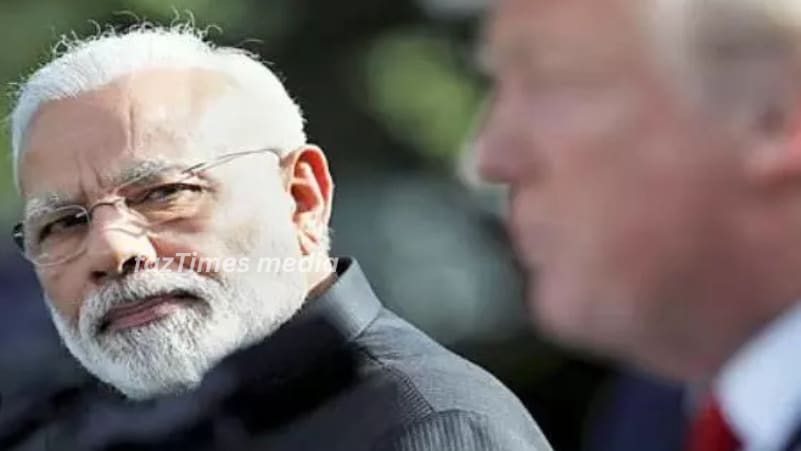
FazTimes Media, August 7, 2025 - New Delhi: In a significant action, U.S. President Donald Trump has signed an order to impose a 25% tariff on numerous Indian imports. This move, allegedly to address India's ongoing purchases of Russian oil, has drawn strong disapproval from New Delhi. The Ministry of External Affairs (MEA) considered the U.S. decision as unfair, unjustified, and unreasonable, vowing to take all required actions to safeguard national interests.
The tariffs, effective 21 days following the executive order, apply to a vast range of Indian products, with exceptions only for those already in transit and cleared by September 17. Given India's efforts to maintain a balanced economic relationship with global powers, this turn of events highlights the increasing strains between national interests and international expectations.
India, which is a country with a population of over 1.4 billion, requires a consistent, affordable, and reliable energy supply as the world's third-largest oil consumer. India buys energy from Russia mostly because it needs it daily for all of the vehicles and other uses, not because it likes Russia politically. Since the start of the conflict in Ukraine, Russia has been offering big discounts on petroleum products, making it a good choice for quickly growing countries with high energy needs.
Market factors influence India's oil purchases to ensure energy security, according to the Ministry of External Affairs (MEA). Furthermore, they noted that other countries continue to import Russian oil, raising questions as to why India is being singled out.
Titled "Are Tariffs Pushing It Too Far?":
Donald Trump's administration argues that tariffs are aimed at deterring India's financial backing for Russia.
Al Jazeera reports that this isn't Trump's first attempt to use tariffs as bargaining chips. His presidency was characterized by tough trade tactics, with a notable trade war with China. The resurfacing of such policies has heightened fears regarding the state of worldwide trade, considering the ongoing challenges of inflation, supply chain issues, and energy shortages.
Rakesh Malhotra, a trade expert based in Delhi, expressed his thoughts, saying, "This isn't about oil; it's about appearances. The U.S. wants to demonstrate a tough stance towards nations tied to Russia. But targeting India while others persist in similar actions suggests an inconsistent approach in policymaking."
New tariffs could significantly influence various Indian exports, such as textiles, automotive components, pharmaceuticals, and IT items. These sectors considerably boost India's economy and employ millions nationwide.
According to Ananya Bhargava, CEO of a textile export company in Noida, the increased import taxes will significantly undermine India's cost advantage in the U.S. market, potentially leading to lost export contracts to competitors from tariff-unaffected countries.
The Confederation of Indian Industry (CII) predicts that these tariffs may impact over $8 billion worth of annual U.S. exports from India. Although India has expanded its export market list, the United States remains India's leading trading partner, accounting for approximately 18% of total exports.
Even though India has shown dissatisfaction, it doesn't mean they are without responses. In the past, India has responded to trade disagreements with the US by imposing its taxes. A senior government official, who wanted to stay anonymous, stated, "We don't wish for a trade war, but we won't shy away from safeguarding our economic benefits."
India may challenge the taxes at the World Trade Organization (WTO) or choose to levy taxes on American goods like almonds, apples, and Harley-Davidson motorcycles—products that were involved in previous back-and-forth tax disputes.
As reported by The Hindu, India's diplomatic channels are currently in talks with the US to find a settlement before the taxes are implemented. The worldwide reaction has been a blend of caution and intrigue. Many Western countries have lessened their dependency on Russian energy but haven't fully cut ties. As a developing nation, India claims it shouldn't be held to the same standards, particularly for essential survival needs.
Countries like China, Brazil, and South Africa, which are important members of the BRICS group, have supported India's point of view. Chinese state media labeled the U.S. action as "yet another instance of economic intimidation." As explained by Dr. Farah Iqbal, a political economist at Jawaharlal Nehru University, this situation may encourage developing countries to reconsider their trading relationships with the U.S. Rather than cooperation, there seems to be coercion at play.
Exploring a Changing World Hierarchy
This conversation discloses a big shift in the balance of power around the world. As the West puts more pressure on countries to follow its diplomatic lead, a number of countries in the Southern Hemisphere are fighting for their independence.
India is not likely to give in quickly because its economy is growing and it is strategically important. The country always pushes for a multilateral world structure, where each country can choose its partners, trade agreements, and ways to grow.
Randhir Jaiswal, a spokesperson for MEA, said, "This is about the sovereignty of the nation." No country should have to give up its interests because of pressure from outside. Here's a simpler, more conversational rewording of the original content:
What's on the Horizon?
With the tariff implementation date approaching, both India and the US find themselves at a crucial crossroads.
India has the task of safeguarding its economic and energy interests while preserving diplomatic ties. The US, under President Trump's proactive leadership, seems focused on enforcing ideological unity, even if it means jeopardizing long-standing alliances.
In the coming weeks, it's expected that diplomats and trade representatives from both countries will dive into negotiations.
Our main goals at FazTimes media are to be accurate, confident, and follow excellent journalistic standards. We check every news story we share with a number of trustworthy and separate sources to make sure it's true.
We have read this report along with articles from major news outlets throughout the world, including BBC News, Reuters, Bloomberg, Al Jazeera, NDTV, The Economic Times, and The Indian Express.
We want to keep the highest standards in global journalism so that our readers can trust the information they acquire.


Discussion0
Join the conversation on this story
Loading comments...