
Iran Claims Downing of 3rd Israeli F-35 Fighter Jet, Pilot Reportedly Apprehended Amid Escalation
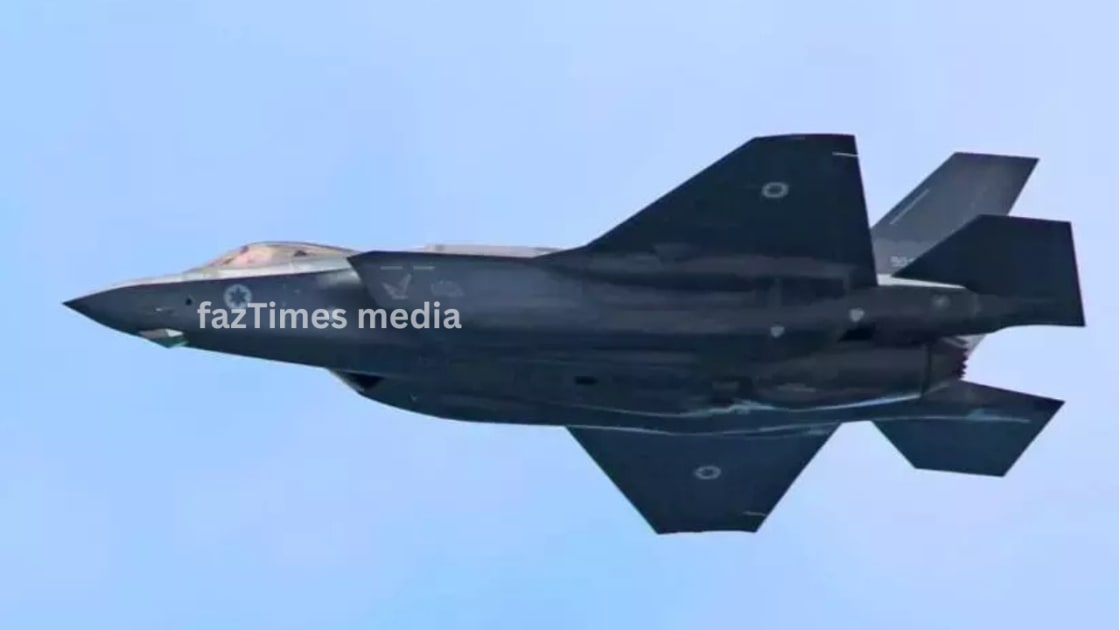
fazTimes media: Tehran— The alleged downing of a third Israeli F-35 stealth fighter plane in less than a week by Iran's defense forces has sparked international alarm as a contemporary flashpoint in the ongoing Israel-Iran conflict. According to Iranian military officials, they also captured the pilot alive. If confirmed, this development would significantly intensify the shadow war between the two longstanding enemies.
The pilot, whose identity has not been revealed, was quickly apprehended by Iranian commandos after the flying machine crashed in western Iran, according to Iranian state media outlet IRNA. This follows Iran's earlier allegations that two Israeli warplanes were shot down a few days earlier and that one of the pilots, who was reportedly a woman, was also placed under guardianship.
However, Israel's military has categorically denied the latest incident. Israeli Resistance Drive (IDF) representative Avichay Adraee called Iran's explanation "wholly false" in a post on X (formerly Twitter), describing it as "a deliberate publicity stunt expecting to divert from the harm Iran is delivering on its people."
Notwithstanding the disagreements, partisan symbolism and observer reports from inside Iran seem to suggest that an airplane did, in fact, crash, even though independent confirmation is still difficult because of restricted media access and disrupted communication channels in the impacted areas.
An Unmanageable Struggle
The firefight between Israel and Iran has escalated to the point of an open military confrontation and is no longer limited to cyberattacks or middlemen. A coordinated conflict involving rocket attacks, airstrikes, and, currently, detailed aerial shootdowns has developed from what began as retaliatory strikes.
Iran launched a massive rocket ambush on Israeli cities, including Jerusalem, Rishon LeZion, Ramat Gan, and Tel Aviv, on Friday night and into Saturday morning. Parts of Israel's famous Iron Arch defense system were reportedly overpowered when more than 200 ballistic rockets were allegedly destroyed in four facilitated waves. The result was devastating: three people were officially declared dead, two in central Israel and one woman in Tel Aviv. Numerous buildings suffered damage, including a high-rise building in the center of Tel Aviv that completely collapsed.
Israel moved swiftly. Israeli warplanes struck multiple targets in Tehran, Borujerd, Kermanshah, and Abadan in a rare coordinated attack on Iranian territory. At least 104 people, including women and children, perished in the retaliatory strikes, according to Iranian state media. More than 380 others suffered injuries.
Why This Conflict Seems Unique
This battle cycle, according to military investigators, is more extensive and well-coordinated than previous scenes. Israel and Iran have long fought each other using enigmatic intelligence operations and ad hoc local armies. But this time, the stakes are higher because both nations have acknowledged coordinated military action.
We are witnessing unfair countering. "It's a message," said defense investigator and former Indian Armed Forces officer Col. Arjun Mehta (Retd.). Iran is sending a message that it will not remain neutral. And it looks like Israel will retaliate more forcefully.
One of Iran's most striking claims is the detailed downing of not one, but three Israeli F-35 jets, which are regarded as some of the world's greatest stealth fighters. If verified, it would be one of the few times such a sophisticated aircraft has been brought down and appears to reveal flaws in the Israeli Defense Force's tactics or the jet's design. Furthermore, it could undermine Israel's military superiority and support Iran's regional allies, such as Hezbollah in Lebanon and state army factions in Syria and Iraq.
The Human Fetched: The Brunt Is Taken by Civilians
Conventional people are suffering the most beyond the front lines. With sirens blaring over major cities, shocked residents of Israel spent the night in bomb shelters. Injured civilians from the retaliatory airstrikes flood Iranian medical facilities.
Social media footage from both countries shows chaos, with citizens documenting destruction on their phones, crisis workers searching for loved ones under debris, and families searching for loved ones under the rubble.
"We've never seen this level of harm from an Iranian assault in some time recently," resident Naama Ben-David of Tel Aviv told FazTimes. The Press Arch made an effort, but it was insufficient. We are worn out and scared. Meanwhile, Hassan Rezaei, a businessman in Tehran, described the night as “apocalyptic.” "It felt like we were in a war zone," he said. Hours passed while the sky blazed and the ground trembled. The house of my neighbor was demolished.
What Follows?
Calls for de-escalation are strong as the international community watches with growing prudence. During a crisis session on Saturday, the Jointed Together Countries Security Chamber was unable to come to a consensus on a ceasefire decision. In a cautious statement, India's Service of Outside Issues urged "both sides to work out limitations and prioritize dialogue." Although neither country has officially responded, Prime Minister Narendra Modi, who has strong discretionary ties with both Israel and Iran, has pledged to step in.
Israel's main ally, the United States, has urged composure but has also deployed naval forces to the Persian Gulf to show that it is prepared to intervene if the situation worsens. China and Russia have warned against unilateral military action and demanded a multilateral strategy. Analysts suggest that both nations may continue their tit-for-tat attacks unless global tensions increase, with each side seeking to establish dominance without escalating into a full-scale conflict.
An Alert Locale
An already fragile Middle East is currently being destabilized by the Iran-Israel conflict. Over the past 48 hours, the price of oil has increased. Over the area, flights have been canceled. Additionally, neighboring countries like Saudi Arabia, the United Arab Emirates, and Jordan are experiencing an increase in fear.
Experts warn that any mistake—a rocket striking an off-base target, a flying warrior being mistakenly identified, or a political assassination—could start a larger conflict involving many nations. Vital specialists are watching closely back in India. "Economically, politically, and socially, we are greatly impacted by events in the Middle East," stated Jawaharlal Nehru College teacher Reena Sharma. Millions of Indians are employed at the Inlet. We can't handle a protracted conflict there.
Final Thoughts: A Dangerous Road Ahead
An unsafe modern chapter in the Iran-Israel story is marked by the downing of an advanced fighter jet, the capture of its pilot, and the joint bombing of capital cities. Both nations have stepped over the line, and the outcome could change the balance of power in the Middle East and, potentially, the entire world. For the time being, discretion is tenuous, and the skies remain hostile.
The world can, in a sense, hope that reasonableness will prevail for a while as civilians on both sides check their dead and beg for peace. Lately, the war machine continues to churn without any help.
As the Iran-Israel conflict unfolds, stay tuned to fazTimes for the ongoing scope, master investigation, and firsthand accounts.


Discussion0
Join the conversation on this story
Loading comments...