
Iran President Injured in Alleged Israeli Nasrallah-Style Assassination Plot
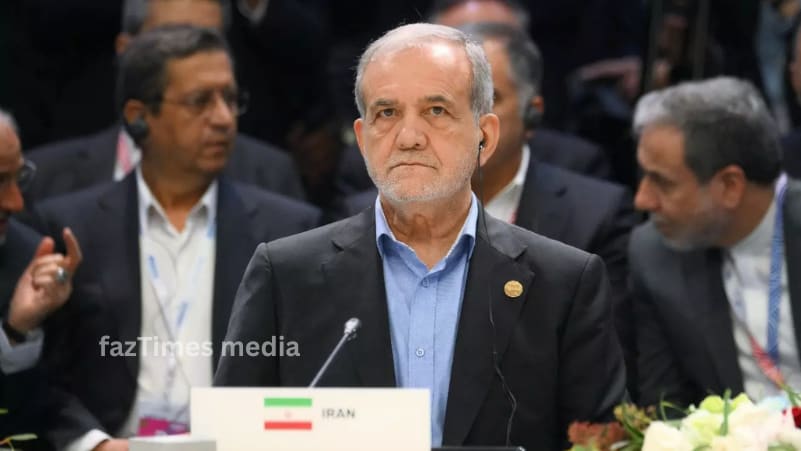
fazTimes media reports that Iranian President Masoud Pezeshkian narrowly avoided an assassination attempt last month. Iranian officials claim the attack was a precision missile strike from Israel targeting a secure government building in western Tehran. Fars News Agency, which is connected to Iran's Islamic Revolutionary Guard Corps, said the attack took place on June 16 during a major meeting of Iran’s Supreme National Security Council, where several top officials were present. The report says six guided missiles hit key areas of a high-security building in the wealthy Shahrak-e Gharb area.
The attack was very precise, hitting entrances, exits, and ventilation systems. Analysts believe this method was similar to Israeli techniques used in an attack on Hezbollah leader Hassan Nasrallah in Beirut. President Pezeshkian was injured in his leg while fleeing through an emergency exit at the bottom of the building. The injury was not serious, but the attack’s impact is significant.
Anatomy of the Attack
According to Iranian military sources reported by Iran International, an airstrike happened during a rare meeting of important leaders.
The people present were:
Parliament Speaker Mohammad Bagher Ghalibaf
Judiciary Chief Gholam-Hossein Mohseni Ejei
Top commanders from the Islamic Revolutionary Guard Corps (IRGC)
Security officials who work on nuclear policies and operations in the region
The meeting took place in a building considered highly vulnerable to attack. The purpose of the meeting was to discuss Iran’s stance as tensions with Israel and its allies in the region increased. A missile attack triggered a brief power outage, causing some confusion before the activation of the building's emergency plans.
Emergency workers were able to rescue all the officials, but a few of them were hurt, including the president.
President Pezeshkian appeared to acknowledge an attempted assassination in a previous interview with American journalist Tucker Carlson. He said, “They did try, yes. They acted accordingly, but they failed.” He didn’t mention Israel directly, but many people understood that he was talking about them.
Shadow War in Full View
The attack is thought to be part of a bigger secret war between Israel and Iran. Israeli special units and missile attacks reportedly killed many top Iranian officials over 12 days of hidden fighting. These people include:
Hossein Salami, leader of Iran’s Revolutionary Guard Corps
Mohammad Bagheri, head of Iran’s military
Amir Ali Hajizadeh, commander of the IRGC’s air force
Israel hasn’t officially confirmed or denied these killings, but they show a big step up in the long-running battle between the two countries. Al Jazeera reports that intelligence groups in the region are very worried.
They fear Iran might soon respond with actions like cyberattacks, fights through allies, or even direct military strikes via groups like Hezbollah in Lebanon or armed groups in Iraq and Syria.
A Ticking Clock and Political Tremors
At home, the attack has revealed weaknesses in Iran's internal security and has caused concern among people about the possibility of spies being present. Iranian government news outlets and supporters have openly discussed the possibility that the attack succeeded because an insider provided important details.
Some hardline religious leaders have called for “heavy revenge” and want to know how Israeli missiles managed to get past Tehran’s air defenses, which include Russian-made S-300 systems.
The International Response
So far, the Israeli government hasn't made an official comment, which matches its usual approach of being unclear about secret operations. However, some unnamed Israeli military officials said that any attacks on Iran’s leaders would be “justified” if they are in response to “increasing threats from Iran’s nuclear program and its support for other groups.”
BBC News reports that European countries and the UN are trying to figure out if this event counts as an act of war or is still part of the unclear area of spying and secret military actions. Last week, the UN Security Council convened a private meeting, but the main member countries failed to reach an agreement.
The U.S. State Department hasn’t confirmed or blamed anyone for the attack, but a spokesperson for the department told The Washington Post that “keeping the region stable is our main concern” and urged “everyone to stay calm and avoid more conflict.”
What This Means for the Region
The failed assassination attempt shows a new stage in the conflict between Israel and Iran, which has usually been fought through groups that act on their behalf, online attacks, and secret operations. If this attack on a leadership figure is true, it would be a big change from how things have been done before.
Some experts think this might be a sign of bigger military actions to come, maybe related to Israel's worries about Iran's nuclear program. Many Western experts now believe Iran could reach the point of making nuclear weapons within weeks.
“Attacking Iran’s president during a meeting with his security team isn’t just about winning a battle; it’s about making a statement,” said Michael Eisenstadt, who studies military and security issues at The Washington Institute. "That means if you keep being aggressive with your nuclear program and in the region, no one is safe."
The Road Ahead: Retaliation or Restraint?
Iran is at a key moment and must decide whether to seek revenge carefully or try to calm things down and plan better. Some unconfirmed reports indicate that Iran's cyber units are prepared for action, while its missile teams are monitoring Israeli airspace more closely using satellites. There are also guesses that Iran might attack Israeli or Western targets overseas, especially in Africa and South America, where both countries have secret operations.
Right now, though, the Iranian government is focusing on what it says to the public and looking into what happened internally. President Pezeshkian recently showed up in public for the first time since the attack, using a cane, and promised to “keep fighting against Zionist plans.”
Conclusion
It’s still unclear if the missile attack will lead to full-scale war. However, it's undeniable that the covert conflict between Iran and Israel has intensified, posing greater risks than before. As both countries plan their next steps, the world has to face a growing truth: the difference between secret actions and open fighting is getting harder to see.
For the people living in Iran, Israel, and the wider Middle East, the risks associated with this perilous situation could be severe.
At FazTimes, we prioritize accuracy, confidence, and strong journalistic standards. We ensure every news story we share is real by verifying it with multiple trustworthy and independent sources.
We’ve compared this report with coverage from major news outlets around the world, including BBC News, Reuters, Bloomberg, South China Morning Post, Al Jazeera, NDTV, The Economic Times, and The Indian Express.
Our dedication lies in upholding the highest standards in global journalism, ensuring our readers can trust the information they receive.


Discussion0
Join the conversation on this story
Loading comments...