
Iran strikes Israel with deadly missile barrage after nuclear site attacks; 3 killed, dozens hurt
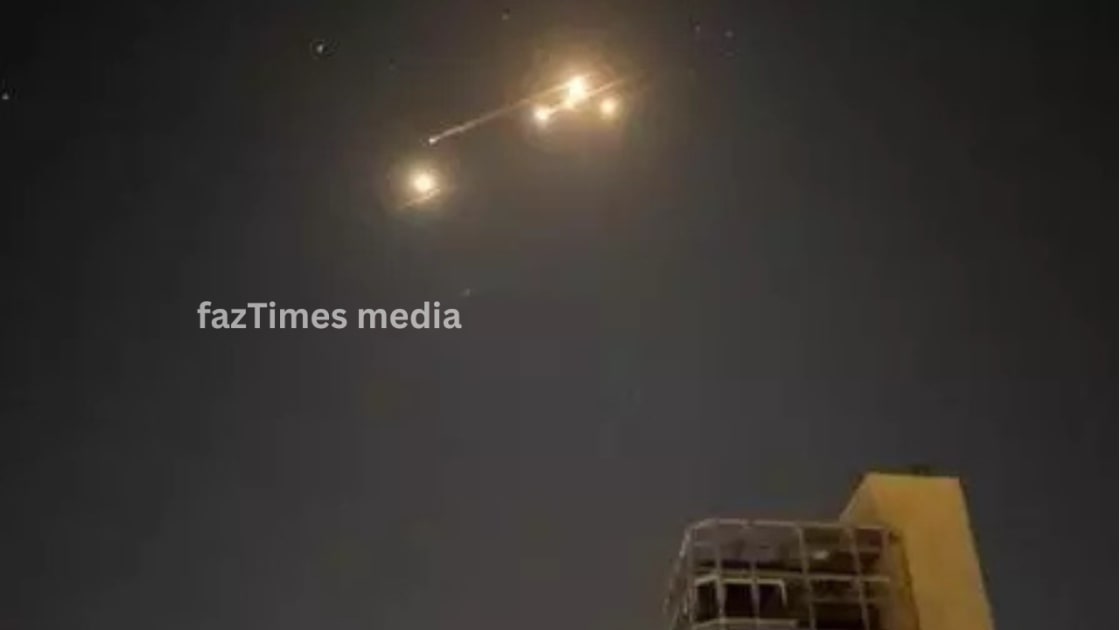
FazTimes media: An unexpected roar inside the skies of Israel in the early hours of Saturday jolted citizens out of sleep and into bomb shelters. The supply: a fresh wave of missile attacks launched through Iran, reportedly in retaliation for a deadly strike on Tehran’s nuclear infrastructure and senior navy figures only a day earlier. For thousands and thousands throughout Israel, it became just some other sleepless night in what is unexpectedly becoming one of the most dangerous periods in Middle Eastern history.
A Cycle of Provocation and Payback
Iranian state media showed the assault, describing it as a “legitimate and proportional” response to what Tehran has called an “act of struggle” by Israel. Though Iran did not verify the exact number of missiles fired, Israeli defense officials have stated that “dozens” have been launched in quick succession toward key Israeli areas, including Tel Aviv, Haifa, and components of northern Israel.
At least 10 civilians were injured in a single residential district close to Tel Aviv after a missile exploded just meters away from a set of apartment homes. Video photos from the scene show shattered glass, damaged cars, and paramedics tending to dazed and bleeding residents. “This was in contrast to something we’ve experienced earlier,” said Anat Levi, a 32-year-old schoolteacher from Tel Aviv who spent almost two hours huddled in her building’s stairwell with her kids. “The sound of the impact turned into a terrifying. We felt the ground shake.”
US Joins Defense Effort as Threats Multiply
In a historical intervention, the United States moved to guide Israel's defenses. According to two Pentagon officers, a number of the incoming Iranian missiles had been intercepted using Navy property already inside the Mediterranean Sea and elsewhere. While specific info on the interception strategies has no longer been released, defense analysts consider that a combination of sea-based and aerial systems, consisting of the U.S. Navy’s Aegis missile defense and fighter jet patrols, was probably used.
President Joe Biden reaffirmed America’s commitment to Israel’s protection in a televised address on Saturday morning, warning Iran that “persistent aggression can be met with rapid and firm consequences.” For Israel, American support offers reassurance and strategic weight. “The truth is that the U.S. involvement in enhancing our air protection structures is a game-changer,” commented Yaakov Ben-Tzur, a former colonel in the IDF. “This shows Tehran that Israel isn't always standing alone.”
Alarms, Shelters, and Uncertainty
The Israeli Home Front Command activated its nationwide emergency protocol quickly after the primary missiles had been detected. Sirens wailed from cities as far south as Beersheba to Haifa, compelling thousands and thousands into shelters. Schools and public institutions have been closed, and mass transit systems have been in part suspended in high-danger areas.
MDA dispatches issued in a single day confirmed that at least 41 people were wounded in the nighttime shelling. Among them, two individuals are in critical condition, with shrapnel wounds and burns. Many others suffered moderate to mild injuries, with a tremendous range of instances regarding panic attacks and psychological trauma. MDA paramedic Lior Gross defined the scene as “controlled chaos.” We had calls coming in from anywhere: humans trapped in stairwells, elderly residents with respiration troubles, and children who were simply terrified. Combine those sentences with additional context.
The Shadow of a Larger War
While Israel and Iran have been involved in proxy conflicts for decades, whether in Syria, Lebanon, or the Gulf, direct army confrontation between the 2 is uncommon. But this current change marks a dangerous shift in strategy, with open attacks and retaliation going on throughout the borders.
Provide a longer paragraph that consists of those lines. "We are currently treading a best line," warns Dr. Elham Kasemi, who teaches political technology at Tel Aviv University, weighing in on the issue. “If either aspect miscalculates even barely, it could attract different international locations like Saudi Arabia, Iraq, or even Russia and China, depending on how things spread diplomatically.”
Israel has no longer formally shown its function inside the strike on Tehran’s nuclear and navy websites, even though more than one international news retailer has attributed the operation to Israeli intelligence. The attack reportedly killed several senior Revolutionary Guard commanders and destroyed key infrastructure believed to be connected to Iran’s superior uranium enrichment software.
Civilians Caught within the Crossfire
Beyond army strategy and political posturing, it's regular civilians who are paying the heaviest price. In both Iran and Israel, families are now dwelling in fear of the next assault. Hospitals are on high alert, kids are lacking college, and cities are making ready for more air raids.
Local corporations, too, are feeling the impact. “No one is coming to the stores. The streets are empty, stated Ali Cohen, a café owner in northern Tel Aviv. “People are afraid. It’s like COVID again; however, this time, it’s missiles.” Mental health specialists have warned of a developing mental disaster, especially among kids and teens. “We’re already seeing symptoms of PTSD in more youthful patients,” stated Dr. Revital Shafir, a child psychologist based in Haifa. “This kind of uncertainty, blended with the consistent danger of violence, leaves deep scars.”
A Plea for Diplomacy
Despite the tension, worldwide leaders are urging restraint. In reaction to the rising battle, the UN has urgently convened a unique assembly of the Security Council to address the state of affairs. European countries, along with France and Germany, have issued statements condemning the violence and urging each party to seek a diplomatic resolution.
Back in Israel, the government has activated all branches of its security equipment. Prime Minister Benjamin Netanyahu convened an emergency cabinet meeting on Saturday morning and assured the public that “every attempt is being made to shield our residents and make sure of countrywide safety.” At the same time, Iran’s management has warned that any additional moves in opposition to its territory might be met with “even greater effective retaliation.”
The Road Ahead
As the sun sets over the Mediterranean, the area remains aggravating. People are stressed, leaders are wary, and the sector watches intently. Whether this incident leads to broader warfare or serves as a catalyst for negotiation remains to be seen. But for now, in towns like Tel Aviv, Jerusalem, and Haifa, citizens are returning to shelters each night, their hearts heavy with worry but additionally with wish. Hope that the day after tomorrow doesn’t carry more sirens. Hope that dialogue may replace destruction. And principally, hope that peace, although remote, may still be feasible.
If you or someone you know wishes psychological help due to the war, local emergency hotlines and counseling services are to be had 24/7.
Stay tuned to fazTimes for persevering with the insurance of this growing tale.


Discussion0
Join the conversation on this story
Loading comments...