
Iran Urges IAEA to Condemn Israeli Attacks on Nuclear Facilities
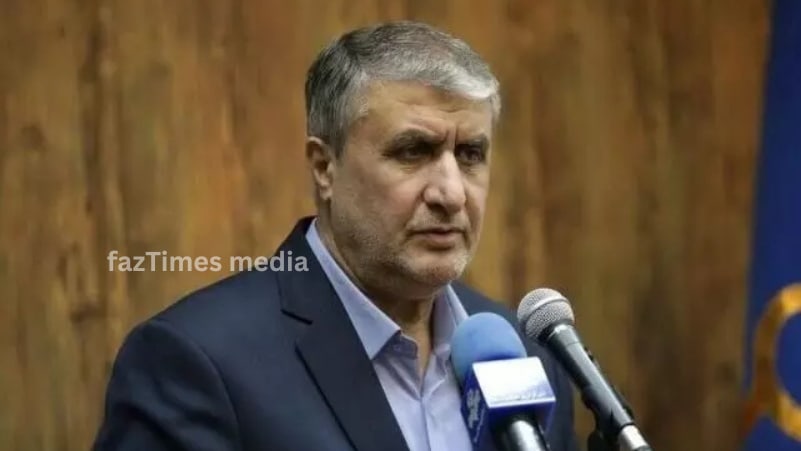
fazTimes media: Tehran, Iran. As the strife between Iran and Israel enters its second week, pressures are rapidly heightening into an emergency with potential worldwide results. In an unequivocally worded letter to the Worldwide Nuclear Energy Organization (IAEA), Iran’s top atomic official has called on the organization to break its silence and condemn Israeli airstrikes on what Iran portrays as its “peaceful atomic facilities.”
The letter, composed by Mohammad Eslami, head of Iran’s Nuclear Energy Organization, follows an Israeli rocket strike on the Arak heavy water reactor office in Khondab Province, found in Iran’s central Markazi territory. The semi-official Fars News Organization and universal outlets, including Xinhua, affirmed that the office was hit amid an Israeli discussion campaign that started on June 13.
Eslami blamed Israel for breaking universal law and expressed that the IAEA’s “continued inaction” energized more assaults. He called the strikes a “clear infringement of Iranian sway and a grave danger to worldwide atomic security.”
A Letter with Direness
Within the letter addressed to IAEA Executive Director Rafael Grossi, Eslami emphasized that atomic offices under IAEA shields are not military targets. He cautioned that assaulting them seemed to cause long-term natural and security dangers remote past the Middle East.
“We encourage the IAEA to fulfill its command and condemn the Israeli regime’s rash activities that pose a peril to territorial and worldwide stability,” Eslami composed.
He cautioned that continuous assaults on atomic facilities seem to set a perilous point of reference, empowering other nations to target atomic facilities under the cover of national security concerns. The IAEA has not, however, freely reacted to the letter or made an articulation about the Arak strike. In any case, the universal body has already called for calm and expressed that all nations ought to regard the security and assurance of nuclear establishments, particularly those under IAEA assessment.
The Heightening Strife: What Started the Savagery?
The current struggle started on June 13, when Israel launched focused airstrikes against Iranian military and nuclear-related facilities. This was supposedly in reaction to insights proposing that Iran was arranging to boost its nuclear enrichment activities beyond the limits set within the now-defunct 2015 nuclear deal (JCPOA).
According to Iranian media, the Israeli strikes have come about with the passing of a few Iranian military commanders and atomic researchers. In countering, Iran launched ballistic rockets and carried out attacks on key targets inside Israel.
The Iranian mission to the United Nations affirmed the retaliatory assaults but denied that they focused on civilians. A rocket strike on the Soroka Therapeutic Center in southern Israel on Thursday harmed at least 71 individuals. Israel depicted this as a considered assault on a civilian office.
Iran negated this claim, expressing that the target was the Israeli army’s C4I broadcast communications and insights office, and repeated its commitment to universal compassionate law, which forbids assaults on civilians.
Worldwide Response: Hush or Technique?
Whereas the locale is in turmoil, the worldwide reaction has been cautious and calm. Western powers, including the United States, Germany, and France, have called for restrictions but have not condemned Israel’s activities or sponsored Iran’s request for IAEA mediation. This scene has quietly driven allegations in Tehran that universal education, including the UN and IAEA, is not remaining unbiased and is in step with supporting Western-aligned countries.
“This isn't almost about Iran,” said political examiner Dr. Mehdi Farahani, based in Tehran. “If the IAEA remains calm nowadays, it sets a point of reference where any atomic location, indeed beneath worldwide review, can be assaulted without consequences.”
Russia and China, Iran’s fundamental vital partners, have encouraged prompt discourse and a ceasefire but have stopped short of directly addressing Israel. Russia’s remote service communicated concern around the potential dangers to atomic security, expressing that “all parties must avoid activities that seem to destabilize the locale further.”
A Hazard to Atomic Security?
The Arak heavy water reactor has long been a disagreeable point in Iran’s atomic program. Whereas Iran claims it is for serene investigation and restorative isotope generation, faultfinders, particularly in Israel and the West, contend it might be adjusted to create weapons-grade plutonium.
Assaults on such offices pose critical dangers. In case of harm, they may lead to radioactive spills, natural defilement, and major difficulties within the worldwide atomic non-proliferation system.
“This isn't a front-line tank or a military base. This can be an atomic office beneath IAEA safeguards,” said Dr. Elham Moghaddam, an atomic approach master at Sharif College of Innovation. “If the worldwide community does not speak out presently, we will see a collapse of belief within the whole worldwide atomic oversight system.”
Residential Reaction in Iran
The assault has caused far-reaching shock in Iran. Thousands gathered outside parliament in Tehran on Friday, requesting a more grounded reaction to Israel and criticizing what they see as the government’s controlled countering.
In a broadcast articulation, President Ebrahim Raisi said Iran would not endure rehashed assaults on its framework. “We have worked out vital tolerance, but we are not going to stay quiet if our sway is damaged again,” Raisi announced.
The Iranian Parliament has allegedly summoned top military and atomic authorities for a closed-door session to audit security conventions around other delicate offices, including Fordow, Natanz, and Bushehr.
What’s Another?
Specialists accept the circumstance remains unsteady, with a tall hazard of encouraging heightening on the off chance that either side miscalculates. Israel has shown no signs of halting its operations, citing national security. In the interim, Iran demands it'll proceed to strike back on the off chance that it's attacked once more.
The universal community remains separated. Whereas numerous concur on the requirement for de-escalation, there's little understanding of how to hold either party responsible or how to bring them back to the arranging table.
Previous U.S. Secretary of State John Kerry, talking at a conference in Geneva, expressed, “We are seeing the results of letting discretion fall flat. Presently is the time for cool heads and calm diplomacy, not advanced military actions.”
Last Considerations
Iran’s call for the IAEA to investigate Israeli airstrikes is more than a fair political ask—it tests the worldwide community’s commitment to universal law and atomic security. If atomic offices under assessment can be bombed without result, what does that mean for nations following the rules?
At the heart of this emergency could be an alarming question: Can worldwide teachers stay impartial in a world progressively isolated by organizations and military control?
As the locale stands on the brink of more extensive strife, the world observes, trusting not in fair means for the cessation of rocket strikes but in significant activity to protect peace, maintain responsibility, and defend worldwide security guidelines.
Remain with fazTimes for progressing the scope of the Iran-Israel strife, atomic discretion, and Middle East issues.


Discussion0
Join the conversation on this story
Loading comments...